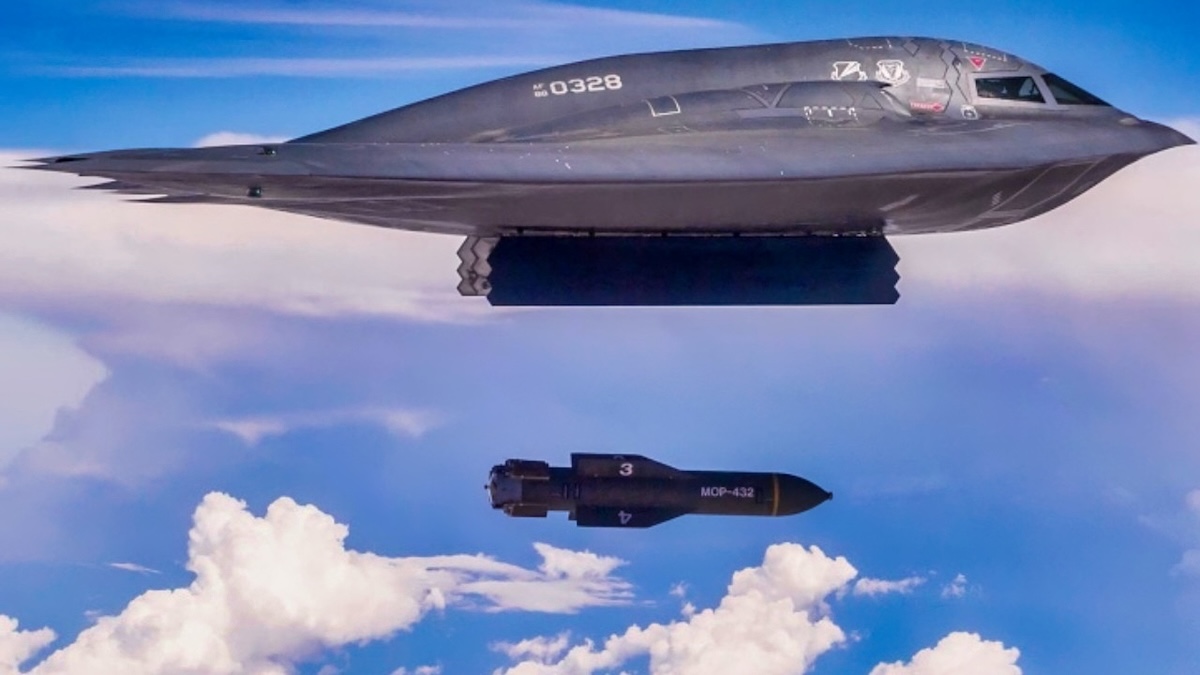
In the wake of its recent strikes on Iran’s nuclear facilities, the United States is fast-tracking the development of a next-generation penetrator (NGP) to address the evolving challenges of modern warfare. The June 2024 operation, codenamed Midnight Hammer, saw the first combat use of the 13,000-kilogram GBU-57/B Massive Ordnance Penetrator (MOP) against Iran’s Fordow and Natanz sites. While the strikes demonstrated precision, they also highlighted operational limitations, particularly with the B-21 Raider’s reduced payload capacity. This has spurred the US Department of Defense to prioritize the creation of a more advanced penetrator capable of overcoming hardened and deeply buried targets. The NGP, expected to weigh under 9,900 kilograms, will feature enhanced precision, propulsion systems for standoff capability, and improved terminal effects. Its development is driven by lessons from the Iran strikes and the growing global proliferation of fortified facilities in nations like China, North Korea, and Russia. The US Air Force aims to deploy initial prototypes within two years, integrating the NGP into the Long Range Strike system alongside platforms like the B-21 bomber and the AGM-181A Long-Range Stand-Off missile. However, the strikes on Iran’s Fordow facility, which lies 80 meters underground, raised questions about the MOP’s effectiveness. Satellite imagery revealed only six craters despite the deployment of 14 bombs, suggesting incomplete destruction of critical infrastructure. US Defense Secretary Pete Hegseth downplayed these concerns, calling leaked reports preliminary and emphasizing the complexity of battle damage assessments. The lessons from Iran could foreshadow greater challenges in potential conflicts with China, where deeply buried command centers and missile silos pose significant threats. Analysts warn that conventional strikes on such targets might be misinterpreted as nuclear decapitation attempts, escalating tensions. As the US refines its penetrator technology, the broader strategy of deterrence by denial remains critical, though it faces practical limitations amid China’s expanding missile capabilities and anti-access systems.