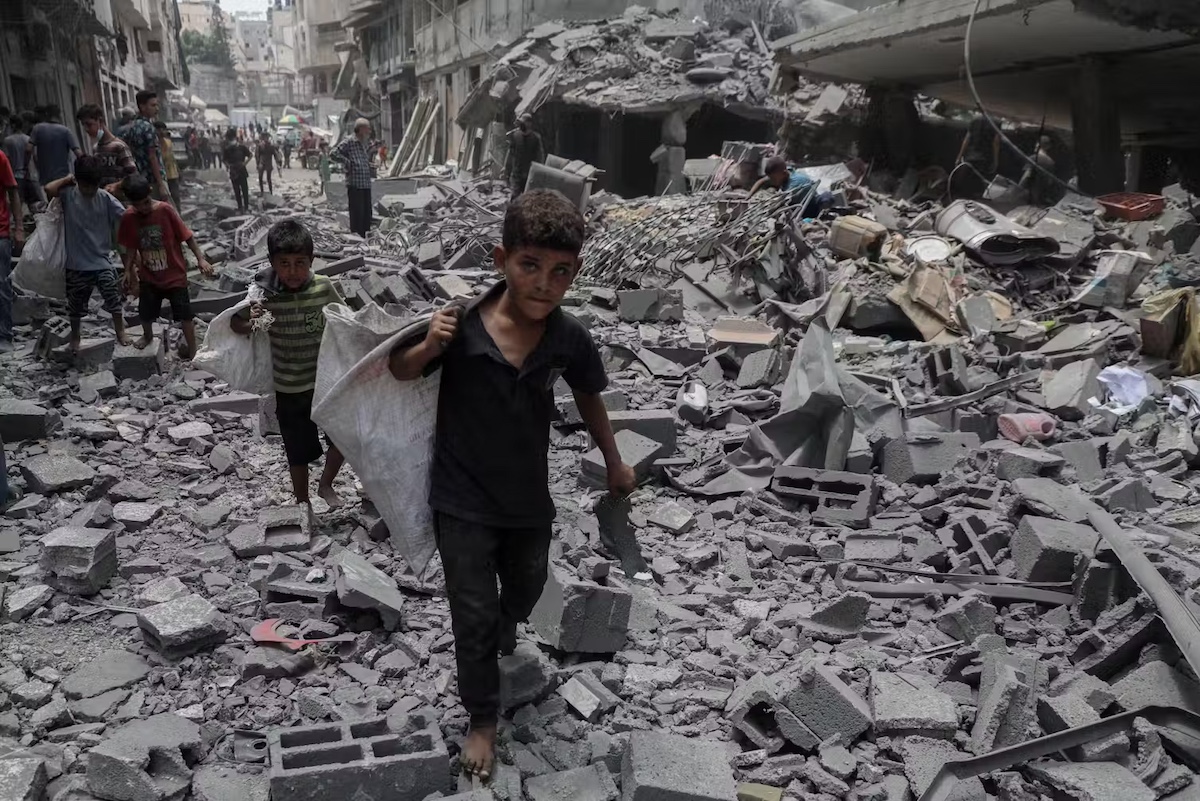
In Gaza City, a renewed Israeli military offensive has forced thousands of Palestinians to flee their homes, following days of intense airstrikes that have claimed dozens of lives. This latest escalation comes just days after Hamas officials, in Cairo, announced their acceptance of a ceasefire proposal brokered by Qatari and Egyptian mediators. However, the assault has likely derailed any hopes of a truce. Meanwhile, across Israel, hundreds of thousands of citizens have taken to the streets in protest against Prime Minister Benjamin Netanyahu’s handling of the war, demanding an end to the conflict and the return of hostages. While some may view Hamas’s ceasefire acceptance and the protests as potential turning points, the situation on the ground suggests otherwise. Gaza City has endured repeated bombardments over the 22-month-long war, and past ceasefire agreements have consistently collapsed. Similarly, large-scale protests in Israel have failed to yield tangible results. The Israeli government has expressed disinterest in partial deals, insisting on a comprehensive agreement that secures the release of all hostages. Netanyahu’s coalition members have already rejected the current proposal, highlighting the deep divide between Israel and Hamas. The latter demands a permanent truce and Israeli troop withdrawal, while Israel’s five-point plan includes disarming Hamas, demilitarizing Gaza, and establishing a new civil administration. These conflicting objectives, coupled with Israel’s plans to maintain security control in Gaza, present significant obstacles to peace. Amid growing public discontent in Israel and internal divisions within Hamas, the prospects for a ceasefire remain bleak, leaving civilians and hostages to bear the brunt of the ongoing violence.