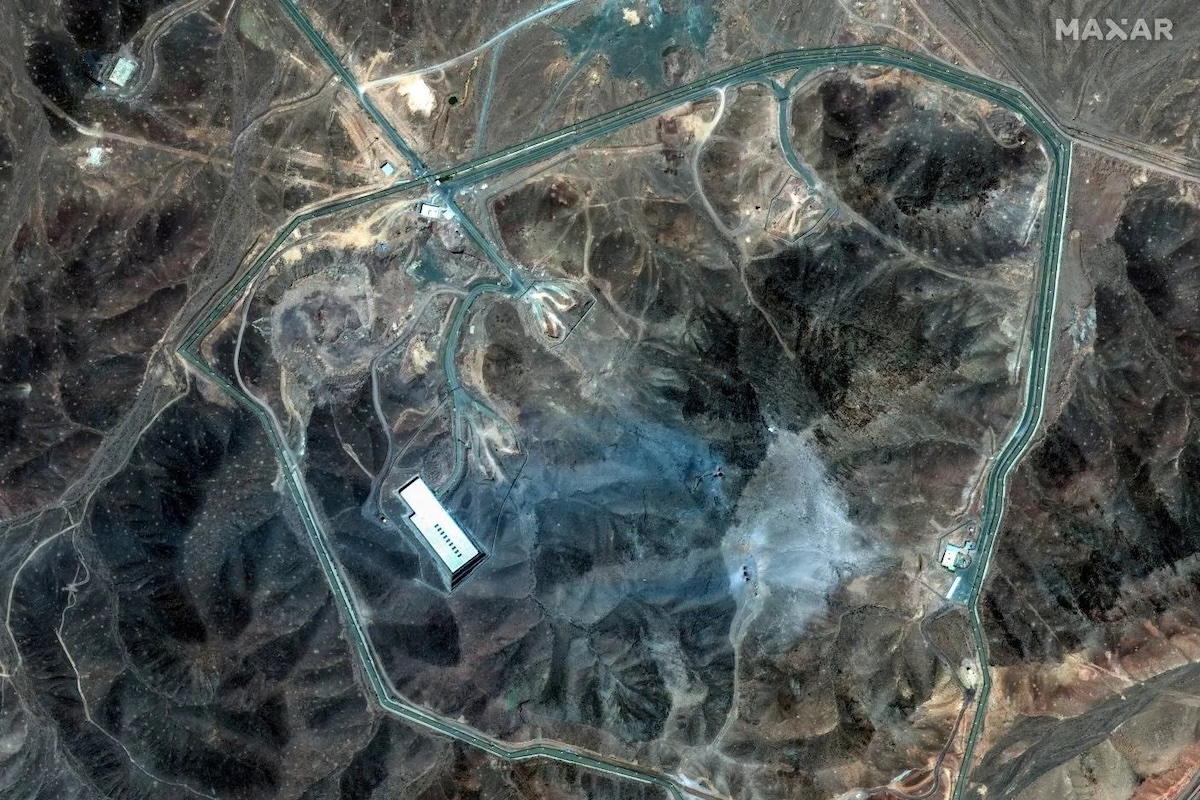
A groundbreaking study utilizing cutting-edge hyperspectral imaging technology has provided new insights into the extent of damage inflicted on Iran’s Fordow nuclear facility. The analysis, conducted by Orbital Sidekick (OSK) Inc., employed its Global Hyperspectral Observation Satellite (GHOSt) constellation to assess the aftermath of a U.S. military strike codenamed ‘Operation Midnight Hammer’ on June 22, 2025. The findings suggest that the facility, officially known as the Shahid Ali Mohammadi Nuclear Facility, suffered ‘extremely severe damage and destruction,’ particularly to its underground enrichment halls. The GHOSt system, which leverages hyperspectral imaging (HSI) and advanced data analytics, identified significant subsidence and concrete debris pushed to the surface, indicating potential structural collapse. This marks a significant leap in satellite technology’s ability to monitor and analyze critical infrastructure and military targets. The study also highlights the evolution of satellite imaging from the Landsat era, which began in 1972, to today’s sophisticated systems capable of providing detailed environmental and situational awareness. The implications of such technology extend beyond military applications, offering potential uses in agriculture, infrastructure monitoring, and environmental management. However, the commercial nature of these systems raises concerns about their accessibility to potential adversaries, underscoring the dual-use dilemma of advanced satellite technology.