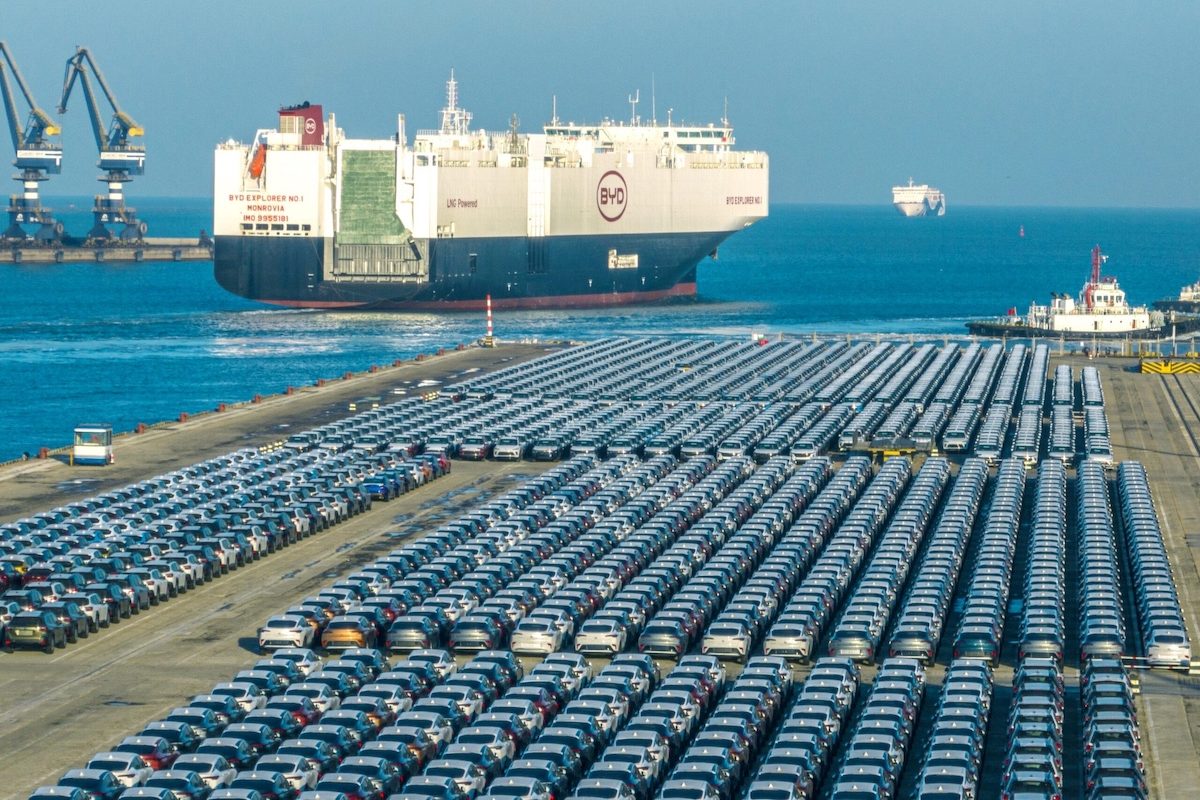
China’s meteoric rise in the electric vehicle (EV) industry is no longer a domestic narrative but a global phenomenon reshaping automotive and energy supply chains. A decade ago, Chinese automakers were seen as imitators; today, they are industry leaders. BYD has surpassed Tesla in global EV sales, while companies like Nio, Li Auto, Geely, and SAIC are capturing significant market shares. Battery giant CATL has become indispensable, powering both Chinese and international brands. This transformation, initially driven by government support, has evolved into structural dominance, compelling the world to react. In 2023, China overtook Japan as the world’s largest vehicle exporter, shipping 5.2 million cars—a 70% increase from the previous year. Domestically, 31.4 million vehicles were sold, with EVs accounting for over 40% of production. Analysts predict that by 2030, China could produce 36 million cars annually, representing 40% of global output. This ascent is fueled by scale, cost control, and over $230 billion in state-backed subsidies, infrastructure, and research investments. China’s supply chain integration, lower labor costs, and vast battery ecosystem provide an unassailable advantage. The implications are profound: global auto incumbents face margin pressures, EV-linked commodities are in high demand, and trade tensions are escalating as Western governments impose tariffs to protect their markets. Yet, protectionism can only slow, not halt, China’s advance. European showrooms are increasingly filled with competitively priced Chinese EVs, and Chinese brands are gaining traction in markets like the UK and Norway. Beyond autos, the EV surge is reshaping metals markets, energy utilities, and software platforms. China’s dominance mirrors its success in solar panels, drones, and steel, driven by deliberate industrial policy. For investors, this represents both opportunities and risks, as the global automotive and energy sectors undergo a once-in-a-generation transformation. China’s EV revolution is accelerating the energy transition, reducing oil demand, and straining electricity grids. The future of mobility, energy, and manufacturing is being written in China, and the world must adapt.