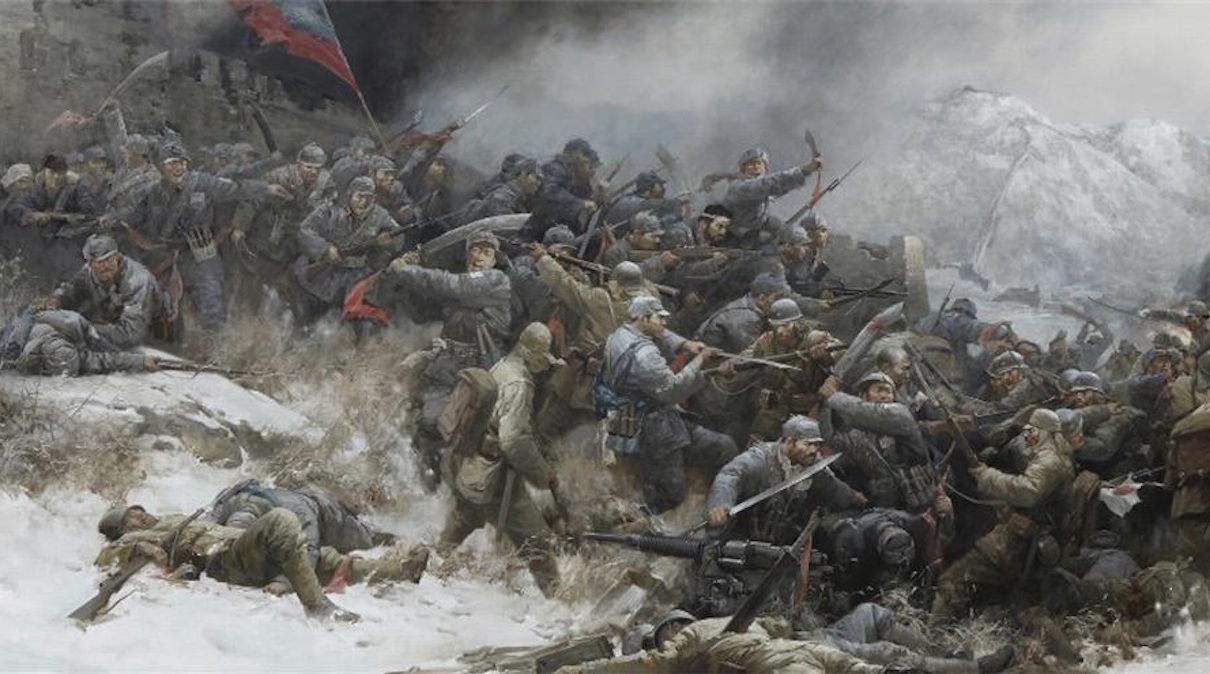
Eight decades after World War II concluded with Japan’s surrender to Allied forces on September 2, 1945, the conflict continues to influence East Asian geopolitics, particularly in the context of modern tensions. The recent high-profile military parade in China, commemorating what Beijing terms the ‘War of Resistance against Japanese Aggression,’ has reignited debates over historical narratives and their implications for current relations. Critics in Tokyo accuse the Chinese Communist Party of fueling anti-Japanese sentiment, while the U.S. has expressed concerns over Beijing’s emphasis on Russia’s role at the expense of America’s contributions. The narrative battle between Taipei and Beijing is particularly significant. During the war, China’s communists and nationalists formed an uneasy alliance against Japan, but after the war, the communists emerged victorious, forcing the nationalists to retreat to Taiwan. This historical backdrop fuels ongoing disputes over each side’s role in defeating Japan and the symbolism of Beijing’s military displays. A key point of contention is the fact that Japan surrendered to the National Revolutionary Army of the Kuomintang, not the communists, a detail that underscores Taiwan’s claim to historical legitimacy. The nationalist army bore the brunt of conventional warfare, while the communists relied on guerrilla tactics, leading to differing interpretations of their respective contributions. Taiwan’s status post-war adds another layer of complexity. After 50 years of Japanese colonial rule, Taiwan was handed over to the Republic of China, but the island’s local population resisted the authoritarian nationalist regime. The Cairo Declaration of 1943 further complicated matters by affirming Taiwan’s return to China, a principle both Beijing and Taipei uphold, albeit with differing interpretations of which government represents China. These conflicting narratives resurface during commemorative events, such as China’s 2015 military parade marking the 70th anniversary of Japan’s surrender. Beijing uses these occasions to assert its role in shaping the post-war world order and to promote its vision of a multipolar world. Meanwhile, Taiwan opts for more subdued commemorations, reflecting its population’s focus on contemporary issues rather than historical grievances. As tensions across the Taiwan Strait escalate, the legacy of World War II remains a potent force in shaping East Asian geopolitics.