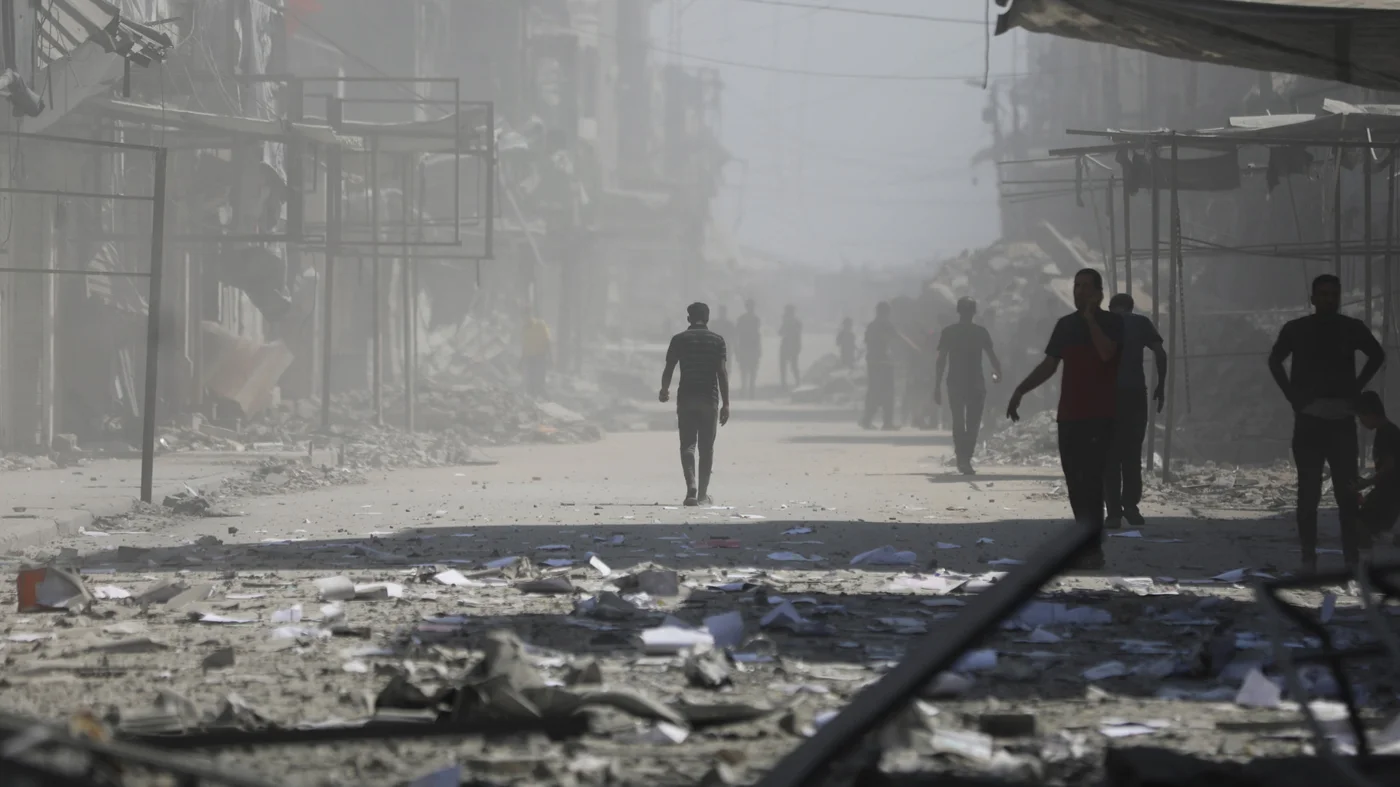
In the midst of Israel’s intensified military campaign in Gaza City, Palestinian journalist Ahmed Dremly faces an agonizing decision: to stay in his lifelong home or flee to uncertain safety. His friend Youssef’s advice to sell his furniture as firewood underscores the dire reality. “Who would buy them?” Dremly retorts, his voice heavy with bitterness. The conversation, reminiscent of a dystopian narrative, reflects the plight of Gaza’s one million residents, forced to choose between survival and the loss of their homes and memories. Since mid-August, Israel’s relentless bombing campaign, coupled with the deployment of explosive-laden robots, has aimed to depopulate the city, described by many as ethnic cleansing. The goal is clear: drive residents south, leaving Gaza City a ghost town. Estimates suggest between 300,000 to 600,000 have already fled, though many remain, unable to afford transportation or face the fear of permanent displacement. For Dremly, the thought of abandoning his home is unbearable. “I look at the walls of my house, even the lamp, and it breaks my heart,” he laments. Award-winning journalist Maha Hussaini shares his anguish, having delayed her departure until the last possible moment. “The last time you leave the house and shut the door—that’s the last time you’ll close that door,” she says. Despite her determination to stay “until the last gasp,” Hussaini was ultimately forced to flee south, leaving behind a city that once teemed with life. The streets, now eerily empty, serve as a stark reminder of the human cost of this conflict. As Gaza’s residents grapple with impossible choices, their stories highlight the devastating toll of war on identity, memory, and home.