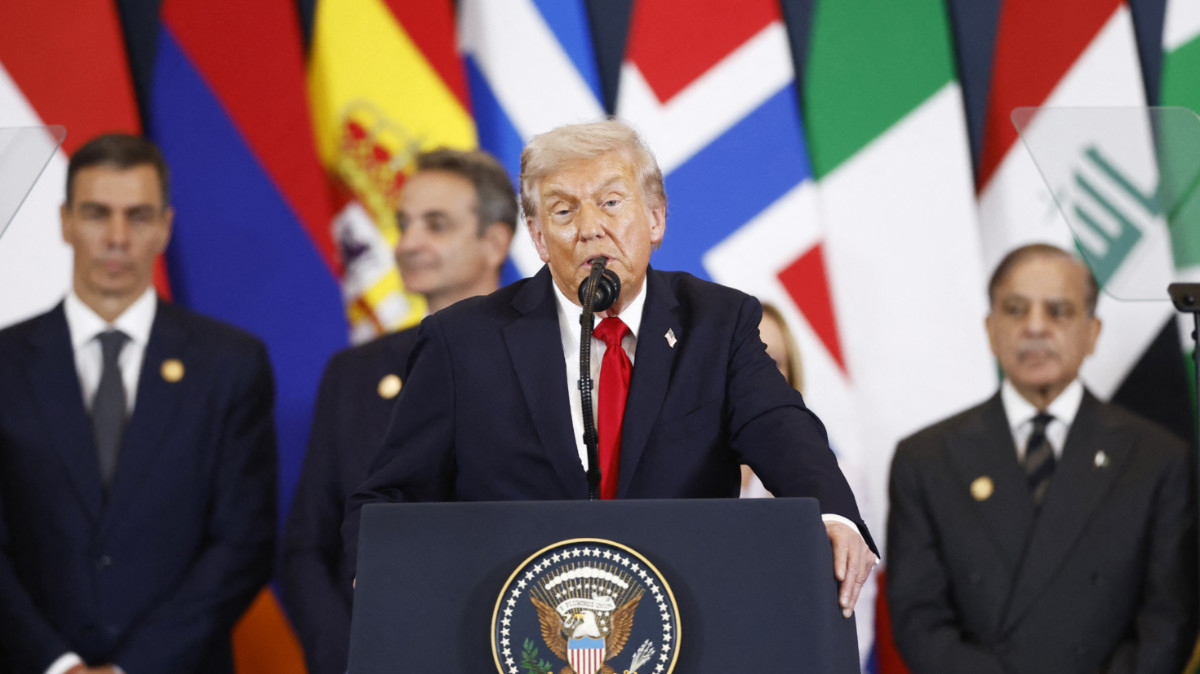
President Donald Trump’s recent Middle East tour was a masterclass in political theater, blending high-profile engagements with significant diplomatic achievements. The journey began with a landmark address at the Israeli Knesset, where Trump reaffirmed his commitment to the Gaza peace deal and the Abraham Accords. He also urged Israel’s president to pardon Prime Minister Benjamin Netanyahu, who is embroiled in a corruption trial. The tour’s second leg took Trump to Egypt’s Sharm el-Sheikh, where he declared the end of the Gaza war and the start of reconstruction efforts. Dozens of world leaders, including Egyptian President Abdel Fattah el-Sisi, Turkish President Recep Tayyip Erdogan, and Qatari Emir Tamim bin Hamad al-Thani, gathered to sign documents recognizing the ceasefire. Trump’s visit was marked by praise for Sisi’s role in brokering the deal and a public nomination for the Nobel Peace Prize by Pakistani Prime Minister Shehbaz Sharif. However, behind the pageantry, Arab states expressed concerns about Trump’s sustained interest in the peace process. Analysts noted that the summit’s internationalization of the Israel-Palestine conflict was unprecedented. While phase one of the ceasefire is complete, with Israeli troops withdrawing from central Gaza and captives released, the hard questions of Hamas’s demilitarization and Gaza’s governance remain unresolved. Trump’s expectation of Gulf funding for Gaza’s reconstruction faces skepticism, as regional powers like Qatar, the UAE, and Saudi Arabia have divergent priorities. Despite the diplomatic successes, the absence of direct references to Palestinian suffering in Trump’s speeches drew criticism, underscoring the complexities of the ongoing conflict.