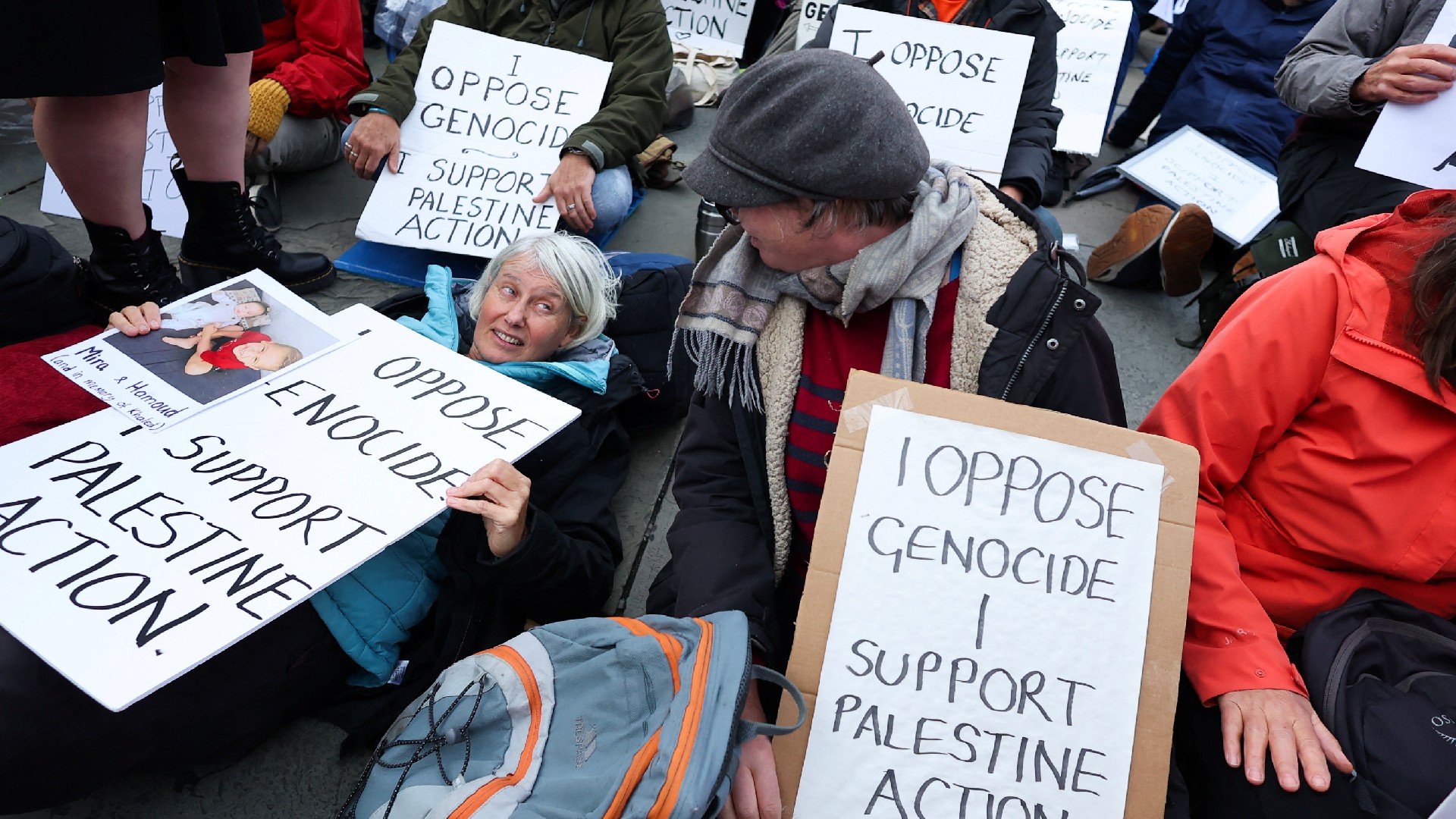
The Westminster Magistrates Court in London has become the epicenter of a legal storm as dozens of individuals face terrorism charges for expressing support for the proscribed group Palestine Action. The preliminary hearings, spanning two days, saw judges grappling with an unprecedented caseload of approximately 2,100 defendants. These individuals are accused of holding cardboard signs that read, “I oppose genocide, I support Palestine Action,” an act now classified as a low-level terrorism offense under UK law, punishable by up to six months in prison. The hearings on Thursday addressed 28 cases, with many defendants being elderly pensioners. Former government lawyer Tim Crosland highlighted the strain on the judicial system, stating, “You’ve got very few judges, very few courts that are equipped to deal with this very extraordinary regime.” The majority of defendants were arrested during initial protests in July, challenging the government’s decision to proscribe Palestine Action under anti-terror laws. This designation, enacted on July 4 following an incident at RAF Brize Norton, places Palestine Action in the same category as groups like al-Qaeda and the Islamic State. Support for the group is now a criminal offense, carrying a potential 14-year prison sentence. The legal proceedings have been further complicated by an ongoing challenge to the proscription, which could potentially overturn the ban and nullify many prosecutions. Judge Snow has proposed a plan to manage the overwhelming number of cases, scheduling at least two trials daily for 10 defendants starting March 23, totaling around 400 trials. However, this plan has been criticized by lawyers and defendants who argue it undermines the right to a fair trial. The situation has sparked concerns about the erosion of democratic rights, with Crosland warning, “The sorts of things that are being suggested go against yet another democratic right, which is the right to a fair trial and a fair hearing.”
Dozens appear in court for supporting Palestine Action with thousands still waiting for trials