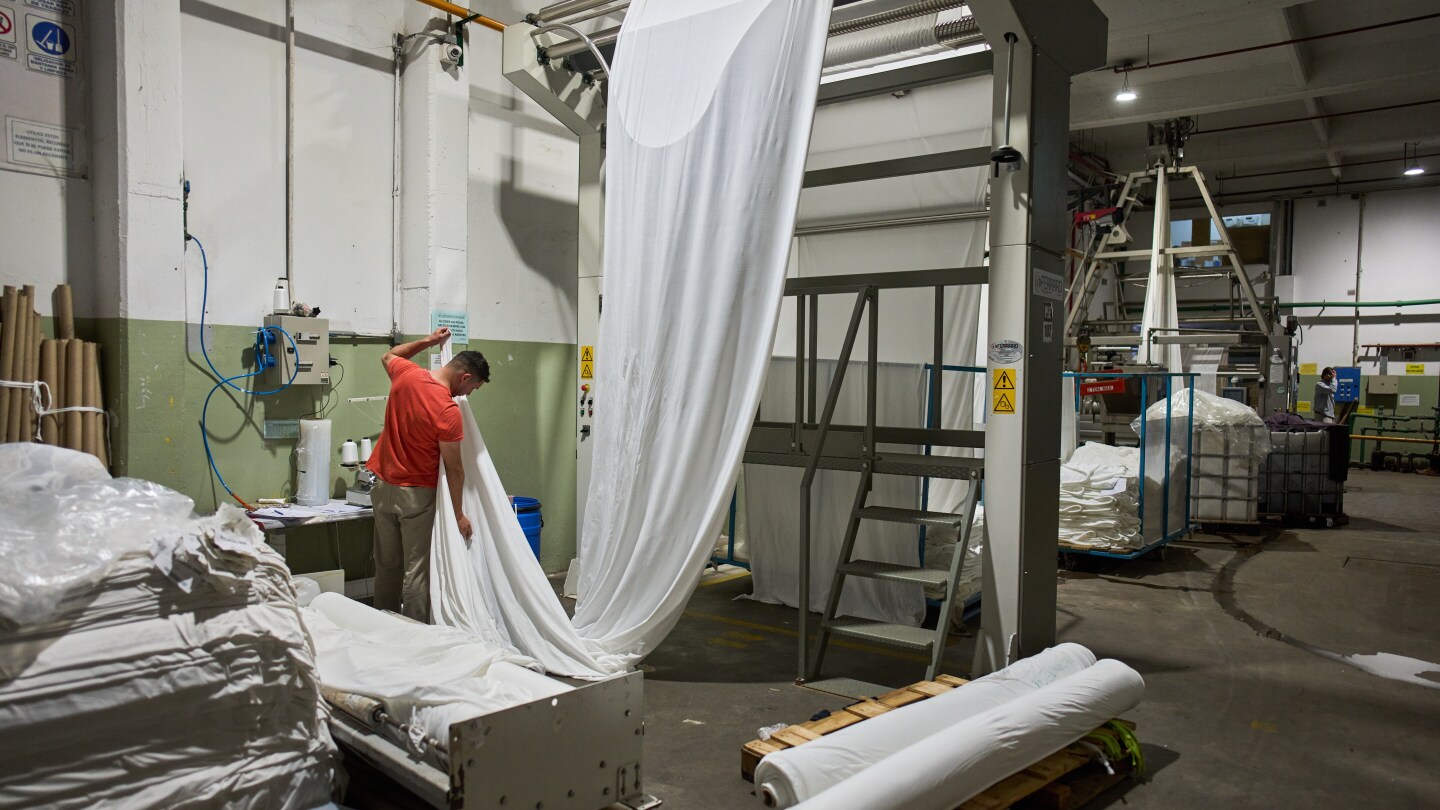
The once-bustling textile mill of the Galfione Group in southern Buenos Aires now stands eerily quiet. Luciano Galfione, the owner, walks through the factory, reminiscing about the days when 200 employees operated state-of-the-art machinery to produce fabrics for Argentina’s middle class. Today, only a handful of workers remain, spooling yarn and dyeing cloth. The factory’s operations have been slashed by 80%, and half the staff has been laid off or suspended. Galfione is now dipping into his personal savings to keep the 78-year-old family business afloat. This grim scenario is emblematic of Argentina’s broader economic crisis, exacerbated by President Javier Milei’s austerity measures and free-market reforms. Since Milei took office nearly two years ago, over 17,600 businesses, including 1,800 manufacturers and 380 textile companies, have shut down, according to Fundación Pro Tejer, a nonprofit representing textile manufacturers. The crisis has been fueled by falling domestic orders, surging competition from cheap imports, and reduced consumer spending due to higher unemployment and lower wages. As Argentina approaches midterm elections on October 26, widely seen as a referendum on Milei’s policies, the textile industry’s collapse highlights the broader challenges facing the nation. The economy has stagnated, manufacturing has been gutted, and consumer confidence has plummeted. Milei’s initial success in curbing inflation has been overshadowed by rising unemployment, stagnant wages, and increased costs for essentials like transportation and healthcare. The president’s reliance on high interest rates and central bank interventions to stabilize the peso has further eroded the competitiveness of Argentine industries. Meanwhile, the removal of trade barriers has flooded the market with cheaper foreign products, leaving local manufacturers struggling to compete. As Milei seeks financial support from the U.S., many Argentines remain skeptical about the potential benefits of foreign aid, emphasizing the need for domestic economic revival. The crisis has left thousands of workers unemployed, with families struggling to make ends meet. The future of Argentina’s economy remains uncertain, as the government grapples with the dual challenges of stabilizing inflation and fostering growth.
After winning Trump’s $20 billion, President Milei must win votes as Argentine industry reels