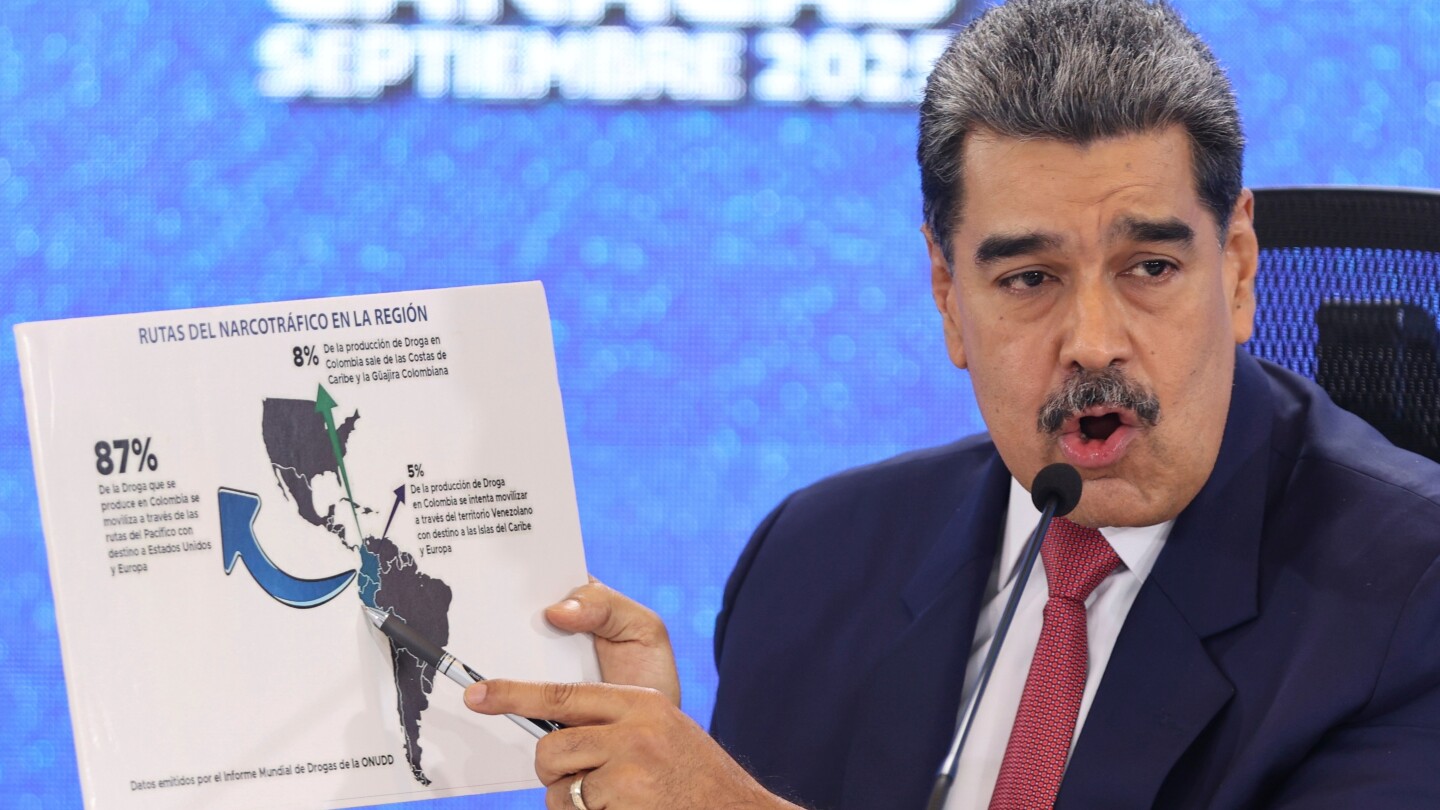
The Trump administration’s approach to combating drug cartels in Latin America is drawing parallels to the post-9/11 war on terror, with legal scholars questioning the expansion of military power and its implications for international law. President Donald Trump has authorized military strikes against Venezuelan drug traffickers, relying on the same legal framework that justified lethal force against al-Qaida after the 2001 attacks. However, critics argue that this strategy stretches the boundaries of international law, particularly as the U.S. military targets groups primarily engaged in drug trafficking rather than terrorism. The administration has conducted at least five strikes, killing 27 people, without congressional approval or traditional legal investigations, raising concerns about the justification for these actions and their impact on U.S.-Latin American relations. Trump has also hinted at potential covert operations to oust Venezuelan President Nicolás Maduro, further escalating tensions. Legal experts, including Claire Finkelstein of the University of Pennsylvania, argue that labeling drug cartels as combatants in an ‘armed conflict’ undermines international law. Meanwhile, the U.S. intelligence community disputes claims that Maduro’s administration is orchestrating drug trafficking and illegal immigration. The administration’s focus on Venezuela overlooks the fact that most fentanyl, responsible for the majority of U.S. overdose deaths, is smuggled from Mexico. Despite calls for transparency, the Trump administration has yet to provide evidence to Congress proving the targeted boats were carrying narcotics. The International Criminal Court could investigate the strikes, but its efforts are hampered by internal issues and U.S. sanctions.
A war on drugs or a war on terror? Trump’s military pressure on Venezuela blurs the lines