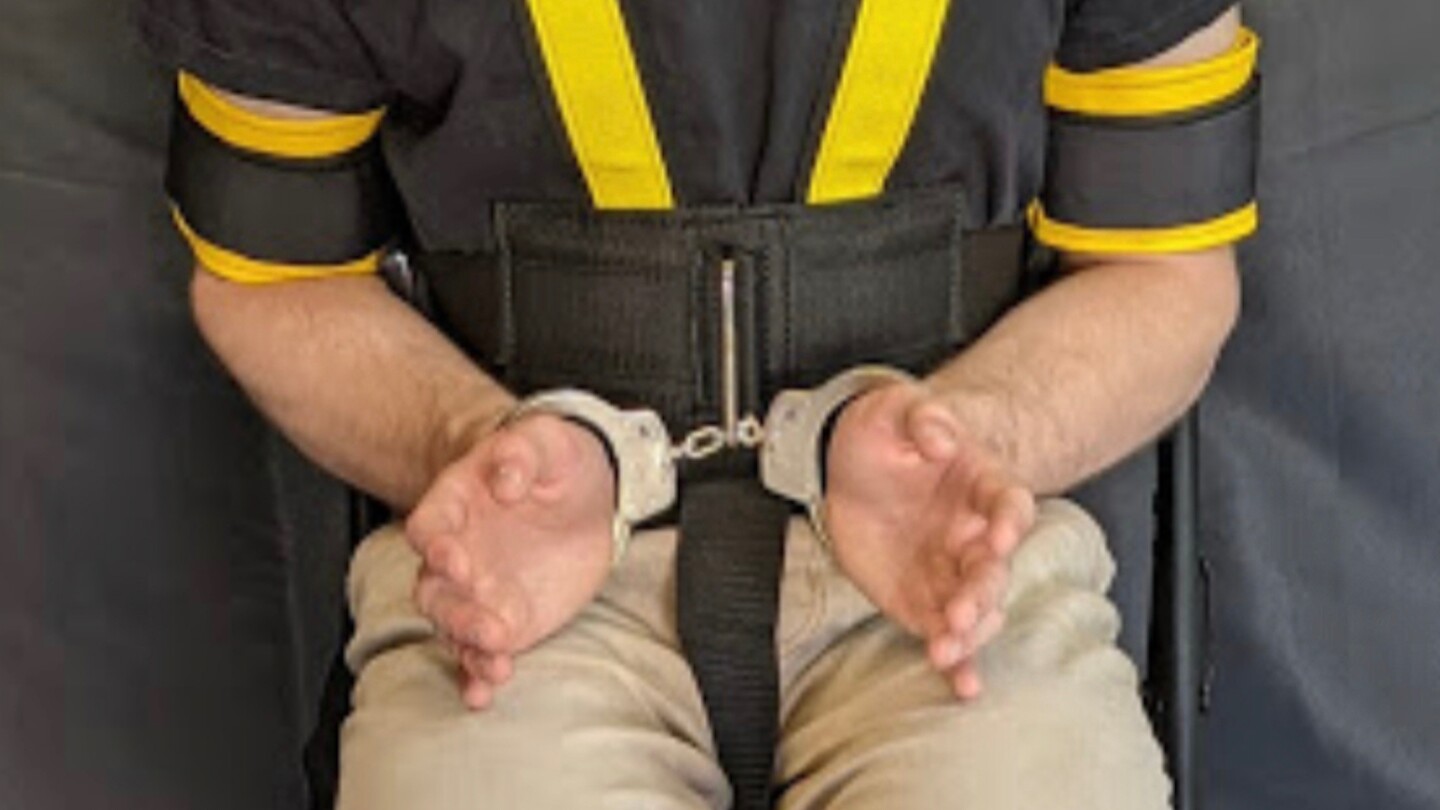
A Nigerian man, part of a federal lawsuit, recounted a harrowing experience of being forcibly deported by U.S. Immigration and Customs Enforcement (ICE) officers in September. He described being awoken in the middle of the night, shackled, and strapped into a full-body restraint device known as the WRAP. Despite not being from Ghana, he and others were flown there on a 16-hour flight, denied access to their attorneys, and subjected to what he likened to a kidnapping. The WRAP, often referred to as “the burrito” or “the bag,” has become a controversial tool in ICE’s deportation process, with detainees alleging its use as a form of intimidation and punishment. The Associated Press (AP) investigation revealed multiple instances of ICE deploying the WRAP, despite internal concerns raised by the Department of Homeland Security’s (DHS) civil rights division. The device, originally designed as a safety measure for law enforcement, has been linked to fatalities and is now the subject of numerous lawsuits. Detainees claim they were restrained in the WRAP for hours, even when they posed no threat, leading to physical and psychological trauma. ICE and DHS have defended the use of restraints as standard protocol to ensure safety during deportations, but advocates argue the practice is inhumane and violates human rights. The AP’s findings highlight a growing debate over the ethical and legal implications of ICE’s deportation methods, particularly under the Trump administration’s aggressive immigration policies.
ICE’s use of full-body restraints during deportations raises concerns over inhumane treatment