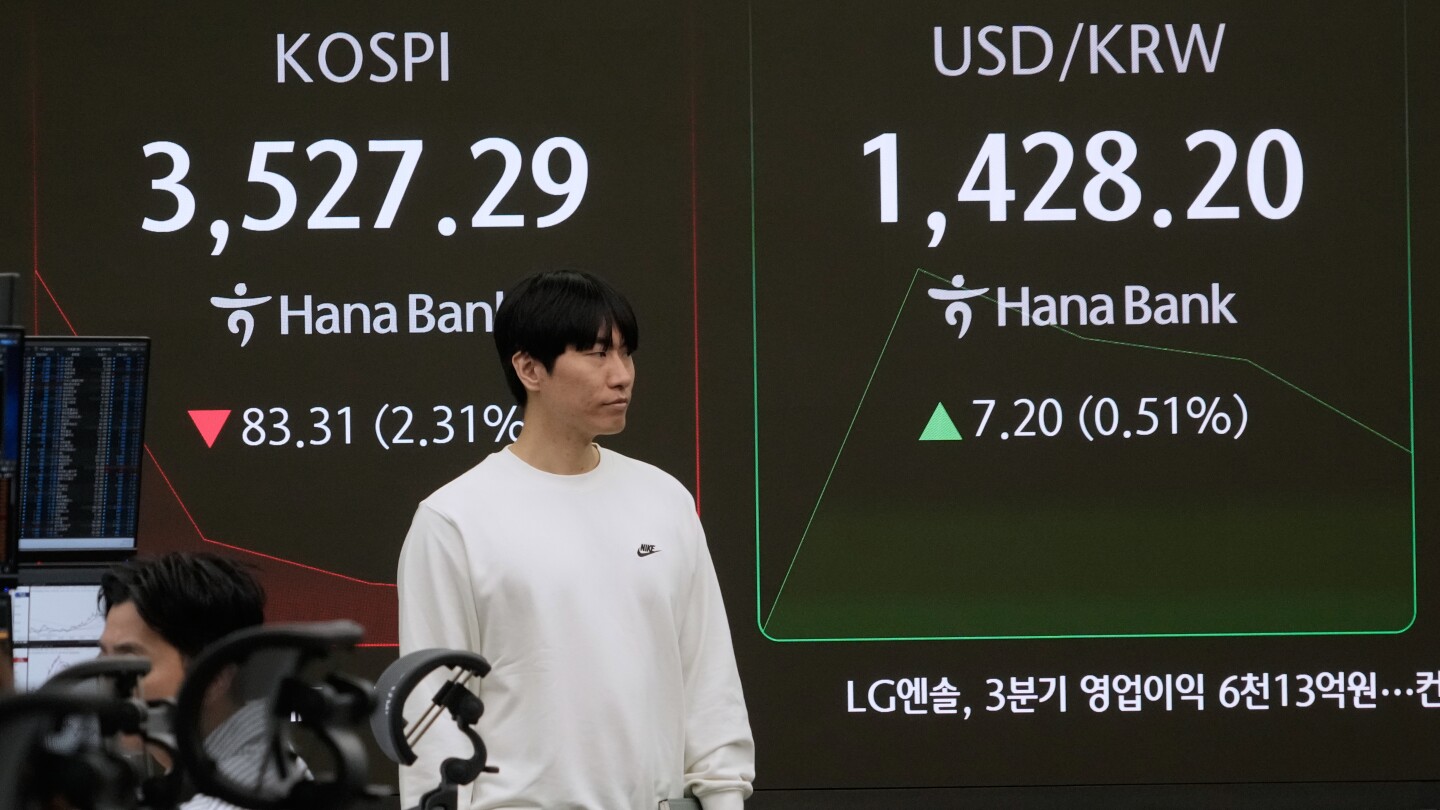
Asian stock markets experienced a sharp decline on Monday as renewed trade tensions between the United States and China disrupted a period of relative calm on Wall Street. The downturn followed President Donald Trump’s threat to impose higher tariffs on Chinese goods, signaling a potential escalation in the ongoing trade conflict between the world’s two largest economies. This move came in response to Beijing’s restrictions on the export of rare earth materials, which are essential for manufacturing a wide range of products, from consumer electronics to jet engines. Despite the turmoil, U.S. futures showed signs of recovery, with the S&P 500 contract rising 1.2% and the Dow Jones Industrial Average gaining 0.8%. Meanwhile, China reported a 8.3% year-on-year increase in global exports for September, marking the strongest growth in six months. However, exports to the U.S. plummeted by 27%, according to customs data. In Hong Kong, the Hang Seng Index fell 3.5%, while other major regional markets, including the Shanghai Composite and South Korea’s Kospi, also recorded significant losses. The S&P 500 had already suffered its worst day since April, dropping 2.7% on Friday, as investors reacted to the renewed trade hostilities. Trump’s comments on Truth Social further fueled concerns, as he hinted at canceling a planned meeting with Chinese President Xi Jinping during an upcoming trip to South Korea. The market’s decline was widespread, with nearly all sectors, including Big Tech and smaller companies, experiencing losses. Critics have warned that stock prices, particularly in the artificial intelligence sector, may be overvalued, drawing comparisons to the dot-com bubble of 2000. In the oil market, prices initially fell due to a ceasefire between Israel and Hamas but later rebounded. The bond market also saw a drop in yields, reflecting broader economic uncertainty. The dollar weakened slightly against the yen, while the euro gained ground.
Asian shares skid after Wall Street tumbles to its worst day since April as China trade woes worsen