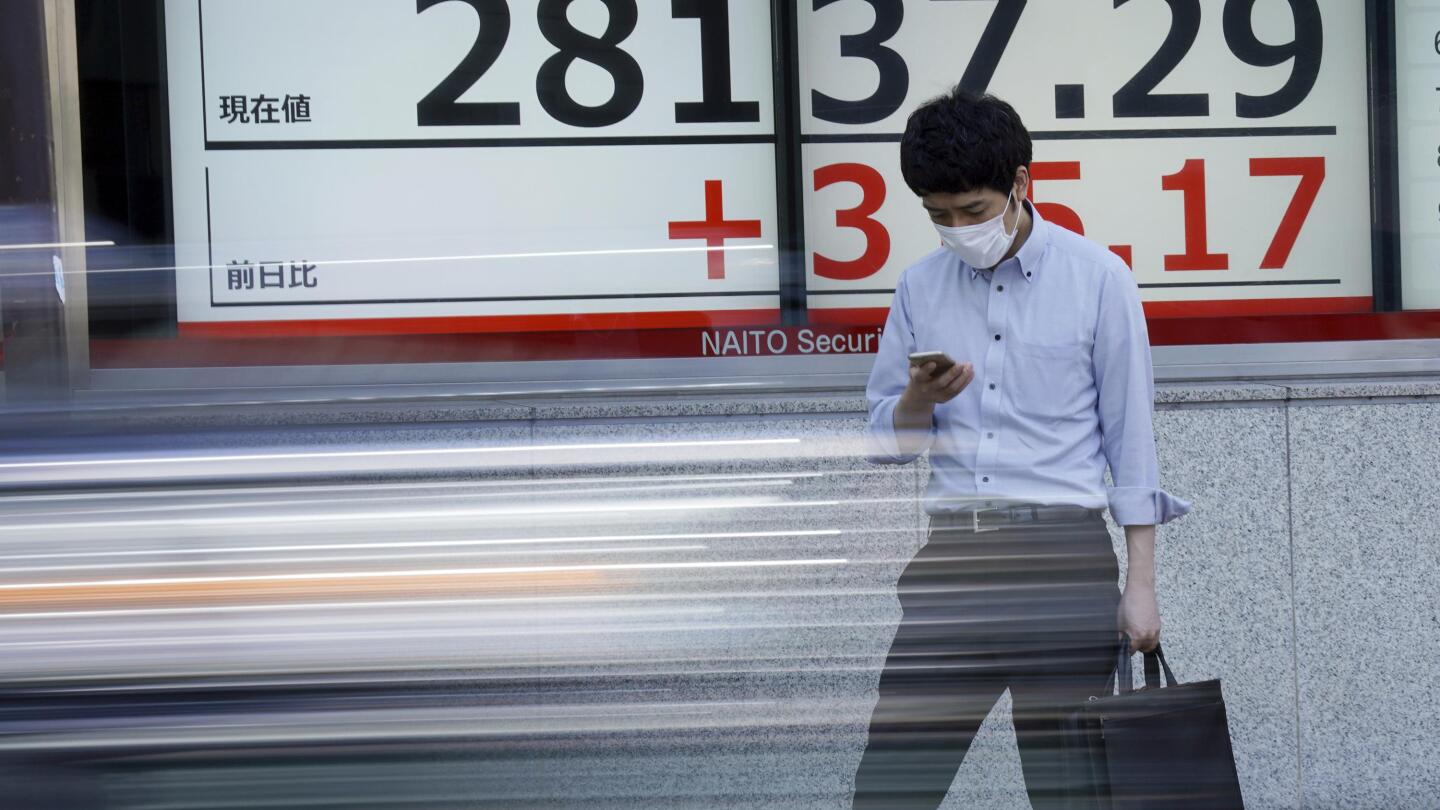
Asian markets experienced a downturn on Wednesday, despite a robust recovery on Wall Street led by technology and banking sectors. Japan’s Nikkei 225 dropped 1% to 27,544.06, while South Korea’s Kospi fell 1.0% to 2,932.15. Australia’s S&P/ASX 200 declined 0.5% to 7,209.40, and Hong Kong’s Hang Seng slid nearly 0.9% to 23,899.34. Trading in Shanghai was suspended due to national holidays. Persistent concerns over COVID-19 infections and China’s economic slowdown, particularly the debt crisis of China Evergrande Group, have kept investors cautious. Tan Boon Heng of Mizuho Bank noted that risks from China’s credit issues and real estate sector remain unresolved. In Japan, the new finance minister’s commitment to traditional economic policies has provided some reassurance, though Fitch Ratings maintains a negative outlook due to pandemic-related macroeconomic risks. Meanwhile, New Zealand’s central bank raised interest rates for the first time in seven years, signaling a shift from pandemic-era support measures. Wall Street saw gains, with the S&P 500 rising 1.1%, the Dow Jones Industrial Average up 0.9%, and the Nasdaq climbing 1.3%. Despite recent volatility, analysts anticipate strong corporate earnings in the upcoming third-quarter reports, which could bolster market confidence. Energy markets saw slight declines, with U.S. crude dropping to $78.81 a barrel and Brent crude falling to $82.48 a barrel. The U.S. dollar strengthened against the Japanese yen and the euro.