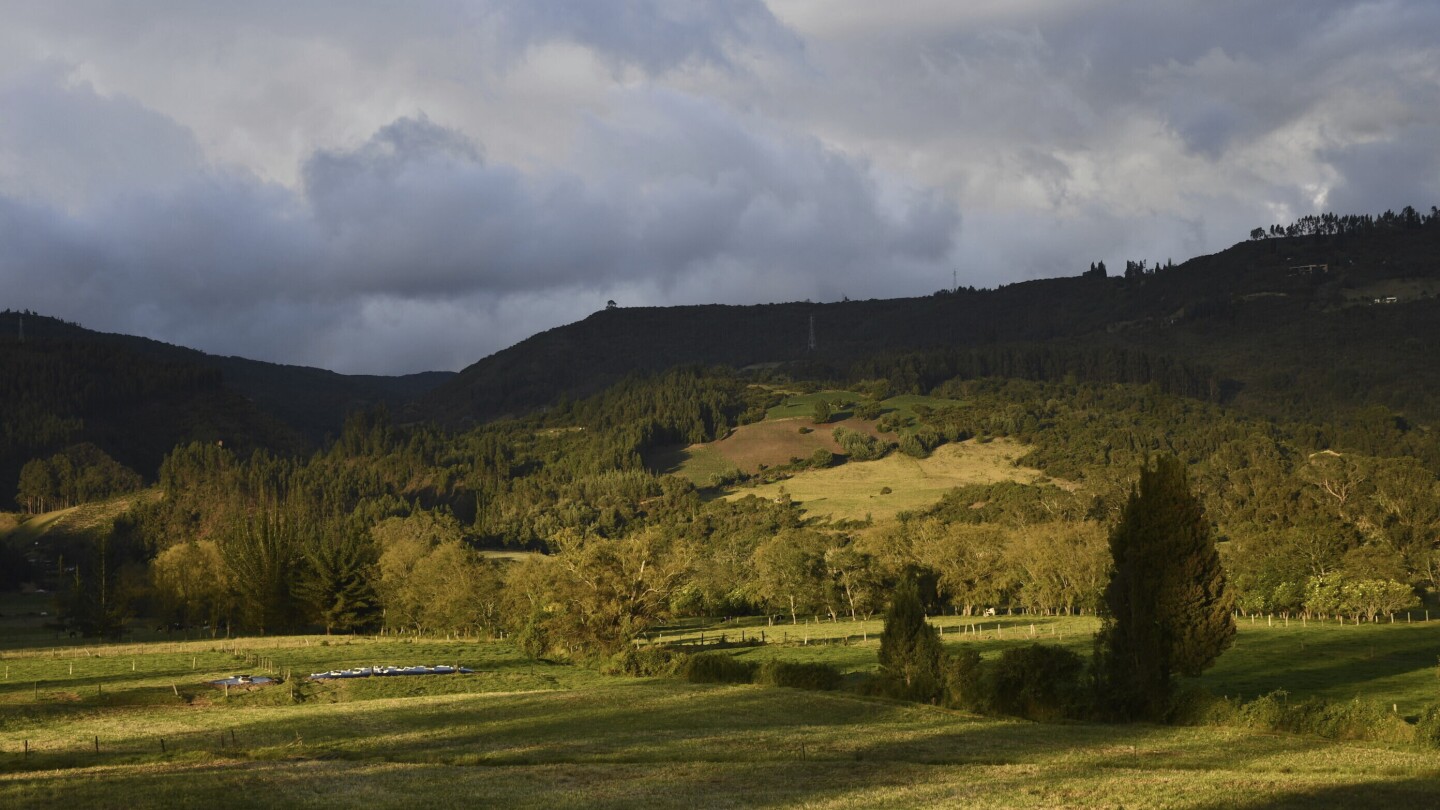
In a groundbreaking discovery, scientists have uncovered evidence of a previously unknown pod of ancient hunter-gatherers who thrived approximately 6,000 years ago near the land bridge connecting North and South America. This revelation, published in the journal *Science Advances*, sheds new light on the complex migration patterns of early humans across the Americas. The group, identified through ancient DNA analysis, inhabited the high plateaus of present-day Bogotá, Colombia—a strategic location where the two continents converge. Intriguingly, this ancient population does not share close genetic ties with either ancient Native Americans in North America or ancient or modern South Americans, leaving their exact place in the human family tree a mystery. Archaeologist Andre Luiz Campelo dos Santos of Florida Atlantic University, who was not involved in the study, remarked, ‘Up to this point, we didn’t believe there was any other lineage that would appear in South America. This is unexpected.’ By 4,000 years ago, this group had vanished, replaced by a genetically distinct population. The reasons for their disappearance remain unclear, with possibilities ranging from assimilation into a larger group to complete displacement. Further genetic analysis in South America could help determine whether traces of this ancient lineage persist in modern populations. Study author Andrea Casas-Vargas of the National University of Colombia emphasized the significance of the region, calling it ‘the gateway to the South American continent.’ This discovery underscores the importance of the land bridge in the migration and settlement of ancient peoples across the Americas.
Ancient DNA reveals a new group of people who lived near land bridge between the Americas