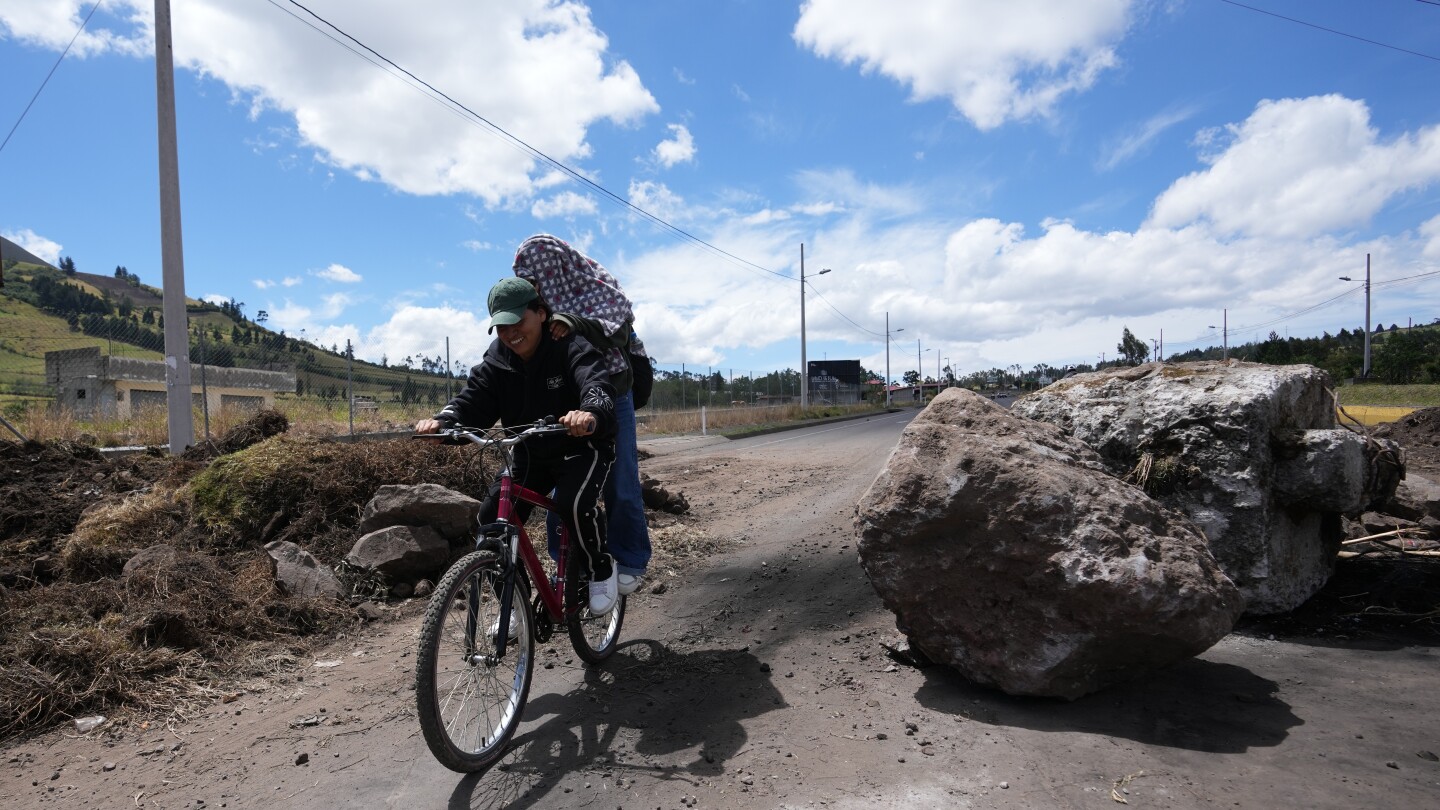
QUITO, Ecuador — The streets of Ecuador’s capital, Quito, became a battleground on Sunday as opposing factions rallied in support of and against President Daniel Noboa. The demonstrations unfolded just hours after the government imposed a state of emergency in 10 provinces, citing “serious internal unrest.” The unrest stems from the removal of a fuel subsidy, which has driven diesel prices up from $1.80 to $2.80 per gallon, sparking widespread outrage among the nation’s largest Indigenous group. The protests, which began two weeks ago, have intensified, with anti-government demonstrators chanting slogans like “Diesel goes up, everything goes up” and “Out with Noboa.” Pro-government supporters, however, outnumbered their counterparts at a popular park in Quito, where tensions escalated. Police intervened with tear gas to disperse protesters attempting to breach security cordons, though no injuries or arrests were reported. The state of emergency, effective from Sunday midnight, restricts freedom of assembly but permits peaceful demonstrations. The Confederation of Indigenous Nationalities of Ecuador condemned the decree, accusing Noboa of waging a “war policy” against legitimate demands and urging international human rights organizations to monitor the situation. The protests also called for the release of detainees, including 13 individuals accused of terrorism. Meanwhile, pro-government activities, such as an art fair in El Arbolito Park, proceeded under heavy police and military protection. Government officials, including Minister Zaida Rovira, emphasized Ecuador’s exhaustion with violence, while President Noboa reaffirmed his stance on the fuel subsidy cut, vowing to treat violent protesters as criminals.
Protesters rally for and against Ecuador’s president as emergency takes effect in 10 provinces