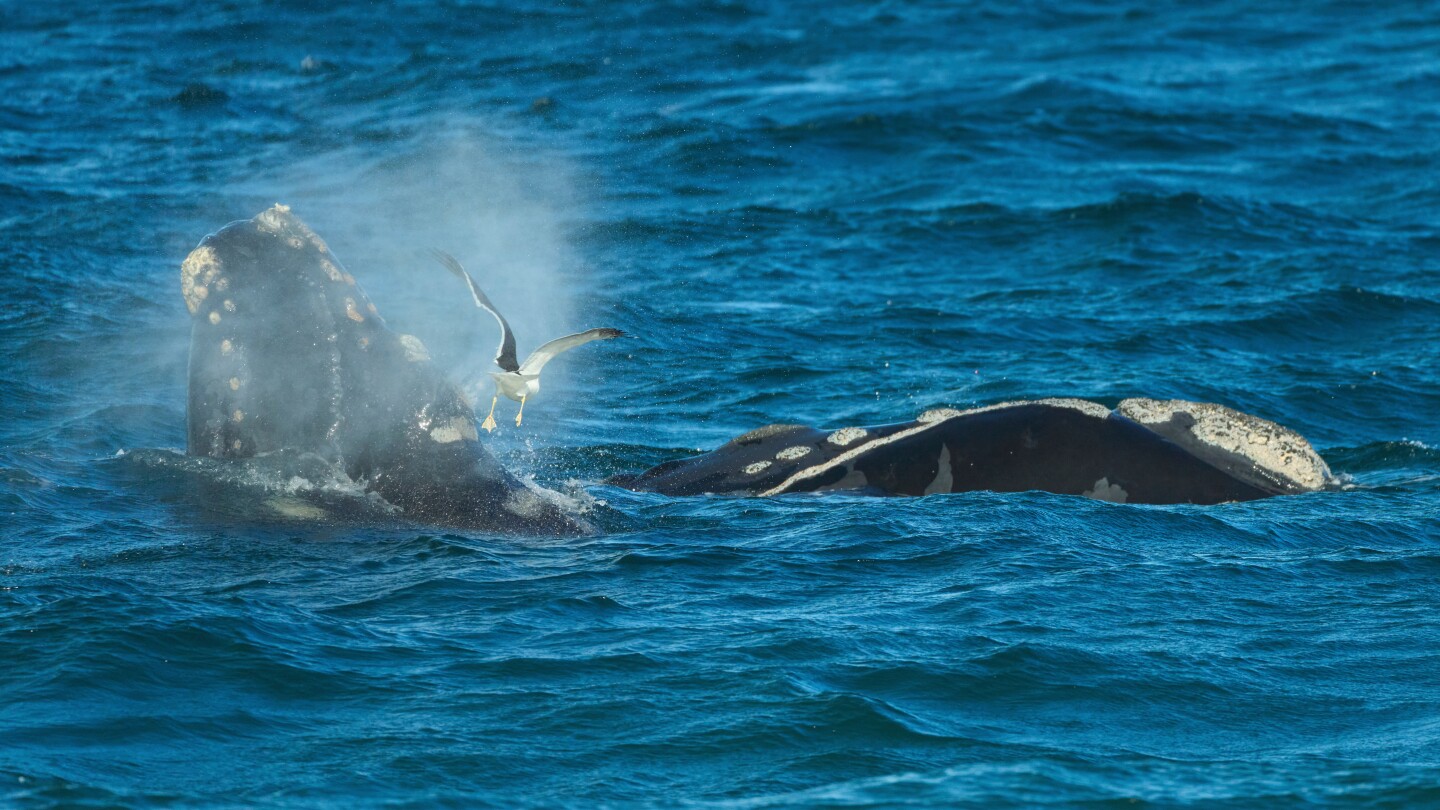
PENÍNSULA VALDÉS, Argentina — Southern right whales, once teetering on the edge of extinction, are now flourishing in the waters off Argentina’s Patagonian coast, captivating tourists and conservationists alike. Peninsula Valdés, a globally significant marine mammal conservation site in the Chubut province, serves as a critical breeding ground for these majestic creatures, alongside elephant seals and sea lions. This year, the region has witnessed an unprecedented surge in whale sightings, with over 2,000 individuals spotted during the peak whale-watching season from August to September. The actual number is believed to be even higher, according to scientists. The Southern right whale population, which plummeted to around 600 due to rampant hunting in the last century, has now rebounded to approximately 4,700 in the Peninsula Valdés area. Tourists like Tino Ventz, a German visitor, have described the experience as unparalleled. “I’ve seen whales in Canada and California, but this was the best and probably the largest number of whales I’ve ever seen,” Ventz remarked. The whales’ acrobatic displays, particularly breaching, have left an indelible mark on observers. Some tourists prefer to watch from the shore, such as at El Doradillo Park in Puerto Madryn, where whales often linger close to the coast with their calves. Biologist Santiago Fernández, part of a long-term research project, noted that the whale population has been growing at an annual rate of 3% since 1999. However, this expansion brings new challenges, as whales increasingly encounter human-related hazards like fishing nets and boat propellers. Ongoing research, including the “Following Whales” project, aims to better understand their migration patterns and mitigate these risks.
Southern right whales awe admirers in Patagonia after coming back from brink of extinction