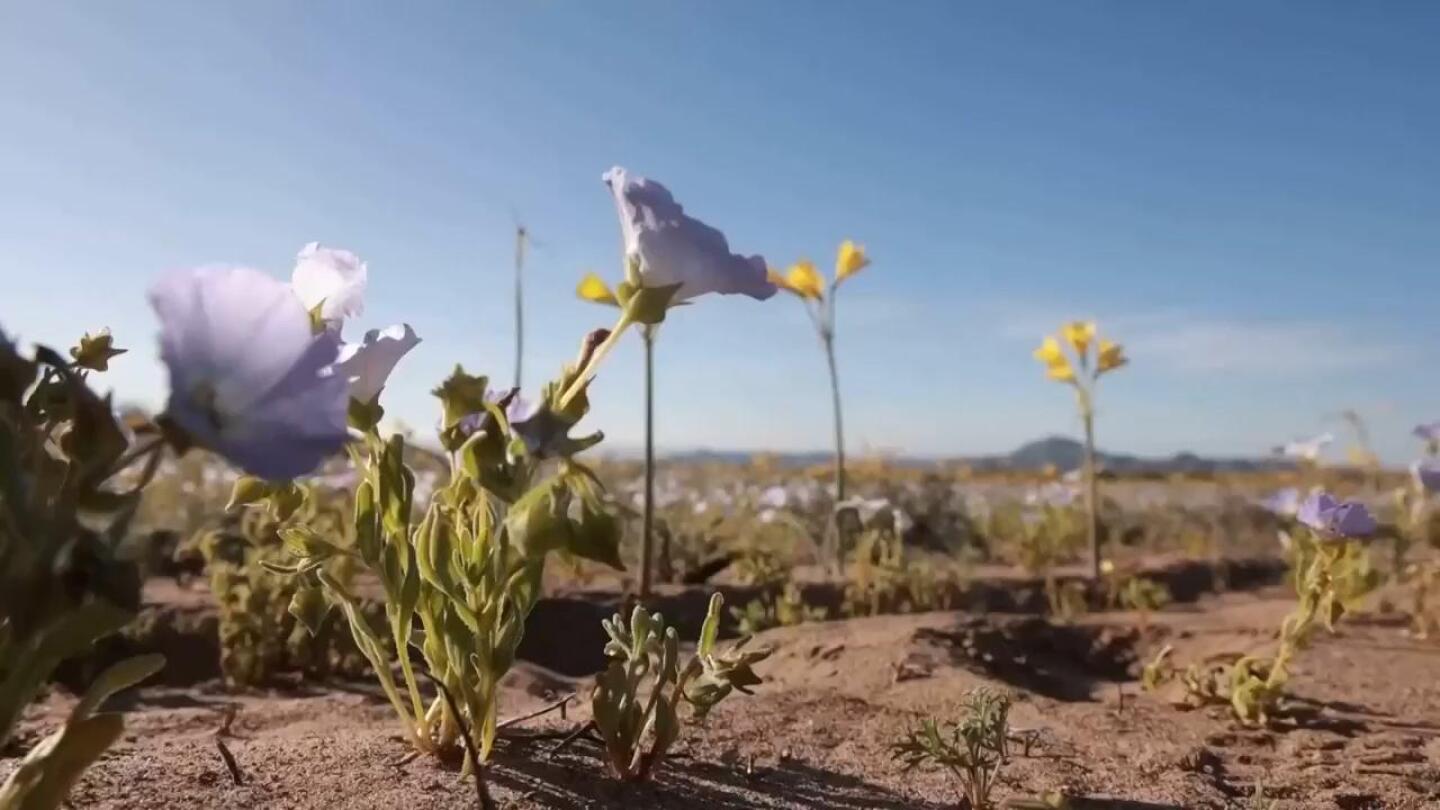
The Atacama Desert, renowned as the driest nonpolar desert on Earth, has recently undergone a breathtaking transformation. Unusual winter rains have triggered a rare phenomenon, turning the arid landscape into a vibrant tapestry of wildflowers. This extraordinary bloom, characterized by hues of fuchsia, purple, yellow, red, blue, and white, has captivated both locals and tourists alike.
Experts attribute this floral spectacle to one of the wettest years in recent memory for the Atacama. Some high-altitude regions received up to 60 millimeters (2.3 inches) of rain during July and August, providing the necessary moisture for dormant seeds to germinate. Víctor Ardiles, chief curator of botany at Chile’s National Museum of Natural History, explained that over 200 flower species lie dormant in the desert’s rocky soil, awaiting the right conditions to bloom. ‘When certain moisture thresholds are met, the seeds activate, grow, and then bloom,’ Ardiles noted.
However, the process is delicate. Factors such as water, temperature, daylight, and humidity must align perfectly for the seeds to flourish. ‘Not all the seeds will germinate,’ Ardiles added. ‘Some will remain waiting, while others will contribute to the next generation.’
The bloom has drawn visitors from across Chile, including Maritza Barrera, who traveled nearly six hours with her children to witness the spectacle in Llanos de Challe National Park. ‘It’s more stunning than I could have imagined,’ she said. Recognizing the ecological significance of this phenomenon, Chilean President Gabriel Boric established the Desert Bloom National Park in 2023, protecting 220 square miles (570 square kilometers) of flower fields along the Pan-American Highway.
This fleeting natural wonder, which typically lasts until November, serves as a reminder of the desert’s resilience and beauty. ‘Nowhere on Earth does this phenomenon occur like it does here in Chile,’ Ardiles remarked.
Isabel DeBre contributed to this report from Buenos Aires, Argentina.