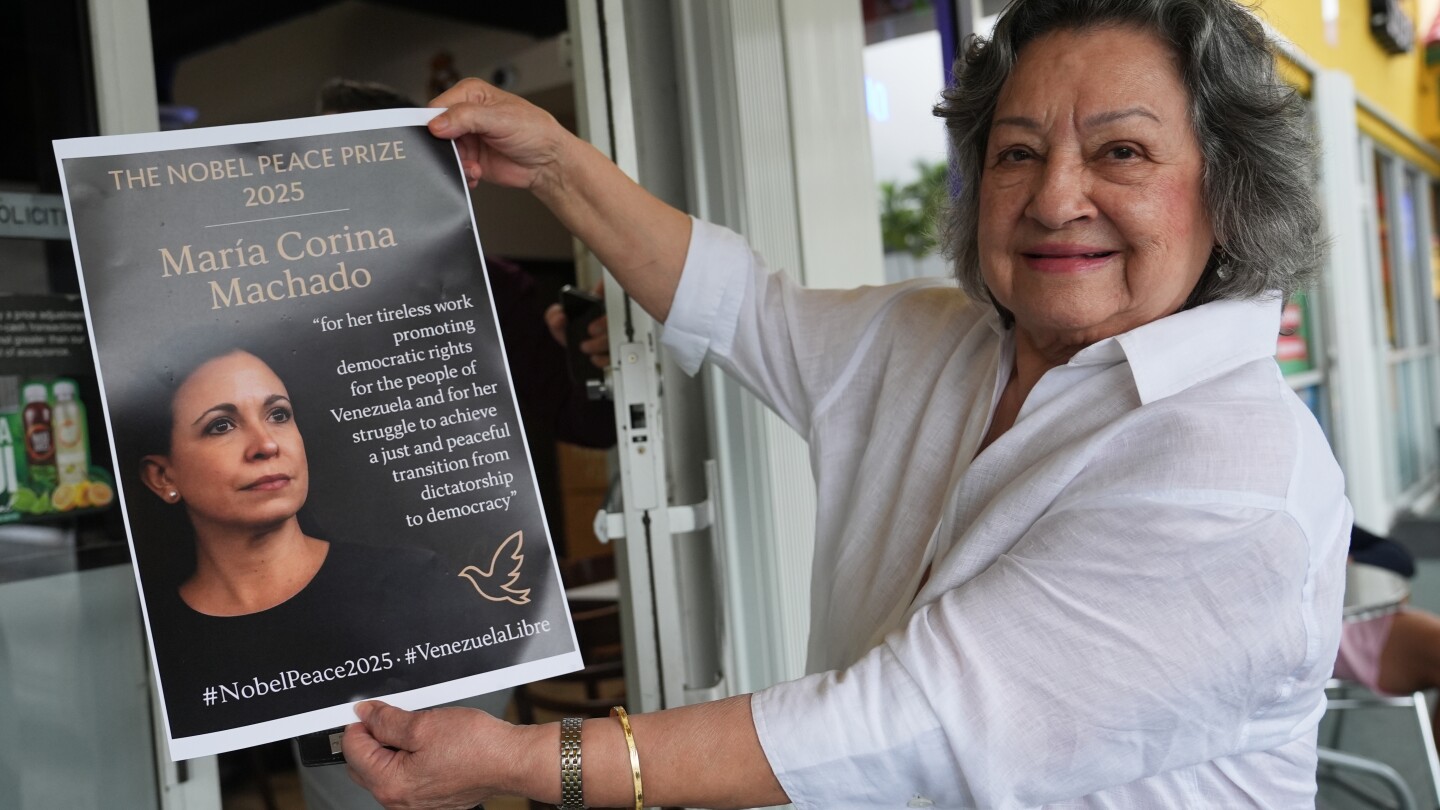
In Doral, Florida, often referred to as ‘Little Venezuela,’ the Venezuelan community has greeted the news of opposition leader Maria Corina Machado winning the Nobel Peace Prize with a mix of pride and apprehension. While the award recognizes her relentless fight for democracy in Venezuela, it offers little solace to the thousands of Venezuelans facing deportation threats in the United States. The Trump administration’s decision to terminate Temporary Protected Status (TPS) and humanitarian parole programs has placed over 700,000 Venezuelans at risk of being deported. Hundreds have already been sent to El Salvador, accused of being members of the Tren de Aragua gang and allegedly ‘invading’ the U.S. This policy shift comes amid a mass exodus of Venezuelans fleeing economic and political instability in their homeland. According to the United Nations High Commissioner for Refugees, more than 7.7 million Venezuelans have left since 2014, marking the largest migration crisis in Latin America’s recent history. While Machado’s Nobel Prize is celebrated as a symbol of hope for Venezuela’s democratic future, many in the diaspora fear it will not translate into tangible protections for those living in the U.S. Machado, who has aligned herself with President Trump’s policies on Venezuela, has not publicly expressed concerns about the termination of TPS, despite earlier promises to seek alternative protections for migrants. Frank Carreño, a prominent figure in the Venezuelan American community, noted that Machado views the U.S. government as an ally in her fight against Nicolás Maduro’s regime rather than a protector of Venezuelan migrants. Meanwhile, Venezuelan refugees like José Antonio Colina and Iris Wilthew expressed hope that the award would bolster efforts to remove Maduro from power, even as they grapple with the uncertainty of their own futures in the U.S.
A look at how Venezuelans in the US are reacting to Maria Corina Machado’s Nobel Prize win