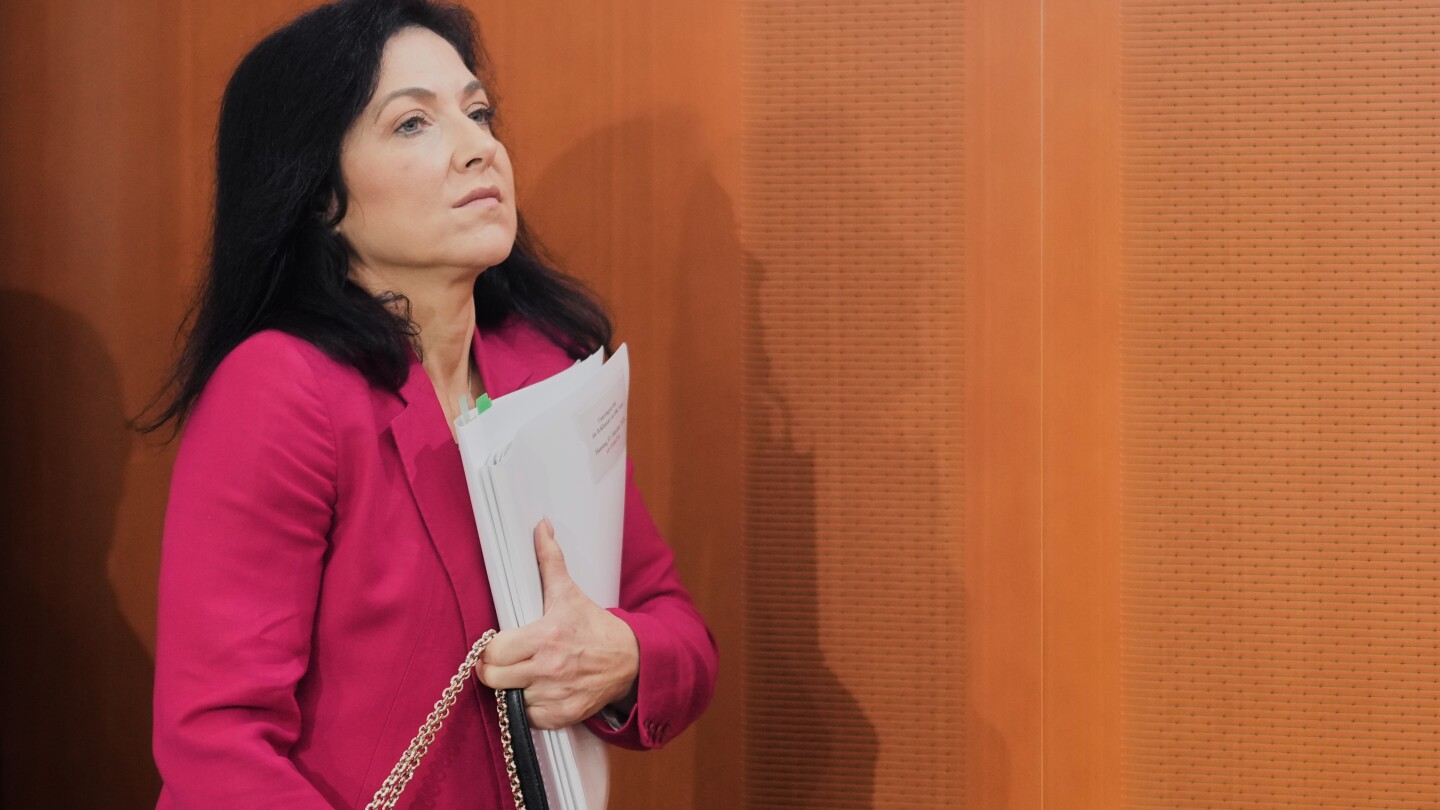
Germany’s newly formed government has unveiled its economic projections, anticipating a modest growth rate of 0.2% for the current year, with forecasts of 1.3% in 2026 and 1.4% in 2027. This outlook marks a slight improvement over the previous administration’s April forecast, which predicted zero growth for 2025 and 1% expansion in 2026. The German economy, which has contracted over the past two years and stagnated for an extended period, is now a focal point for Chancellor Friedrich Merz’s administration, which assumed office in early May. Economy Minister Katherina Reiche emphasized the urgency of addressing competitiveness and innovation, stating, ‘We need to act, now.’ She highlighted that a significant portion of the projected growth hinges on swift government spending, which requires accelerated planning and approval processes—areas where Germany has historically lagged. Reiche also stressed the need for comprehensive reforms, including reducing energy costs, fostering private investment, lowering the tax burden, dismantling bureaucratic hurdles, opening markets, and enabling innovation. To bolster economic revitalization, Merz’s government has initiated a program to encourage investment and established a 500 billion-euro ($584 billion) fund aimed at modernizing Germany’s aging infrastructure over the next 12 years. Additionally, the administration has pledged to streamline regulatory processes and expedite the country’s digital transformation. In a show of confidence, a consortium of companies committed in July to invest at least 631 billion euros in Germany over the next three years, including some previously planned investments. Despite Germany’s historical dominance in global trade, particularly in engineered products like industrial machinery and luxury cars, the nation faces mounting challenges, including competition from Chinese manufacturers and external risks such as tariffs and trade threats from the U.S. under former President Donald Trump.