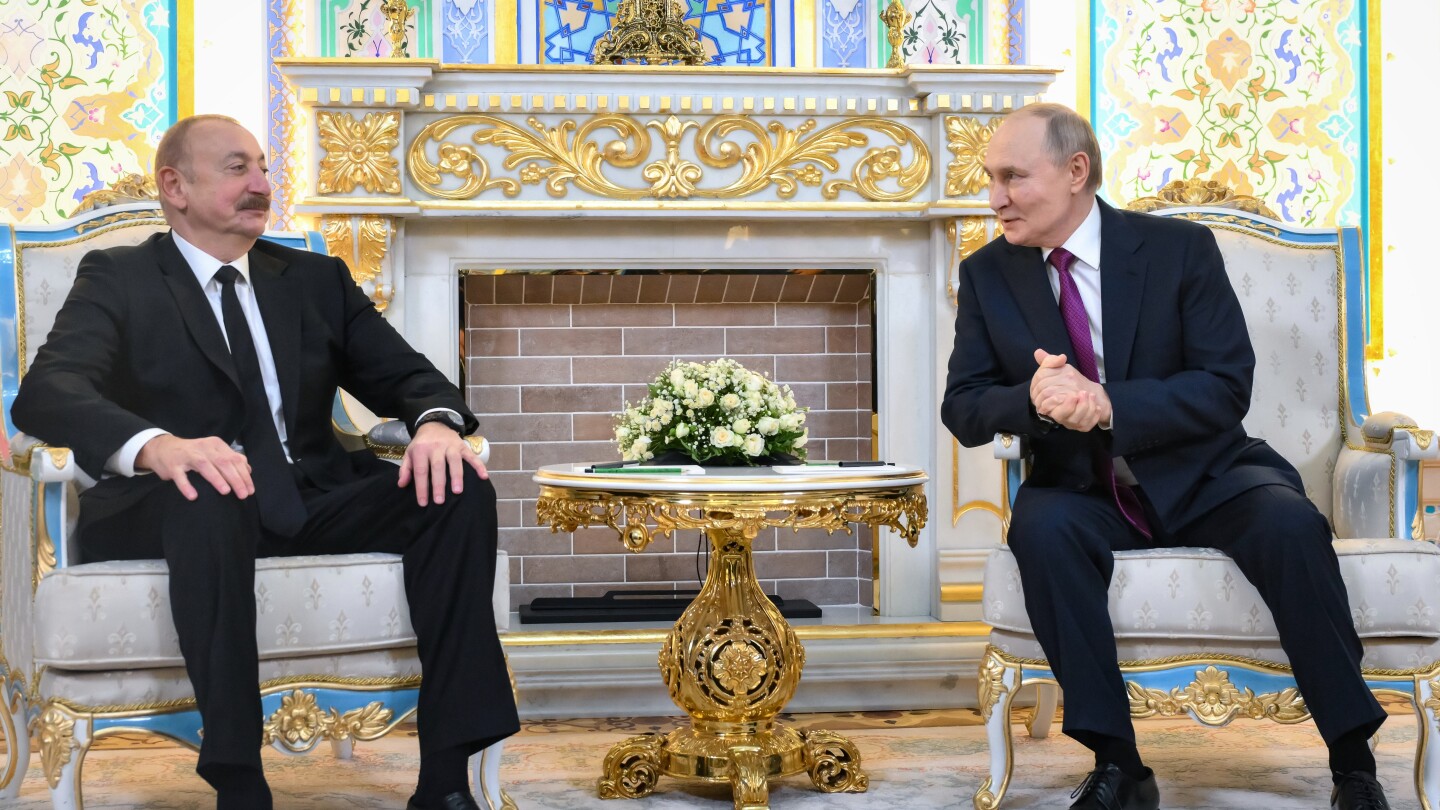
In a significant development, Russian President Vladimir Putin publicly acknowledged on Thursday that Russia’s air defense systems were responsible for the downing of an Azerbaijani jetliner in December 2024, which resulted in the tragic deaths of 38 individuals. This marks Putin’s first explicit admission of culpability, aimed at de-escalating tensions between Russia and Azerbaijan. The incident occurred when Russian air defenses, targeting a Ukrainian drone, mistakenly fired missiles that exploded near the Azerbaijan Airlines plane as it approached Grozny, the capital of Russia’s Chechen Republic. Ukrainian drones have frequently penetrated Russian airspace, prompting heightened defensive measures. Speaking during a meeting with Azerbaijani President Ilham Aliyev in Dushanbe, Tajikistan, where both leaders were attending a summit of former Soviet nations, Putin vowed to hold those responsible accountable and provide compensation to the victims’ families. Azerbaijani officials had previously attributed the crash to accidental Russian fire, which forced the Embraer 190 jet to attempt an emergency landing in western Kazakhstan, where it ultimately crashed. Putin had initially expressed regret for the “tragic incident” but refrained from accepting full responsibility, drawing criticism from Aliyev for Moscow’s perceived attempts to downplay the event. The crash has strained the historically cordial relations between Russia and Azerbaijan, further complicated by recent incidents involving ethnic Azerbaijanis in Russia and the arrests of Russians in Azerbaijan. Putin attributed the missile strike to a “technical malfunction,” revealing that the missiles detonated just 10 meters from the passenger jet. He emphasized Russia’s commitment to providing compensation and conducting a legal review of the officials involved. Aliyev expressed gratitude for Putin’s personal oversight of the investigation. The incident has underscored the delicate nature of Russia-Azerbaijan relations, particularly as Azerbaijan’s ally Turkey has become a crucial economic partner for Russia amid Western sanctions. Azerbaijan serves as a vital transport corridor for Russian trade with Iran and the Middle East, while also importing Russian energy resources and exporting its own hydrocarbons to the West. Russia, in turn, is a major market for Azerbaijani agricultural exports and hosts a significant Azerbaijani diaspora. Both leaders signaled their intent to restore and strengthen bilateral ties, with Putin expressing hope for renewed cooperation and Aliyev highlighting a “broad and positive” agenda. During his state visit to Tajikistan, Putin also sought to reinforce Russia’s strategic partnership with Central Asian nations, emphasizing military, economic, and humanitarian collaboration.
Putin says Russian air defenses were to blame for Azerbaijani jet’s crash last year, killing 38