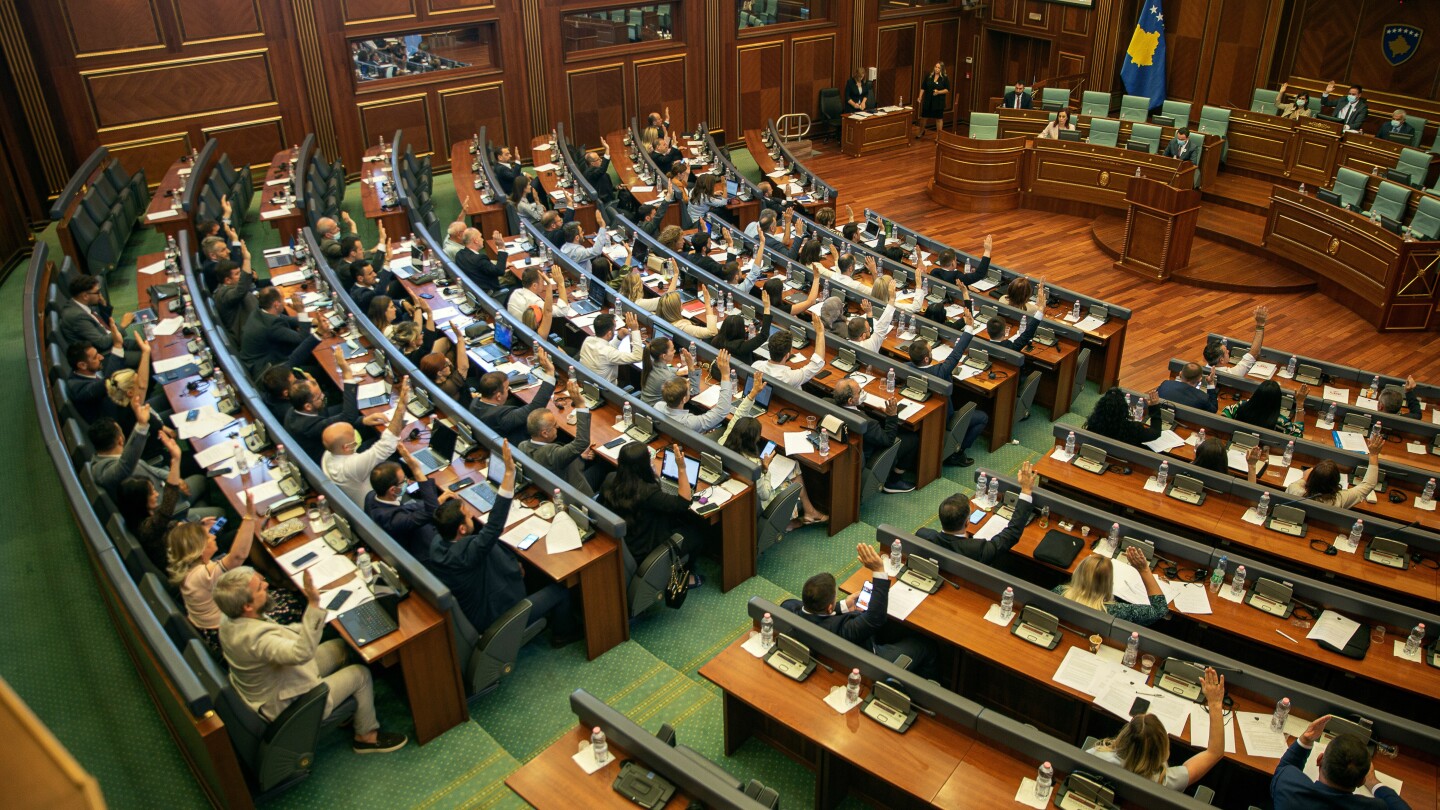
In a significant development, Kosovo’s Parliament resolved an eight-month political impasse on Friday by electing its full leadership, including a representative from the ethnic Serb minority. This crucial step paves the way for the formation of a new government. While the Parliament had already chosen its top officials in August, including a speaker from the left-wing Self-Determination Movement (Vetevendosje!), it had previously failed to elect a Serb minority representative, a constitutional requirement. Nenad Rasic, from the small ethnic Serb party For Freedom, Justice and Survival, was elected as deputy speaker with 71 votes in favor. However, all nine lawmakers from the main Serb party, Srpska Lista, voted against, and 24 members from two smaller right-wing ethnic Albanian parties abstained. Srpska Lista, which holds nine of the ten seats reserved for the Serb minority, is closely aligned with Serbian President Aleksandar Vucic and his government in Belgrade. Many Kosovo Albanians view this relationship as a potential catalyst for ethnic tensions. The breakthrough came after a Constitutional Court ruling on Wednesday, which urged lawmakers to resolve the stalemate within 12 days. The prolonged deadlock began after inconclusive elections on February 9, where Vetevendosje!, led by acting Prime Minister Albin Kurti, won 48 out of 120 seats, falling short of the 61 needed to govern alone. Kurti, as the leader of the largest party, now has 15 days to form a Cabinet, which must then gain parliamentary approval. If he fails twice, Kosovo could face early elections. A new government is urgently needed to address economic challenges and restart EU-facilitated talks on normalizing relations with Serbia. Kosovo also faces municipal elections on October 12. The 1998-1999 Kosovo War, which claimed around 11,400 lives, mostly ethnic Albanians, ended with a 78-day NATO air campaign that forced Serbian forces out. Kosovo declared independence from Serbia in 2008, but its statehood remains unrecognized by Serbia, Russia, and China, keeping it a focal point of regional tensions.
Kosovo lawmakers break 8-month deadlock with election of an ethnic Serb to the leadership team