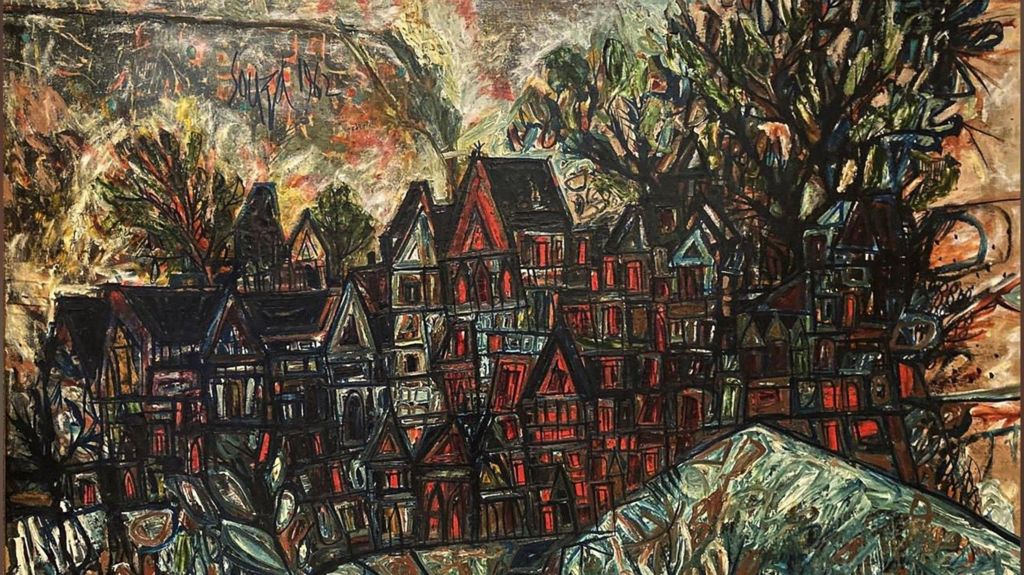
The Indian art market is experiencing an unprecedented surge, as evidenced by the recent Saffronart auction in Delhi, where Vasudeo Santu Gaitonde’s untitled 1971 painting sold for a staggering $7.57 million, nearly triple its estimated value. The auction, which achieved a total of $40.2 million, marked the highest-ever total for South Asian art and set a new benchmark for the industry. Gaitonde’s work now stands as India’s second most expensive painting, following closely behind MF Husain’s ‘Untitled (Gram Yatra)’, which fetched $13.8 million earlier this year. The momentum continued as Sotheby’s sold Francis Newton Souza’s ‘Houses in Hampstead’ for a price just below Gaitonde’s piece, making it India’s third most expensive painting. This record-breaking season reflects a broader trend in the Indian art market, which has grown exponentially from $2 million at the turn of the century to an estimated $338 million today, with projections of reaching $1.1 billion by 2030. The boom is fueled by rising wealth among India’s elite and the diaspora, who view art as both a status symbol and a generational investment. Recent tax cuts, reducing the goods and services tax (GST) on art from 12% to 5%, have further bolstered the market. Despite a global slump in art sales, India’s art scene thrives, driven by a surge in art fairs, galleries, and exhibition spaces. Established modernists like Husain, Souza, Gaitonde, and Raza dominate top sales, but auctioneers note that rising prices are also lifting demand for previously overlooked artists. The market’s sustainability is further supported by growing recognition of Indian artists and increased investment in public engagement spaces, such as the Kiran Nadar Museum of Art’s new Delhi building, set to open in 2026. Non-profits like Khoj are also playing a crucial role in nurturing emerging artists, ensuring the ecosystem’s long-term growth.