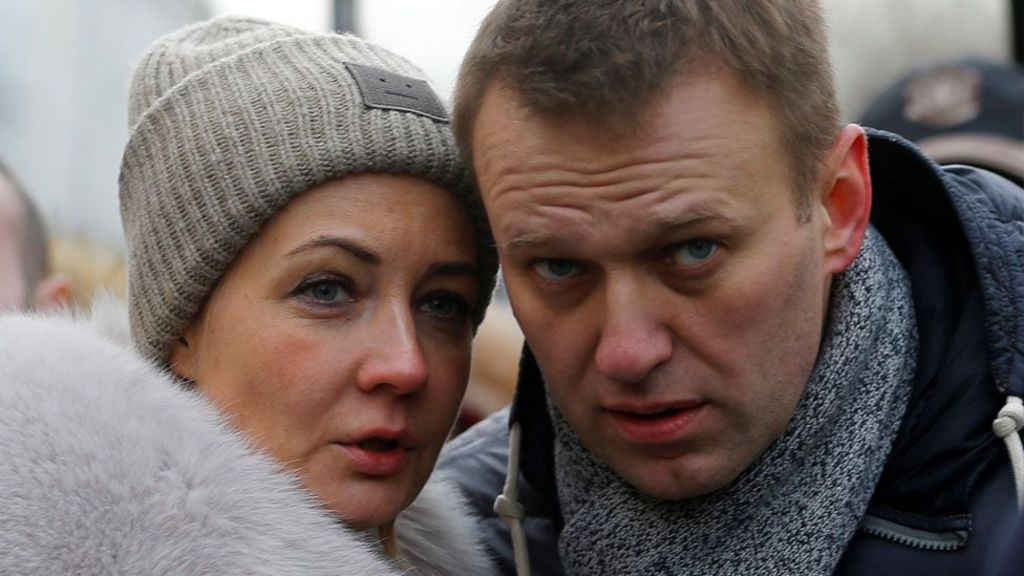
Yulia Navalnaya, the widow of the late Russian opposition leader Alexei Navalny, has publicly accused the Kremlin of orchestrating her husband’s death through poisoning. In a compelling video statement shared on social media, Navalnaya revealed that independent laboratories in two countries had analyzed smuggled biological samples, concluding that Navalny was murdered. While she did not disclose specific details about the poison or the laboratories involved, she urged them to release their findings publicly, despite what she described as ‘political considerations’ preventing transparency.
Navalny, a prominent anti-corruption activist and fierce critic of President Vladimir Putin, died suddenly on February 16, 2024, while serving a prison sentence in an Arctic penal colony. His death came three years after he was poisoned with a Novichok nerve agent in 2020, an incident that led to his treatment in Germany and subsequent arrest upon his return to Russia. Navalny’s supporters and his Anti-Corruption Foundation (FBK) have consistently alleged that the Russian government was complicit in his demise.
Navalnaya recounted her husband’s final days, citing testimonies from penal colony employees. She described how Navalny fell ill during a walk, suffered convulsions, and vomited before collapsing in his cell. Despite his visible distress, an ambulance was not called until 40 minutes later, and he died shortly thereafter. Prison authorities initially attributed his death to ‘sudden death syndrome,’ while state investigators later cited a medical condition and arrhythmia.
Navalny’s associates have shared previously unseen images of his cell and the exercise yard where he spent his last moments. Navalnaya, who faces potential arrest herself, vowed to continue seeking justice, declaring, ‘I affirm that Vladimir Putin is guilty of killing my husband.’ She also emphasized Navalny’s role as a symbol of hope for a better future in Russia, a sentiment echoed by the thousands who attended his funeral in Moscow despite government warnings.
The Kremlin has remained largely silent on the matter, with spokesman Dmitry Peskov claiming unawareness of Navalnaya’s statements. President Putin briefly acknowledged Navalny’s death a month later, describing it as a ‘sad event’ and revealing that a prisoner swap involving Navalny had been considered but was ultimately abandoned. Navalny’s death has left a void in Russia’s opposition movement, with many of his associates either imprisoned or in exile, and civil society increasingly suppressed under punitive laws enacted after Russia’s invasion of Ukraine in 2022.