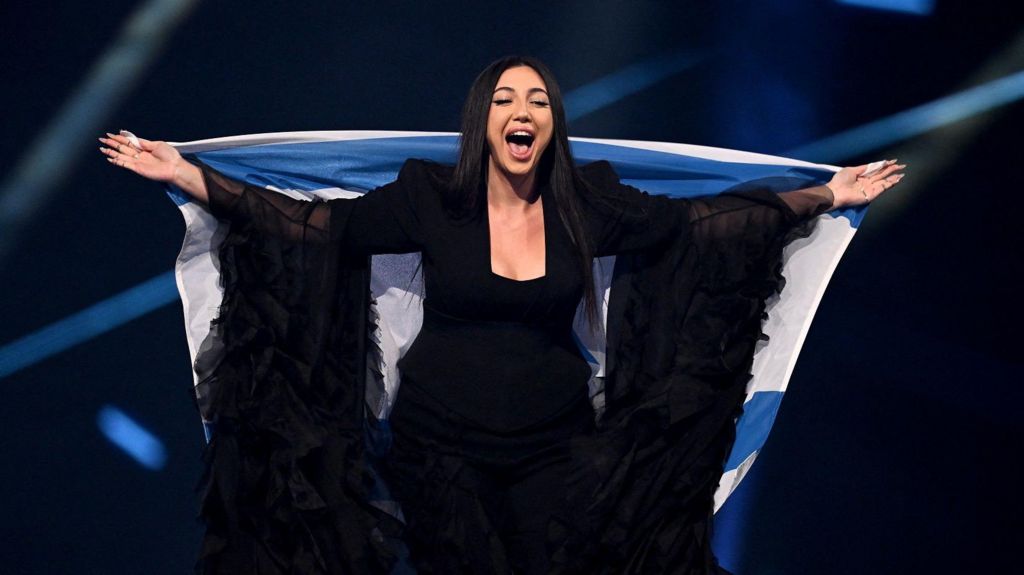
The Eurovision Song Contest, renowned for its vibrant music and cultural celebration, is now embroiled in political controversy as debates intensify over Israel’s participation in the 2025 event. BBC Director General Tim Davie, addressing the UK Parliament’s Public Accounts Committee, emphasized that Eurovision ‘has never been about politics’ and should remain a unifying platform for music and culture. However, concerns over Israel’s actions in Gaza have prompted broadcasters from Ireland, the Netherlands, Slovenia, Iceland, and Spain to threaten a boycott if Israel is allowed to compete. Spain’s Culture Minister Ernest Urtasun echoed Prime Minister Pedro Sánchez’s earlier calls for Israel’s exclusion, citing accusations of genocide and imposing measures such as an arms embargo. Israel’s Foreign Minister Gideon Saar countered, labeling Sánchez’s administration as antisemitic and criticizing its rhetoric. The European Broadcasting Union (EBU), which oversees Eurovision, is set to make a final decision in December. The controversy mirrors the 2022 expulsion of Russia following its invasion of Ukraine, which the EBU justified as necessary to preserve the contest’s integrity. Meanwhile, Austria prepares to host next year’s event in Vienna, following Austrian singer JJ’s victory in 2024. Amidst the political tensions, Eurovision’s history of subtle political messaging continues, with past performances like Ukraine’s 2016 winning song ‘1944’ addressing historical injustices. As the EBU navigates this complex issue, the future of Eurovision as a non-political celebration hangs in the balance.