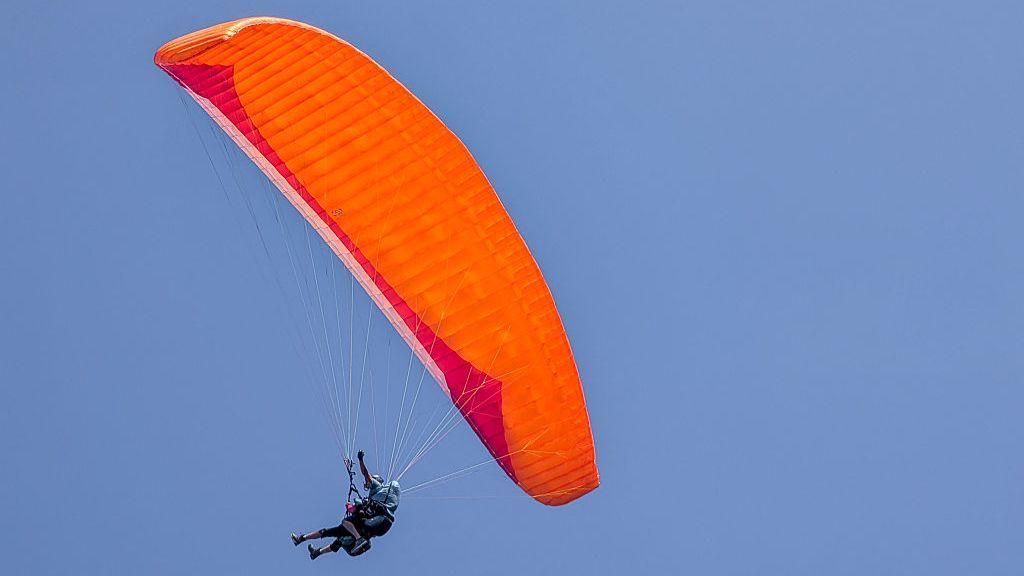
In a chilling escalation of Myanmar’s ongoing civil war, paramotor attacks have surged in recent months, transforming these low-tech aerial devices into instruments of terror. The latest incident occurred during a Thadingyut festival in Chang U township, Sagaing region, where nearly 100 people had gathered to celebrate the full moon and protest against the military junta. The festive atmosphere turned to horror as a paramotor—a motorized paraglider—dropped bombs on the crowd, killing at least 26 people and injuring dozens more. Witnesses described the attack as ‘mass murder,’ with one survivor recounting the trauma of believing his lower body had been severed. This attack is part of a broader pattern of paramotor strikes that have become a grim hallmark of Myanmar’s conflict. These devices, which can carry up to 160kg of payload, including 120mm bombs, are cheap, easy to operate, and require minimal pilot training. Their low-altitude flight capability allows them to strike with precision, often under the cover of darkness. Military sources reveal that paramotors are produced at Myanmar’s state-owned Heavy Industry Number 10, making them a cost-effective alternative to conventional aircraft. However, their slow speed, vulnerability to ground fire, and inability to operate in severe weather limit their effectiveness. Despite these drawbacks, their use reflects the junta’s strategy of low-cost aerial dominance amid resource constraints. The conflict, which began with a military coup in 2021, has displaced millions and claimed thousands of lives. China’s increasing support for the junta, including arms sales and drone technology, has further complicated the situation. As paramotor attacks target civilian gatherings, the humanitarian crisis deepens, leaving residents with few defenses beyond makeshift bunkers. This new wave of terror underscores the evolving nature of warfare in Myanmar, where innovation meets brutality.