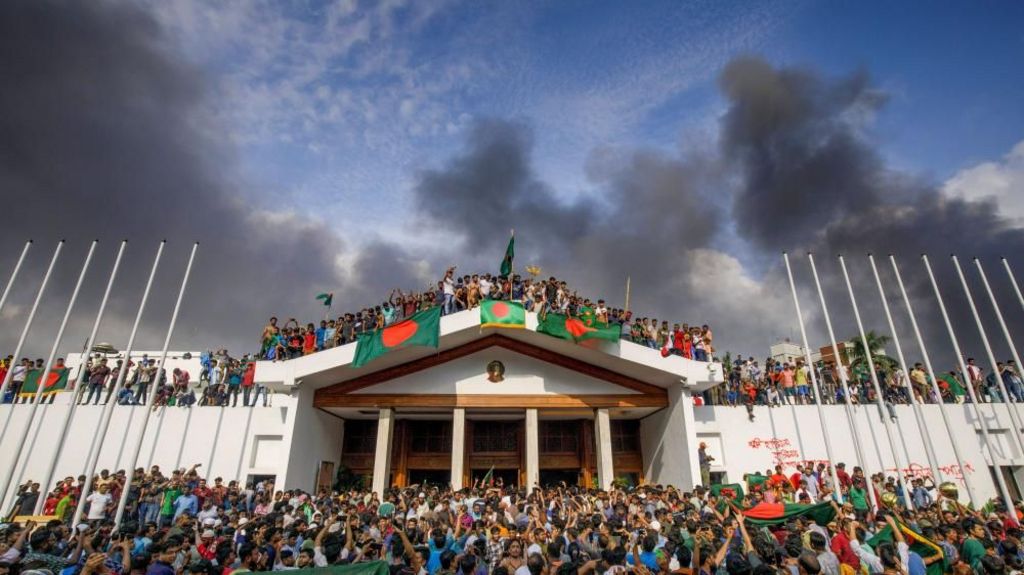
In a landmark announcement, Tarique Rahman, the acting chairman of the Bangladesh Nationalist Party (BNP), has declared his intention to return to Bangladesh after two decades abroad to contest the upcoming elections. Speaking in his first face-to-face interview in nearly 20 years with BBC Bangla, Rahman stated, ‘The time has come, God willing, I will return soon.’ The elections, scheduled for February, are widely regarded as one of the most consequential in Bangladesh’s history, following the mass protests in 2024 that ousted three-time Prime Minister Sheikh Hasina. Her Awami League party is unlikely to participate due to ongoing legal proceedings. Rahman, the son of ailing BNP leader Khaleda Zia, is expected to lead the country if the BNP secures victory. The 2024 unrest, which saw up to 1,400 deaths according to UN investigators, marked a turning point in Bangladeshi politics. Hasina, now in exile in India, faces trial in absentia for alleged crimes against humanity. Rahman, who was cleared of all charges after Hasina’s ousting, emphasized the importance of the upcoming elections, stating, ‘This is an election for which people had been waiting, I cannot keep myself away during this time.’ The interim government, led by Nobel laureate Prof Muhammad Yunus, has banned the Awami League from political activities until the trial concludes. While the BNP has criticized the interim government for delays in announcing the election date, both share a common stance on the Awami League’s exclusion. Rahman also addressed concerns about the rise of Jamaat-e-Islami, the country’s largest Islamist party, which has gained momentum in recent student union elections. However, he remains confident in the BNP’s prospects, citing its historical resilience. The election is expected to focus on democratic reforms and freedom of speech, issues that were heavily suppressed under the Awami League. Rahman pledged to ensure such restrictions are not repeated if he assumes power. The interim government’s efforts to build consensus on reforms have been slow, but for many Bangladeshis, particularly the youth who led the 2024 uprising, ensuring basic freedoms will be a critical test for the next government.