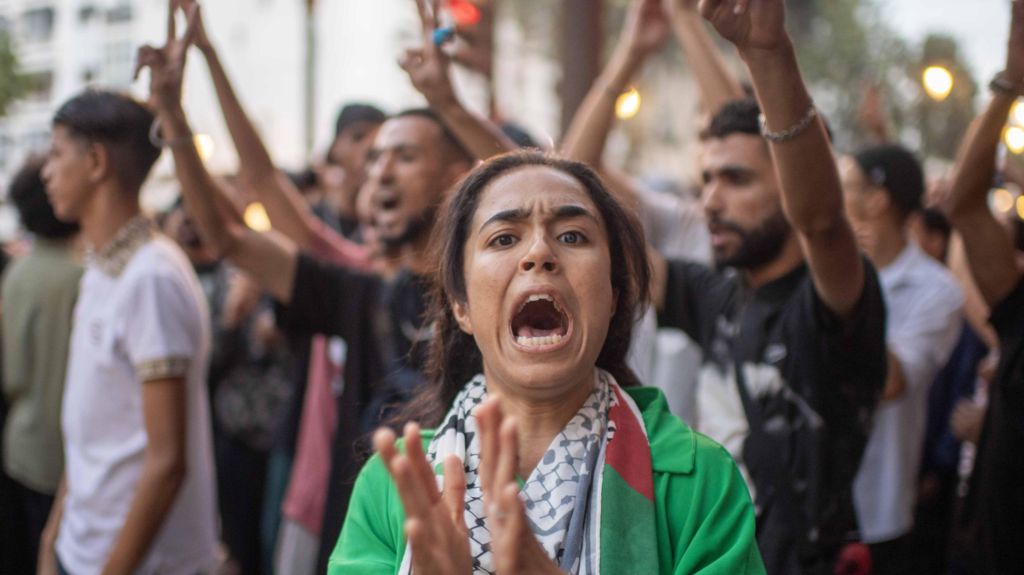
Morocco is currently constructing the world’s largest football stadium, a 115,000-capacity venue, as part of its preparations to co-host the 2030 FIFA World Cup. However, this ambitious project, along with other football infrastructure developments costing an estimated $5 billion, has sparked nationwide protests led by the country’s youth. Demonstrators argue that the government’s priorities are misplaced, emphasizing the urgent need for improvements in healthcare, education, housing, and employment opportunities. The protests, organized by a group called Gen Z 212, have gained momentum through social media platforms like Discord, TikTok, and Instagram. Inspired by recent youth-led movements in Nepal, Moroccan protesters are demanding concrete action from authorities to address systemic issues. The demonstrations, which began on September 27 across 10 cities, have grown in size, with slogans such as ‘No World Cup, health comes first’ and ‘We want hospitals, not football stadiums.’ The government’s response has been marked by mass arrests and violent clashes, resulting in the deaths of three protesters. Prime Minister Aziz Akhannouch has expressed openness to dialogue, but the leaderless movement remains steadfast in its demands. Key grievances include free and quality education, accessible healthcare, affordable housing, better public transport, lower prices for basic goods, improved wages, and job opportunities for youth. The movement gained significant traction following the tragic deaths of eight women in a maternity ward in Agadir, which many believe could have been prevented with adequate medical resources. Morocco’s healthcare system is severely underfunded, with only 7.8 doctors per 10,000 people, far below the World Health Organization’s recommendation of 23. Protesters like Hajar Belhassan, a 25-year-old communications manager, emphasize that their demands are basic and reasonable. ‘We are making reasonable, basic demands. Health and education are necessities that should already be prioritized,’ she told the BBC. The protests have drawn comparisons to Morocco’s 1981 Bread Riots, where demonstrators protested against rising food prices. While the government has faced criticism for its heavy-handed response, protesters have distanced themselves from acts of violence and looting. As the movement continues, calls for the king to dissolve the government have emerged, reflecting the growing discontent among Morocco’s youth. Despite their grievances, protesters like Belhassan express pride in their country’s ability to host the World Cup but stress the need to address fundamental issues first. ‘Let’s build stadiums, but let’s also build our education and health systems. Let’s take care of our people,’ she said.