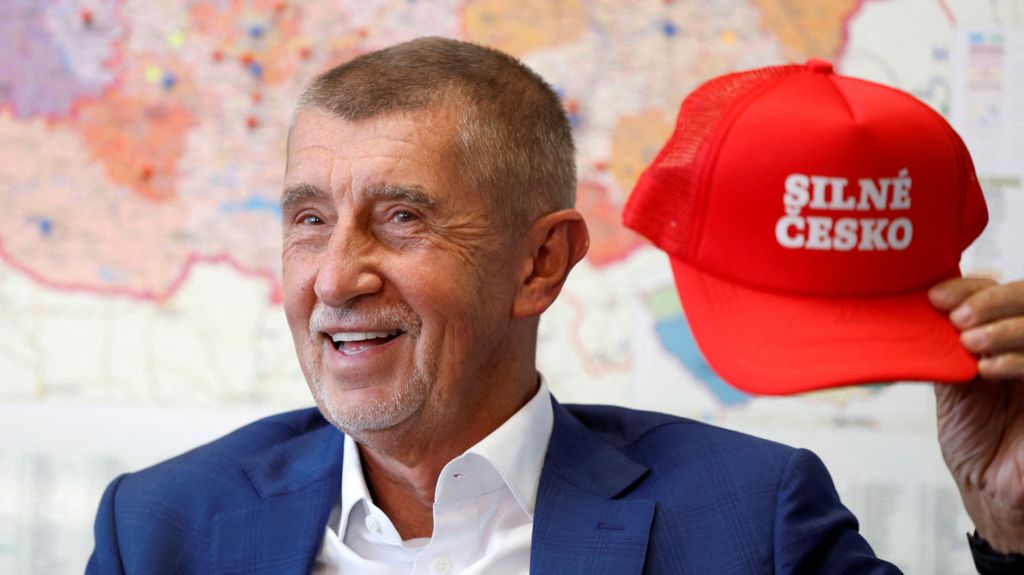
As Czech voters prepare to cast their ballots this weekend, the nation stands at a political crossroads. Populist billionaire Andrej Babis, leader of the ANO party, is poised to lead the next government, potentially replacing the current pro-Western coalition. However, his path to power may require alliances with fringe parties, raising concerns about the country’s future direction. Babis, a former prime minister, has sought to distance himself from accusations of pro-Russian sentiment, vowing to maintain Czechia’s alignment with the West. Yet, his potential coalition partners—ultra-nationalist and anti-EU factions—pose significant challenges to the nation’s longstanding commitments to NATO and European integration. The election comes amid heightened fears of Russian interference and a deteriorating security situation in Europe. Babis, inspired by the US MAGA movement, has adopted red caps emblazoned with ‘Strong Czechia,’ symbolizing his populist appeal. While he has ruled out forming a coalition with Communists, his potential allies advocate for radical policies, including referendums on EU and NATO membership. Critics warn that an ANO-led government could mirror the illiberal trajectories of Slovakia and Hungary, undermining Czechia’s democratic values and Western alliances. As the nation grapples with these uncertainties, the election’s outcome will have far-reaching implications for its role in Europe and beyond.