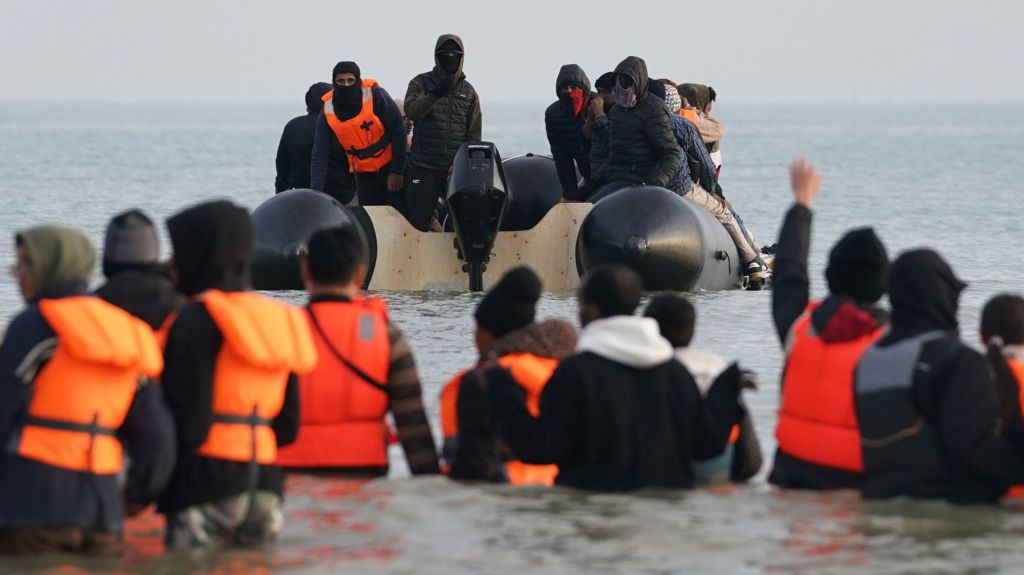
The English Channel has become a perilous route for thousands of migrants seeking refuge in the UK, with over 33,500 individuals crossing in small boats since the start of 2025. This marks a 721-person increase compared to the same period in 2022, the year with the highest recorded crossings. Despite Prime Minister Sir Keir Starmer’s pledge at the Labour Party conference to dismantle people-smuggling networks and reduce crossings by 2029, the crisis persists. Weather conditions and other factors make it uncertain whether 2025 will surpass 2022’s record of 45,000 crossings. Since 2018, more than 184,000 people have arrived in the UK via small boats, though this represents a small fraction of the country’s overall immigration figures. In 2024 alone, nearly 37,000 crossings were detected, a 25% increase from 2023. Tragically, 2024 also saw at least 82 migrant deaths, the deadliest year on record, with 20 fatalities reported in 2025. The International Organization for Migration (IOM) highlights the escalating dangers, attributing them to overcrowded and unseaworthy vessels. A year-long pilot scheme initiated in August allows UK officials to refer migrants for return to France within three days of arrival, but critics argue this will impact only a small proportion of crossings. The UK government has intensified efforts to combat people-smuggling, freezing assets of 25 individuals, including gang leaders, and deploying 300 additional National Crime Agency officers. Despite these measures, the Refugee Council advocates for safer legal routes to asylum, emphasizing the need for a comprehensive policy overhaul. Afghans constitute the largest group of small boat arrivals, followed by Eritreans, Iranians, Syrians, Sudanese, and Vietnamese. The UK’s immigration challenges mirror broader trends in Europe, where nearly 189,000 sea arrivals were recorded in 2024, with Italy receiving the majority. The EU and EEA saw 1.1 million asylum claims in 2024, with Germany leading in applications.