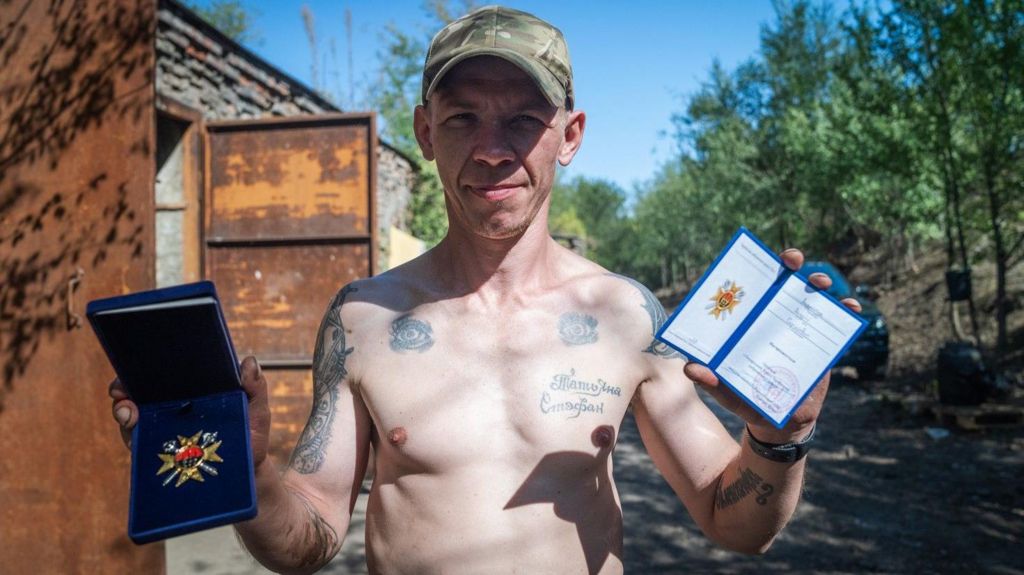
In the shadow of Ukraine’s ongoing conflict with Russia, a unique and controversial initiative is unfolding within the nation’s penal system. At Penal Colony No. 4, a medium-security prison with an imposing atmosphere, inmates like Andrii Askerov and Roman Chech are trading their prison jumpsuits for military fatigues. Under a law enacted last year, over 10,000 prisoners, including drug dealers and even murderers, have volunteered to join the Ukrainian army in exchange for early release. Their mission? To fight on the front lines until the war ends. For many, this is not just a path to freedom but a chance for redemption and revenge. Roman, whose sister was killed by a Russian missile in Kharkiv in 2023, sees this as an opportunity to avenge her death. ‘I would have a lifelong label as a convict, but if I serve, I’d be a serviceman,’ he says. The recruits, many of whom have no prior military experience, undergo a month of training before being deployed to some of the most dangerous sectors of the front line. According to the governor of Penal Colony No. 4, half of the thousand inmates who volunteered have already perished. Despite the high mortality rate, morale among these convict soldiers remains surprisingly high. For them, the battlefield offers a chance to rewrite their legacies. Andrii Andriichuk, a former career burglar turned soldier, proudly displays his ‘Hero of Ukraine’ medal, the nation’s highest honor. ‘I’ve committed many evil deeds for this country,’ he admits. ‘There is a price to pay for everything. I’ll just go back to the job I’m good at: fighting.’ The initiative has drawn comparisons to Russia’s earlier strategy of recruiting prisoners, which was widely criticized. However, Ukraine’s Deputy Justice Minister, Evhen Pikalo, insists there is a fundamental difference. ‘The Russians are paid per hundred meters, and Ukrainians are driven by patriotic feelings,’ he claims. Pikalo views the program as a form of rehabilitation, offering convicts a chance to contribute to their country’s defense. Yet, the moral implications of releasing serious offenders remain contentious. Pikalo emphasizes that these are conditional releases, not pardons, and that the program aims to resocialize rather than exploit. As Ukraine’s war effort continues, the search for motivated soldiers grows increasingly desperate. For these convicts, the battlefield is both a proving ground and a path to redemption, even as the odds of survival remain grim.
‘I can kill and not be convicted’: The Ukrainian convicts swapping jail for the battlefield