Dubai’s Roads and Transport Authority (RTA) has achieved remarkable success in urban mobility through its comprehensive traffic improvement initiative. In 2025, the authority completed 67 strategic enhancements across the emirate’s transportation network, resulting in unprecedented efficiency gains and reduced congestion.
The infrastructure transformation encompassed three primary categories: 46 upgrades along major arterial roads and residential zones, 12 school zone optimizations, and 9 development area improvements. These interventions have produced measurable outcomes, with travel times decreasing by up to 45% in targeted areas and road capacity expanding by approximately 33% on multiple thoroughfares.
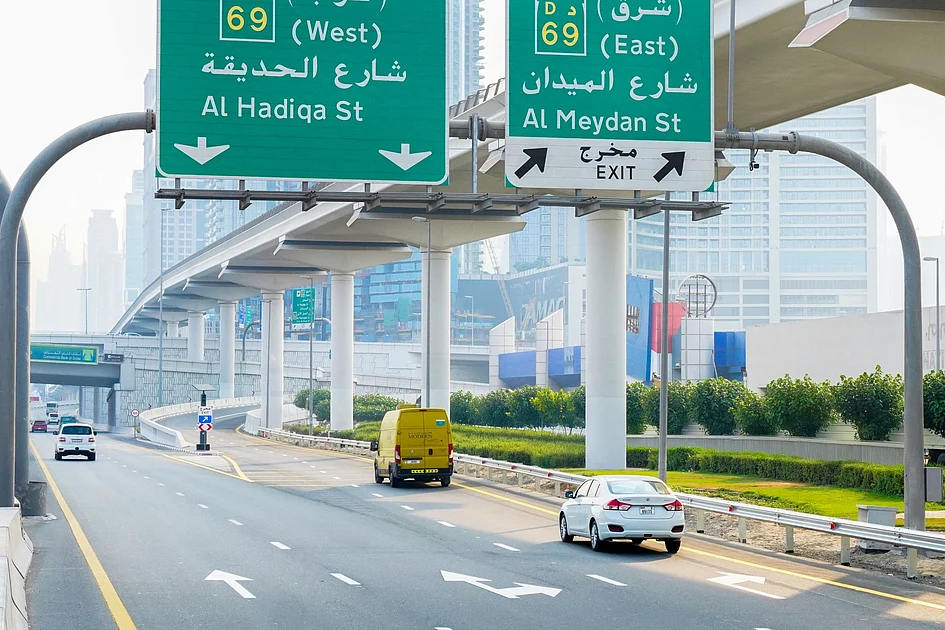
Key beneficiaries of this urban revitalization include Al Warqa’a, Al Barsha South, Nad Al Hamar, and Al Ras districts. Major corridors experiencing enhanced traffic flow comprise Sheikh Zayed Road, Al Meydan Street, Emirates Road toward Sharjah, and Umm Al Sheif Street. Notable engineering accomplishments feature the widening of Sheikh Zayed Road toward Al Meydan Street from two to three lanes at Al Khawaneej access points and the capacity expansion of Al Meydan Bridge from three to four lanes.
The intersection of Al Wasl Street and Al Manara Street demonstrated particularly impressive results, achieving a 50% increase in vehicular capacity and over 30% reduction in waiting times through strategic redesign.
School zone safety received dedicated attention through twelve targeted interventions serving more than thirty educational institutions. The Al Warqa’a First School Complex, Mizhar First School Complex, and Al Qusais School Complex were among the beneficiaries of upgraded parking facilities, improved access points, and traffic calming measures that collectively reduced congestion while enhancing pedestrian safety.
Looking ahead, the RTA has announced an ambitious continuation plan for 2026, with forty-five additional improvement projects already in development. These future initiatives will focus on intersection modernization, commercial district access optimization, and further school zone enhancements, reinforcing Dubai’s commitment to becoming a global model for urban transportation efficiency.