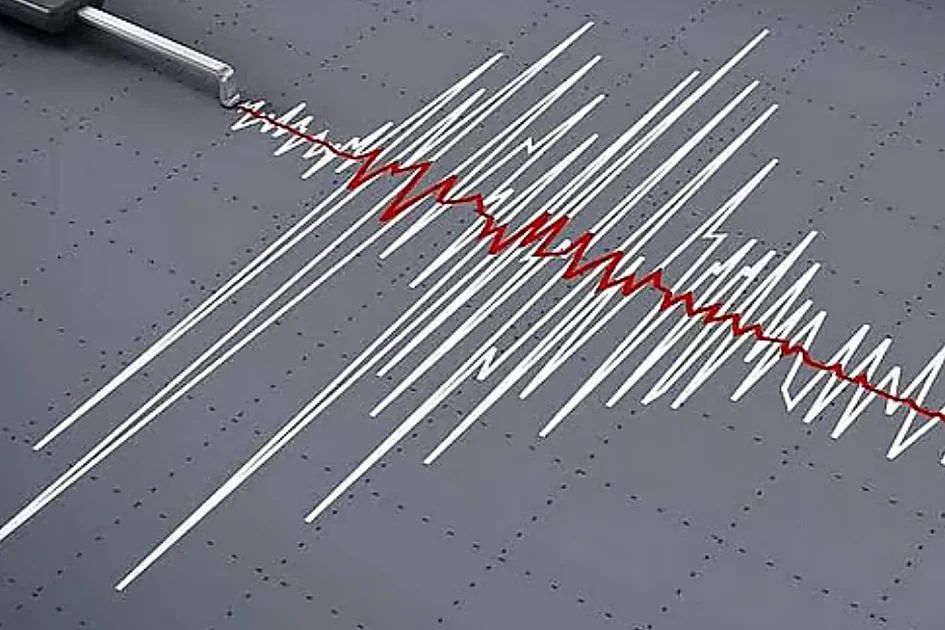
A moderate seismic event registering 5.4 on the Richter scale struck northeastern India’s Assam state in the early hours of Monday morning. The United States Geological Survey (USGS) confirmed the earthquake’s epicenter was positioned just three kilometers from the village of Dhing, located near India’s sensitive border region with Bhutan.
The tremor occurred at approximately 4:17 AM local time (2:47 AM UAE time on Sunday), with preliminary reports indicating strong ground shaking in the immediate vicinity. Despite the significant seismic activity, the USGS preliminary assessment suggested limited population impact due to the remote nature of the affected area.
This event occurs within the seismically active Himalayan region, which experiences numerous earthquakes annually and has witnessed some of India’s most devastating seismic disasters in recorded history. The region’s tectonic vulnerability stems from the ongoing collision between the Indian and Eurasian continental plates, which continues to generate substantial seismic stress along the Himalayan fault lines.
Historical context reveals the area’s tragic seismic legacy, including the catastrophic 1950 earthquake that claimed approximately 4,800 lives across Assam and Tibet. The Great Assam Earthquake of 1897 remains documented as one of the most powerful seismic events ever recorded in the Indian subcontinent, resulting in hundreds of fatalities across the remote mountainous terrain.
Current monitoring indicates no immediate reports of significant damage or casualties, though regional authorities remain on alert for potential aftershocks and are conducting preliminary damage assessments in the affected border region.