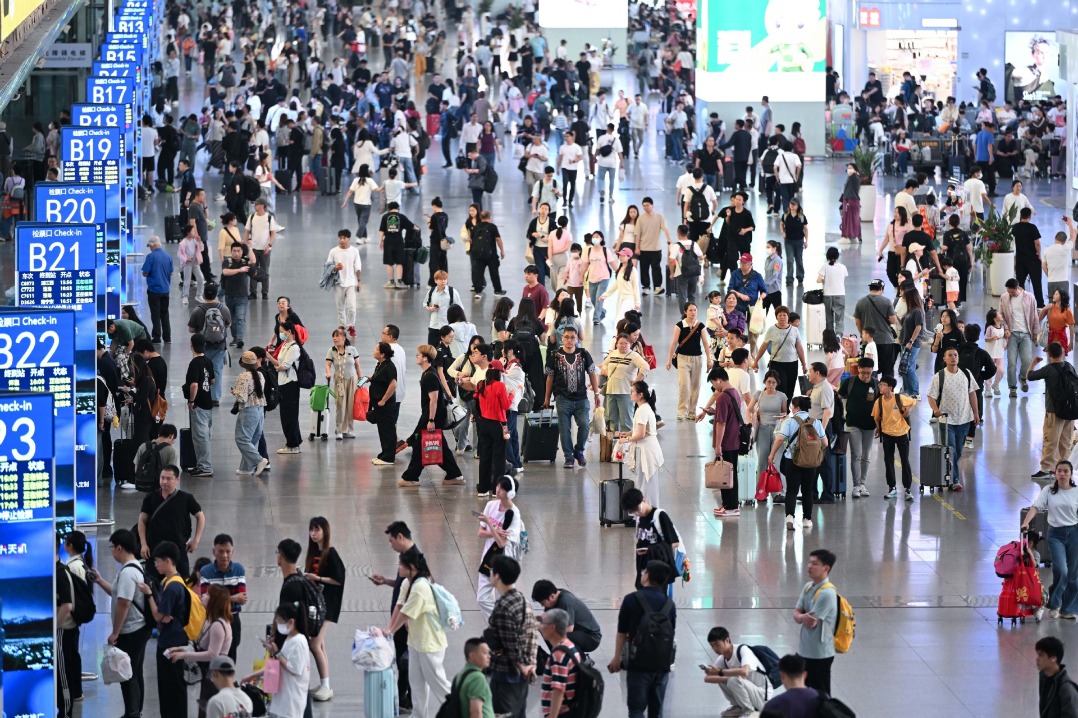
China’s domestic tourism industry delivered steady year-on-year growth during the 2026 three-day Qingming Festival holiday, new official data shows, reflecting sustained momentum in the country’s domestic consumption and cultural travel sectors.
Released on Tuesday by China’s Ministry of Culture and Tourism, the data confirms 135 million domestic trips were taken across the country between Saturday and Monday, when the 2026 holiday was held. This figure marks a 6.8% increase compared to the same holiday period in 2025. Total domestic tourism expenditure hit 61.37 billion yuan, equivalent to roughly $8.95 billion, representing a 6.6% annual rise. The ministry confirmed that the entire national cultural and tourism market operated safely, stably and in an orderly fashion throughout the long weekend.
Qingming Festival, also widely known as Tomb Sweeping Day, is a centuries-old Chinese tradition centered on honoring deceased ancestors and revolutionary martyrs. This year’s observance fell on Sunday, creating the standard three-day weekend holiday from April 4 to 6. Across the country, memorial events drew large crowds to cemeteries, memorial halls and revolutionary heritage (or “red tourism”) sites, where visitors laid floral tributes and held silent remembrance ceremonies.
Beyond traditional commemorative activities, spring leisure travel emerged as a major driver of holiday consumption. As temperatures warm across most of China, flower viewing and outdoor recreational activities became top travel choices for many holidaymakers. The ministry also noted that scheduled concerts and music festivals held over the weekend gave a clear boost to related local cultural and hospitality spending, while the country’s fast-growing nighttime tourism segment continued its steady expansion.
A key factor boosting longer-distance travel this year was the alignment of the Qingming holiday with scheduled spring breaks for K-12 and university students in multiple Chinese provinces, including Jiangsu, Zhejiang, Anhui and Guizhou. This overlap created extended combined breaks of up to six consecutive days for residents in these regions, leading to a sharp rise in family vacation travel. Official data shows the share of minors among passengers on commercial flights and high-speed rail rose notably, alongside a clear increase in the number of travelers taking trips longer than 800 kilometers. Overall, family travel bookings accounted for 37% of all total tourism reservations for the holiday, cementing family groups as the largest core consumer group for the Qingming weekend.
The steady growth of domestic tourism during the holiday adds to broader signs of recovering domestic consumption in China, with the cultural and travel sector continuing to evolve to meet changing traveler demand, from short local getaways to extended cross-region family vacations.