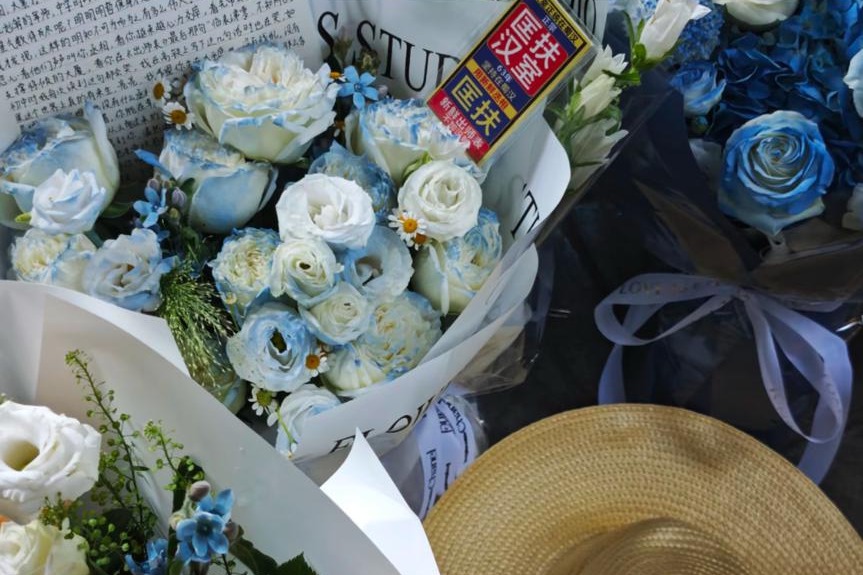
As China’s annual Qingming Festival, the traditional Tomb-Sweeping Day, arrived this year on April 5, a new cultural trend led by China’s Generation Z has breathed fresh, creative life into an ancient ritual: young travelers are flocking to the tombs of celebrated Chinese historical figures, leaving unconventional, deeply personalized offerings that blend modern fan culture with long-held traditions of remembrance.
For centuries, Qingming Festival has centered on family visits to ancestral graves, where descendants clean burial sites, light incense, and leave traditional offerings of food, incense and ceremonial paper money to honor departed loved ones. This year, however, young Chinese history enthusiasts expanded that tradition beyond family lines, extending their tributes to iconic historical figures whose legacies have captivated modern audiences through pop culture, history books and digital content.
The trend gained widespread attention after staff at the Cao Cao’s Mausoleum Site Museum in Anyang, Henan, revealed that visitors had left dozens of boxes of ibuprofen and other painkillers at the tomb of Cao Cao, the powerful Three Kingdoms period (220-280 CE) warlord. Historical records have long documented that Cao Cao suffered from chronic, severe headaches, with some modern archaeologists hypothesizing the pain stemmed from undiagnosed dental neuralgia. Rather than discarding the informal tributes, museum staff told reporters they simply arranged the offerings neatly, respecting the visitors’ intent.
Similar personalized tributes have appeared at tombs across China. At the resting place of Li Bai, the legendary Tang Dynasty (618-900 CE) poet famous for his love of wine, visitors have left bottles of premium Maotai liquor, craft beer, and imported spirits. At the tomb of Zhang Juzheng, a prominent Ming Dynasty (1368-1644) political reformer, hemorrhoid cream appeared as an offering, reflecting widespread popular accounts that the reformer died from complications related to the condition. For Huo Qubing, a Western Han Dynasty general who died at just 23 years old, young visitors left potato chips and spicy street snacks, a nod to his youth that resonates with modern young people.
Scholars and cultural analysts say the trend is far more than a viral internet gimmick — it reveals a shifting, deeply personal way that Gen Z engages with Chinese history and traditional culture. “Young people are adopting a fan club mindset, treating beloved historical figures the way younger generations treat modern celebrities, to dig into the small, human details of the past,” explained Shi Anbin, a communications professor at Tsinghua University, in an interview with China Daily. “This is a far more personalized way of expressing affection for ancient figures, it’s quite different from how previous generations engaged with history.”
Shi noted that while playful entertainment is a part of the trend, the core driver is Gen Z’s desire for authentic, individual self-expression. Born between the mid-1990s and early 2010s, China’s Gen Z prioritizes unique, personal connections over rigid, formal tradition, he said, adding that cultural and tourism institutions could leverage this enthusiasm to create more engaging cultural experiences for young visitors.
Yang Jinsong, a researcher at the China Tourism Academy, echoed that observation, noting the trend aligns with a broader shift in travel preferences toward experiences that deliver personal emotional fulfillment, rather than strictly following formal traditions. “People want to project their own feelings onto ancient figures and establish a modern, personal connection with them,” he said.
However, Yang also raised constructive concerns about the growing volume of physical offerings, pointing to potential safety hazards and negative environmental impacts from accumulated items left at heritage sites. To address this, he suggested cultural institutions develop alternative, structured interactive experiences that channel young people’s enthusiasm without the need for physical offerings. Ideas include historical role-playing activities, live-action mystery games set around historical events, or themed edible products tied to famous historical figures. “If we provide better, more engaging products, visitors may not feel the need to leave physical items,” he explained.
Both analysts agree that when guided thoughtfully, this grassroots trend represents a unique opportunity to make Chinese history more accessible and engaging for younger generations. “This is a natural communication phenomenon of the digital age,” Shi said. “With proper guidance, it can bring history to life in a fun and deeply engaging way for a new generation.”