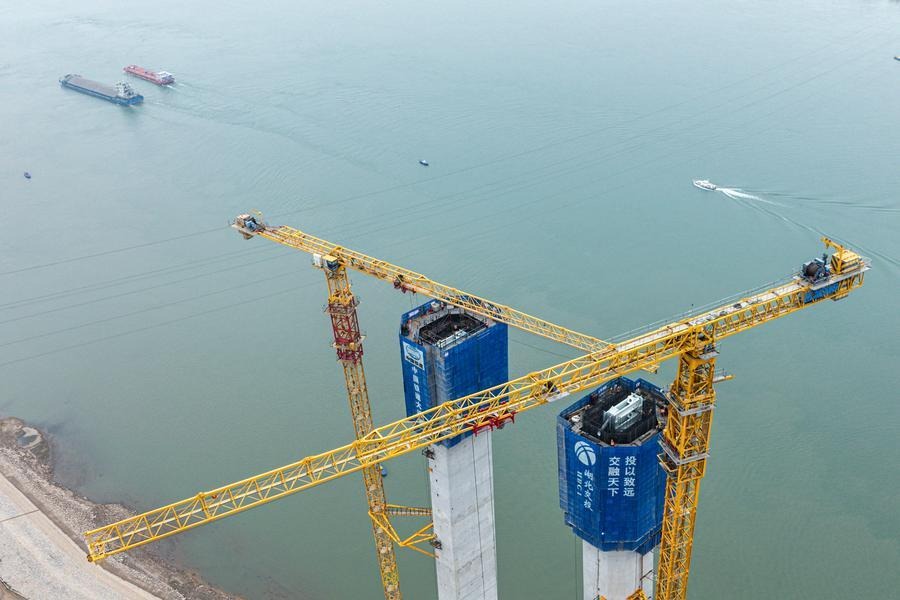
China’s Yangtze River Economic Belt has demonstrated remarkable progress in balancing economic expansion with environmental restoration over the past decade, according to senior government officials. The region has achieved a dual triumph of economic advancement and ecological rehabilitation, with water quality standards showing dramatic improvement alongside substantial GDP growth.
At a State Council Information Office briefing commemorating the 10th anniversary of President Xi Jinping’s pivotal symposium on Yangtze development, National Development and Reform Commission Deputy Director Wang Changlin revealed striking statistics. The proportion of river sections achieving ‘fairly good’ or superior water quality ratings surged from 67% in 2015 to an impressive 96.5% by 2025, while the region’s economic output more than doubled during the same period.
The economic significance of the Yangtze belt within China’s national framework has substantially increased, with its contribution to the national GDP expanding from 42.2% to 47.3% over the ten-year span. This growth occurred alongside the implementation of President Xi’s directive prioritizing ecological restoration over large-scale development, establishing environmental protection as the region’s guiding principle.
Significant environmental milestones include the virtual elimination of black and odorous water bodies in prefecture-level cities along the Yangtze, achieved through comprehensive pollution control measures targeting industrial, agricultural, and shipping sources. The mainstream Yangtze has been transformed from containing Grade V quality sections to maintaining consistent Grade II standards throughout its entire course.
Biodiversity conservation has shown particularly encouraging results since the implementation of a comprehensive 10-year fishing ban effective January 1, 2021. Monitoring data from 2021-2024 documented 344 indigenous fish species in the Yangtze basin, representing an increase of 36 species compared to pre-ban levels.
Despite these achievements, challenges persist. Jiang Kaiyong, Director of the Yangtze Basin Fishery Supervision Administration, noted that 99 historically recorded fish species remain undetected, with flagship species like the Chinese sturgeon continuing to face critical endangerment. Occasional illegal fishing incidents further complicate conservation efforts.
The Ministry of Agriculture and Rural Affairs has committed to strengthening interdepartmental cooperation with local authorities to enhance law enforcement coordination and improve biodiversity conservation capabilities, ensuring the continued protection of the Yangtze’s ecological resources while supporting high-quality regional development.