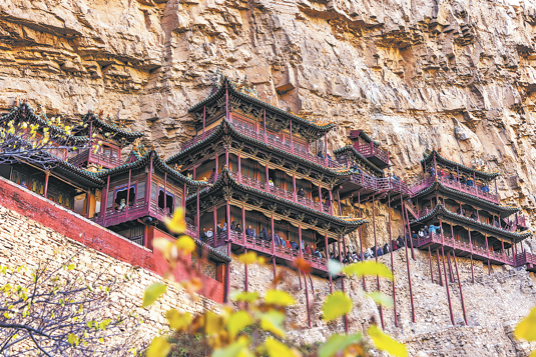
Perched dramatically on the vertiginous cliffs of Cuiping Mountain in Datong, Shanxi province, the 1,500-year-old Xuankong Temple (Hanging Temple) is experiencing an unprecedented tourism renaissance. This architectural marvel, which defies gravity through ingenious ancient engineering, has become a global pilgrimage site following its prominent featuring in the blockbuster video game ‘Black Myth: Wukong’.
The temple’s sudden popularity surge has created extraordinary visitor demand, with waiting times extending for hours during peak seasons. In response to the overwhelming foot traffic, local authorities have implemented protective measures, reducing daily admission quotas from 3,275 to 2,475 visitors effective immediately. This conservation strategy aims to safeguard the fragile wooden structure that has clung to the mountainside since the Northern Wei Dynasty (386-534).
What makes the temple’s endurance particularly remarkable is its revolutionary construction technique. Heritage expert Hao Weihe explains that the structure’s stability derives not from its visible supporting pillars, but from horizontal beams crafted from durable hemlock wood. These beams, shaped like scissors at one end, penetrate deep into the cliff face—functioning similarly to modern expansion bolts—with two-thirds embedded in rock and one-third exposed to support the temple’s weight. Each beam can reportedly support several metric tons.
Beyond its architectural wonders, the temple serves as a symbol of religious harmony. The Hall of Three Religions simultaneously honors Buddhism, Confucianism, and Taoism through statues of Buddha, Confucius, and Lao Tzu. Visitors can additionally admire exquisite carvings adorning the upturned eaves, roof tiles, and plank path corners throughout the complex.
International tourists like Yana from Ukraine have expressed awe at the temple’s preservation, describing it as ‘staggering’ in social media posts that encourage others to witness the ancient wonder firsthand. As gaming culture continues to influence travel patterns, this 1,500-year-old temple demonstrates how digital media can breathe new life into historical treasures while presenting contemporary conservation challenges.