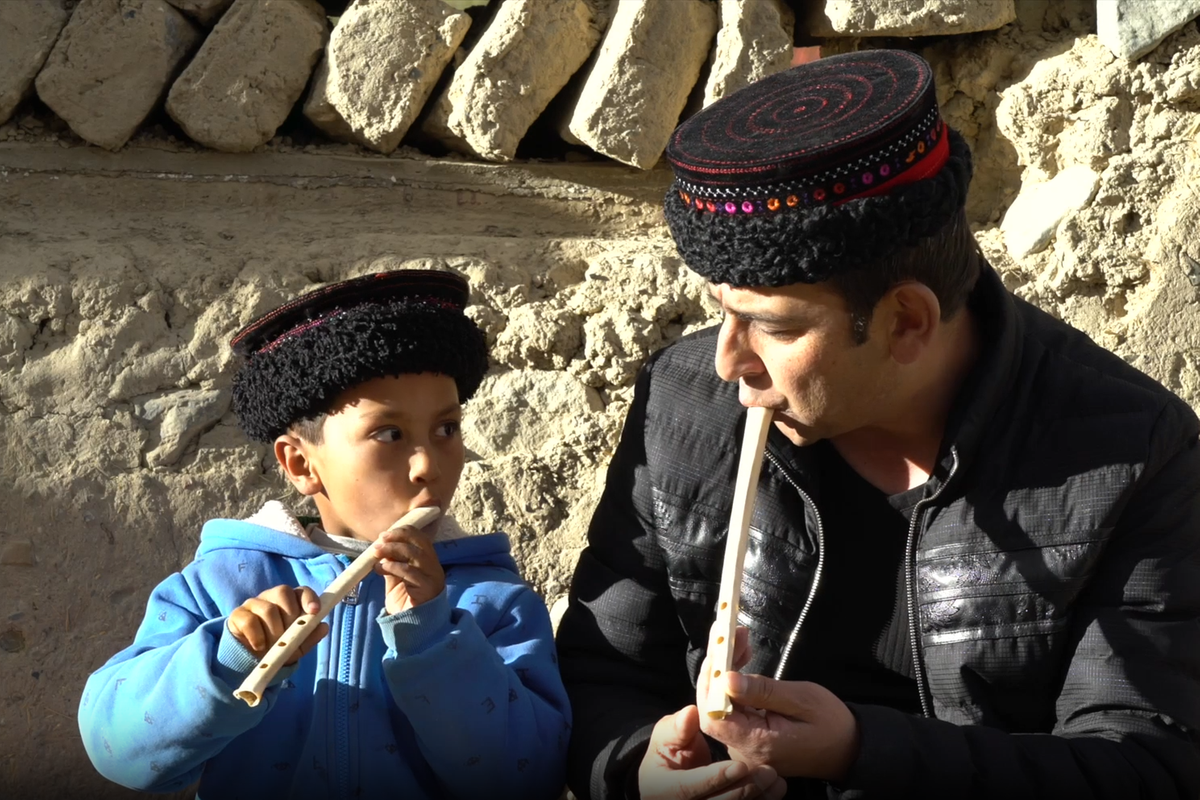
In the high-altitude terrain of the Tashikurgan Tajik Autonomous County within China’s Xinjiang region, a unique cultural preservation story unfolds through the dedication of Aikebaier, a local artist. Once a professional dancer and now a drummer, Aikebaier has devoted his life to mastering and promoting the traditional eagle bone flute—an instrument recognized as part of China’s intangible cultural heritage.
During his leisure hours, Aikebaier engages in rigorous practice sessions, documents the flute’s distinctive melodies, performs for community gatherings, and instructs younger generations in playing techniques. His efforts represent a personal mission to safeguard this auditory emblem of Tajik culture from fading into obscurity.
“The eagle bone flute embodies my lifelong passion,” Aikebaier stated, emphasizing his commitment to both preserving and popularizing this traditional art form. His aspiration extends beyond local recognition—he aims to introduce the haunting sounds of the Pamir Plateau to international audiences, ensuring the flute’s legacy continues resonating globally.
This cultural initiative reflects broader efforts within Xinjiang to maintain ethnic traditions while fostering intercultural dialogue. Through Aikebaier’s dedication, the eagle bone flute transforms from a historical artifact into a living testament to Tajik heritage, demonstrating how traditional arts can thrive in contemporary society.