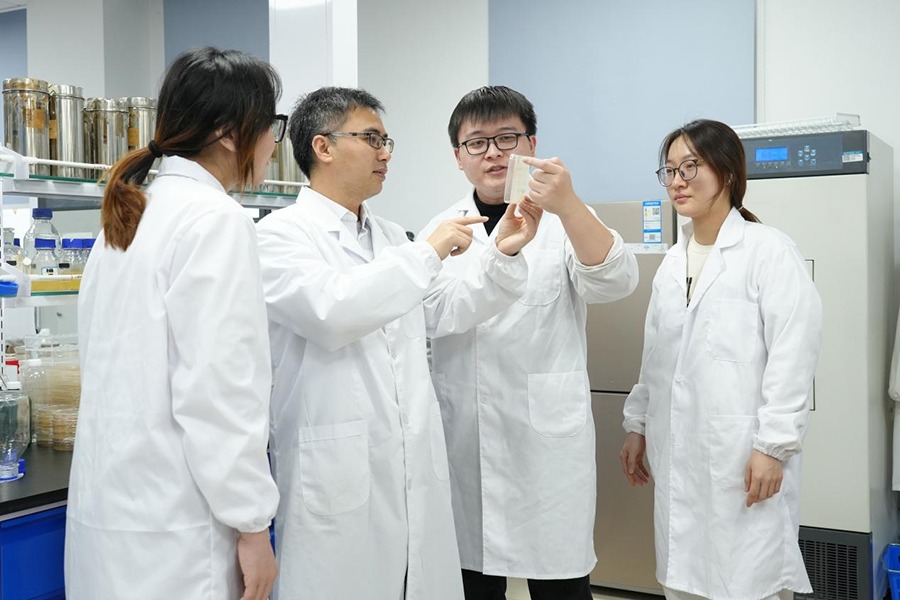
Professor Peng Donghai from Huazhong Agricultural University has received prestigious recognition for his groundbreaking work in transforming laboratory discoveries into practical agricultural solutions. With over two decades dedicated to agricultural microorganism research, Professor Peng’s innovative approach to biological pest control has revolutionized traditional farming practices.
The scientific breakthrough emerged when Professor Peng abandoned conventional screening methods that focused exclusively on the most potent pest-killing microbes. Instead, his research team pioneered an unconventional strategy examining previously overlooked, weaker microbial strains. This methodological shift led to the successful cloning of cry7Ba1, a revolutionary pest-fighting protein that became the first Chinese insecticidal protein to secure a US patent.
To support this research, Professor Peng initiated an unprecedented nationwide sampling project in 2011. The ambitious endeavor mobilized tens of thousands of teachers and students across China, resulting in the collection of over 21,000 soil samples from more than 2,680 towns. This massive effort yielded the preservation of approximately 53,000 Bacillus thuringiensis (Bt) strains, creating one of the world’s most comprehensive microbial databases.
The research team developed a specialized platform that enabled faster and more cost-effective identification of beneficial genes, assembling one of the planet’s largest collections of natural insecticide genes. Their most significant recent achievement involves combating plant-parasitic nematodes – microscopic worms that attack plant roots. The team has identified 102 effective Bt strains against these destructive pests and discovered several novel pest-fighting proteins, with findings published in leading scientific journals including Science Advances and Nature Communications.
Beyond academic circles, Professor Peng’s team has successfully commercialized their research through collaboration with Wuhan Kernel Bio-tech. In 2021, they launched a commercial nematode-fighting agent demonstrating remarkable efficacy rates between 81.6% and 91.1% against root-destroying pests. This biological solution has already been applied to nearly 4 million mu (approximately 267,000 hectares) of farmland across China.
The research has earned Hubei province’s 2024 Technical Invention Award (first prize) and generated nearly 100 million yuan ($14.4 million) in technology transfer income. The work has sparked increased interest from domestic pesticide companies seeking biological alternatives to chemical treatments. Looking forward, Professor Peng plans to expand international collaborations, aiming to apply microbial and genetic research to global food security and ecological protection challenges.