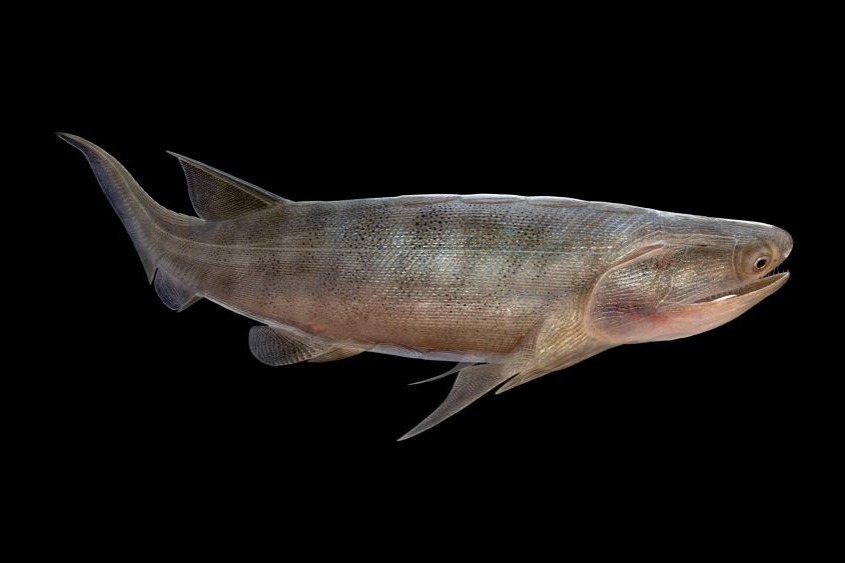
A groundbreaking paleontological discovery in China’s Chongqing Municipality has revealed the world’s oldest articulated bony fish fossil, fundamentally altering our understanding of vertebrate evolution. The exceptionally preserved specimen, named Eosteus chongqingensis, was excavated from a site in Xiushan county renowned for its exceptional preservation of ancient life forms.
Dating back approximately 440 million years to the early Silurian Period, this remarkable fossil represents a pivotal moment in paleontological research. The findings, published in the prestigious journal Nature, effectively push back the evolutionary timeline of jawed vertebrates by nearly 11 million years, providing unprecedented insights into the origins of bony vertebrates that would eventually include humans.
The research collaboration, spearheaded by the Chongqing Bureau of Planning and Natural Resources in partnership with the Chongqing Institute of Paleontology and led by Chinese Academy of Sciences academician Zhu Min, has yielded the most complete record of jawed vertebrates from the previously poorly understood Silurian Period. The exceptional articulation of the fossil provides researchers with unprecedented anatomical details that were previously unavailable from fragmentary remains.
This discovery not only underscores Chongqing’s emerging significance as a paleontological research hub but also illuminates critical evolutionary transitions that occurred in ancient marine environments. The fossil’s preservation quality offers scientists a rare window into the anatomical features that characterized early jawed vertebrates, enhancing our comprehension of how life diversified from oceanic habitats to eventually colonize terrestrial ecosystems.