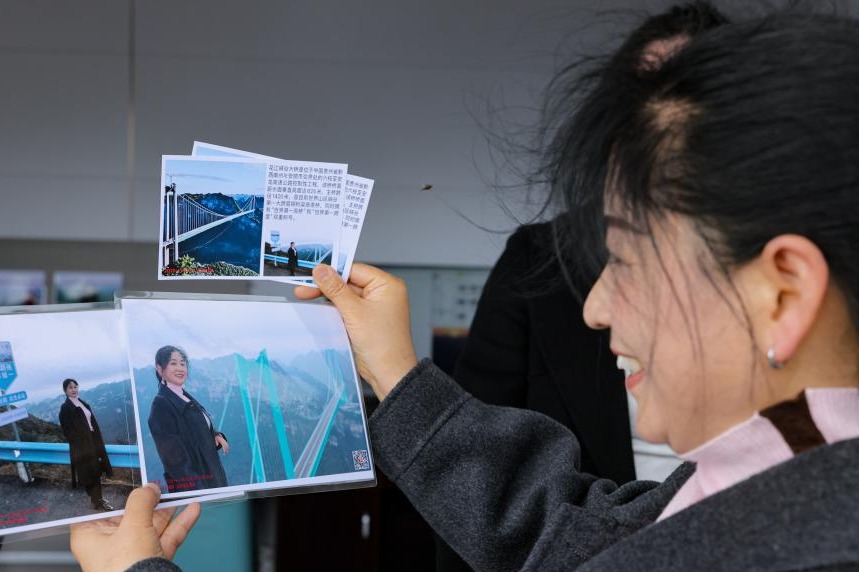
The Huajiang Grand Canyon Bridge in Guizhou province, officially recognized as the world’s highest bridge, has triggered an extraordinary tourism boom that has surpassed all initial projections. Standing at a staggering 625 meters above water level with a total length of 2,890 meters, this engineering marvel has become an unexpected catalyst for regional economic development since its inauguration in September last year.
During the recent Spring Festival holiday in February, the infrastructure phenomenon recorded approximately 300,000 visitor arrivals and over 70,000 vehicle transits, establishing unprecedented traffic records according to data from Guizhou Communications Investment Group (GCIG). The bridge’s revolutionary impact has reduced travel duration between Anshun and Qianxinan Bouyei and Miao Autonomous Prefecture from two hours to merely two minutes, effectively creating a transformative ‘one-hour golden tourism circle’ that interconnects multiple scenic attractions including Huangguoshu Waterfall and Shuangru Mountain.
Yin Hengbin, NPC deputy and Mayor of Anshun, emphasized that the bridge represents both China’s remarkable developmental achievements and a distinctive new emblem for Guizhou’s tourism sector. Concurrently, Huang Xingwen, governor of Qianxinan and fellow NPC deputy, revealed strategic plans to leverage the bridge as an integrative force connecting additional scenic spots such as Malinghe Canyon and Wanfenglin scenic area, thereby fostering synergistic development between cultural, tourism, and sports initiatives.
Zhang Shenglin, GCIG manager and NPC deputy, highlighted the unique convergence of Guizhou’s karst topography with the bridge’s architectural grandeur, creating spectacular visual experiences that have enabled innovative tourism offerings. These include sightseeing elevators, vertigo-inducing glass walkways, cable tower cafes, and extreme activities like waterfall bungee jumping—amenities that transcend conventional bridge functionality.
The structure additionally serves as an educational resource, with its advanced materials and construction methodologies providing valuable learning opportunities for basic education students through organized science excursions. Zhang noted that this multifaceted bridge-tourism integration, facilitated by unique geographical conditions and specialized design features, has yielded outcomes that exceeded conventional expectations, pointing toward exceptionally promising development prospects for integrated infrastructure tourism.