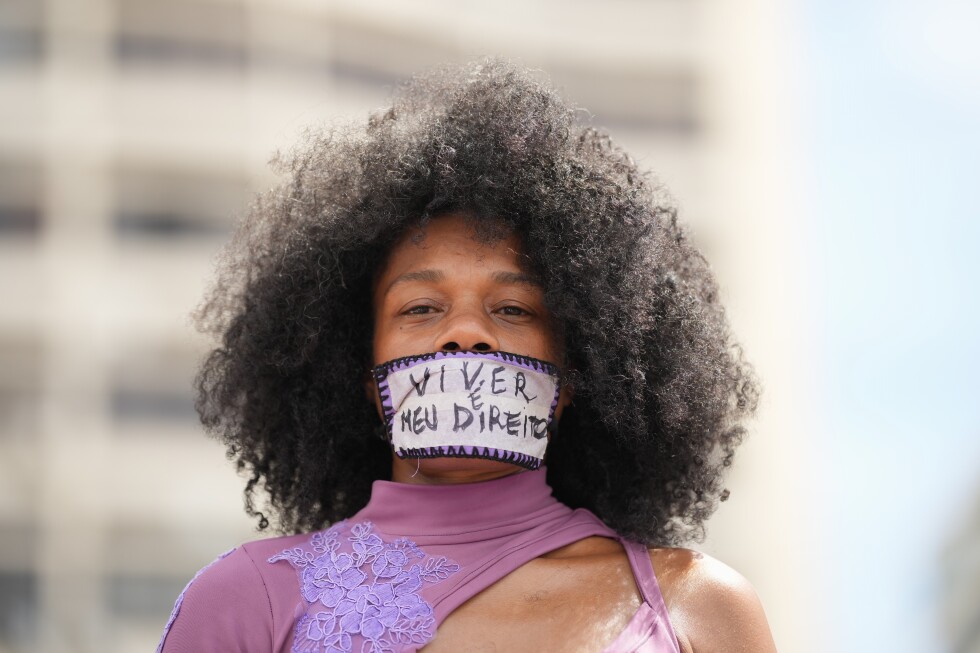
Brazil witnessed massive nationwide demonstrations on International Women’s Day as thousands mobilized against escalating gender-based violence, galvanized by a horrific gang rape case that has ignited national outrage. The protests, organized across at least 15 cities, specifically condemned the January assault of a 17-year-old girl in Rio de Janeiro’s Copacabana neighborhood that gained national attention this week when four suspects surrendered to authorities.
The case exemplifies Brazil’s growing crisis of violence against women, with official data revealing 1,568 femicides reported in 2025 alone—a 4.7% increase from the previous year and more than triple the 2015 figures. According to the Brazilian Forum on Public Safety, related crimes including threats, stalking, psychological violence, and rape have consistently risen in recent years.
Police investigations indicate the teenage victim received an invitation from a classmate at her prestigious school to visit a friend’s apartment in January. Once inside, she was allegedly confined to a room and subjected to sexual assault along with physical and psychological violence by multiple perpetrators. Four young men currently in pretrial detention face formal rape charges, while a fifth minor suspect turned himself in on Friday.
The case’s prominence intensified when security footage of suspects arriving and leaving the crime scene circulated widely on social media. Further scrutiny emerged when local media revealed one suspect’s father served as a Rio state official in the social development and human rights department, leading to his dismissal following the allegations.
Government ministers Anielle Franco and Sônia Guajajara joined women’s rights groups and ordinary Brazilians in denouncing the violence. ‘It’s impossible not to feel indignation when a 17-year-old young woman suffers such brutal sexual violence,’ stated Racial Equality Minister Franco, who called for mass protests.
In response to the crisis, President Luiz Inácio Lula da Silva’s administration announced multipronged measures including a national task force to execute approximately 1,000 arrest warrants for known aggressors, implementation of electronic tracking systems for individuals with protective orders, and deployment of 52 mobile units to assist women in dangerous situations.
While sociologist Isadora Vianna acknowledged these measures’ symbolic importance, she emphasized that ‘it would be more effective to invest massively in policies of prevention and support networks.’ The researcher also highlighted the need for better regulation of misogynistic content online.
Longtime activist Tatianny Araújo, who has participated in over 30 International Women’s Day events, described the current climate as uniquely charged: ‘We feel bad, we cry, we’re consumed by rage and by pain. But at the same time we cannot stop. We have to mobilize, we have to do something.’