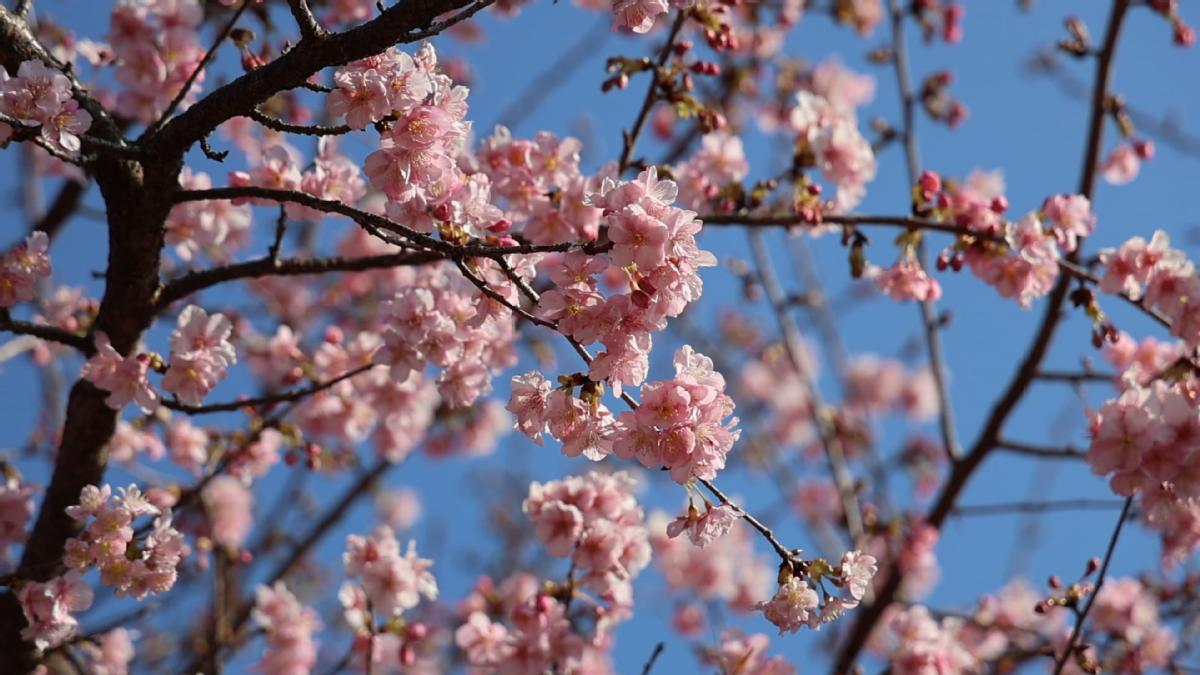
Two remarkable natural phenomena featuring winter cherry blossoms have emerged simultaneously in different regions of China, creating unexpected visual spectacles and ecological interactions. In Central China’s Hunan province, Taifu Mountain in Linli county has experienced an unusual winter blooming of cherry blossoms, typically associated with spring. The phenomenon has drawn substantial visitor numbers to the area, with over 10,000 arrivals recorded in the past ten days, including weekend peaks exceeding 2,000 daily visitors. Experts attribute this atypical flowering pattern to recent unseasonably warm and dry weather conditions in the region. Approximately twenty percent of the mountain’s cherry trees have entered bloom, with projections suggesting the flowering period could extend for up to three months. The scenic area, noted for its exceptional 97.3% forest coverage rate, maintains a unique microclimate that supports diverse plant life, attracting more than 210,000 visitors throughout 2025. Meanwhile, in Southwest China’s Yunnan province, the Jingdong area within Wuliang Mountain National Nature Reserve has witnessed an equally captivating interaction between nature and wildlife. Winter cherry blossoms there have attracted groups of Indochinese gray langurs, national first-class protected animals, who have been observed feasting on the blossoms. Photography enthusiast Run Ning recently documented hundreds of these primates foraging together, capturing images of langurs lounging on branches, playing, grooming, and consuming petals amidst the floral backdrop. Conservation efforts have proven successful, with latest survey data indicating the Jingdong area now hosts over 3,000 Indochinese gray langurs distributed across 61 distinct groups—representing a significant increase of 18 groups and more than 1,000 individuals compared to population figures from a decade ago.