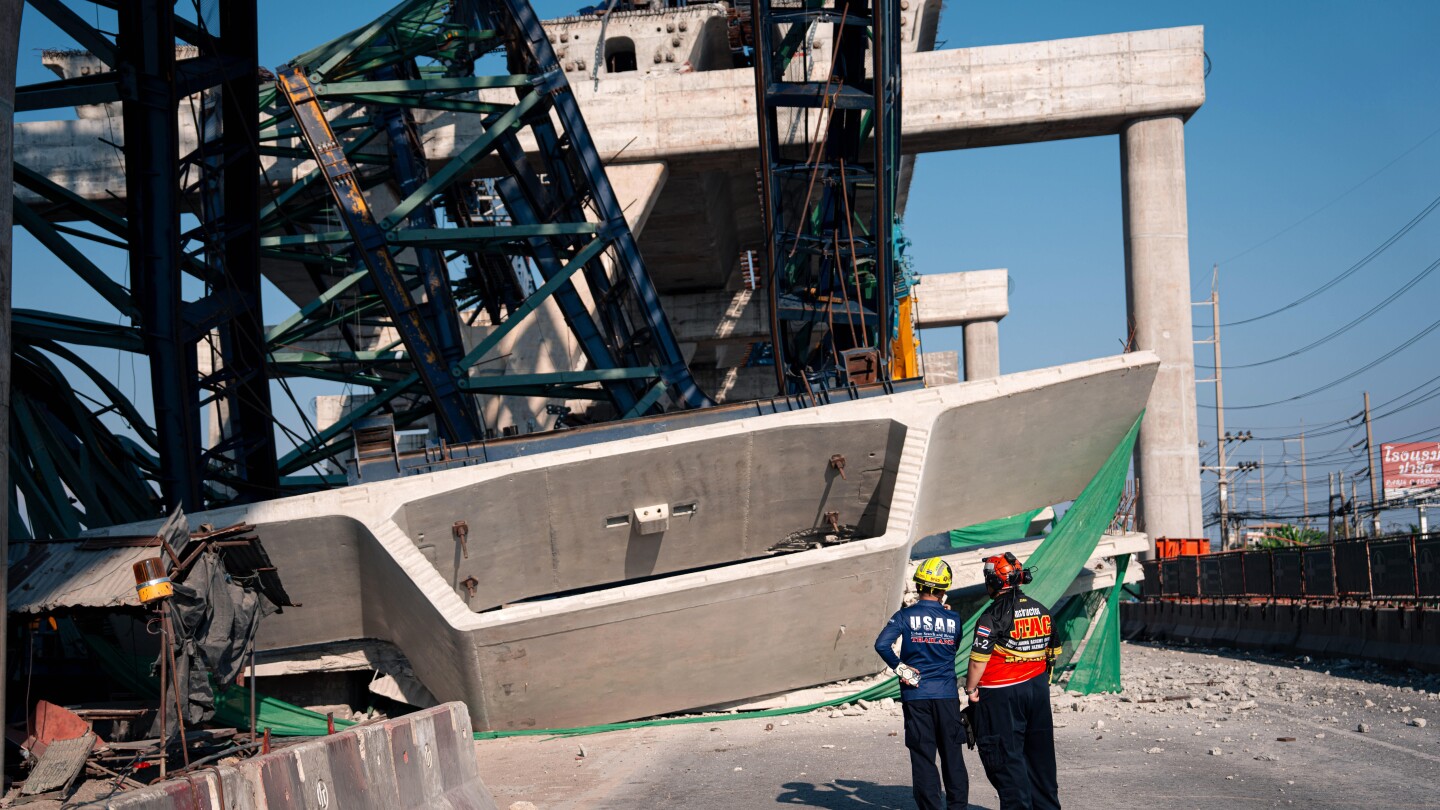
Thailand’s construction sector is confronting a severe safety crisis following multiple catastrophic incidents that have claimed numerous lives and triggered widespread public outrage. The most recent tragedies include a crane collapse onto a moving passenger train that killed 32 people, followed just one day later by another crane accident claiming two additional lives. These events come nearly a year after the devastating collapse of a 33-story office tower that resulted in approximately 100 fatalities.
Public scrutiny has intensified toward Italian-Thai Development (Italthai), the contractor responsible for both recent accident sites. The company, a major recipient of government projects, also served as joint lead contractor for the State Audit Office building that collapsed in March. Remarkably, this structure was the only major building in Thailand to fail during an earthquake whose epicenter was located over 1,300 kilometers away in Myanmar. In that case, 23 individuals and companies—including Italthai’s President Premchai Karnasuta—face indictments for professional negligence causing death and document forgery, though the company denies all wrongdoing.
Prime Minister Anutin Charnvirakul has responded decisively, ordering the Transport Ministry to terminate contracts, blacklist, and prosecute companies involved in recent accidents. The government will seize performance bonds and bank guarantees to fund unfinished projects while reserving the right to pursue additional costs through litigation. A contractor performance ‘scorecard’ system is mandated for implementation by early February.
Engineering experts identify systemic failures rather than technical knowledge gaps as the root cause. Panudech Chumyen, a civil engineering lecturer at Bangkok’s Thammasat University, notes critical challenges including lax law enforcement, bureaucratic red tape, insufficient policy integration among stakeholders, and a shortage of independent assessors without conflicts of interest.
The involvement of Chinese companies in troubled projects has drawn particular attention. Last week’s train accident occurred on a line associated with the Thai-Chinese high-speed railway project, part of China’s Belt and Road Initiative. China Railway No. 10, co-lead contractor with Italthai on the collapsed State Audit Office project, faces charges of violating Thailand’s Foreign Business Act through nominee shareholders hiding Chinese control of its local affiliate.
The term ‘tofu-dreg projects’—referencing shoddy construction that evades regulatory standards—has resurfaced in Thai social media discourse, originally popularized after China’s 2008 Sichuan earthquake. China’s Ambassador to Thailand Zhang Jianwei stated that Beijing requires companies to follow local rules and will guide them to cooperate with Thai investigations.