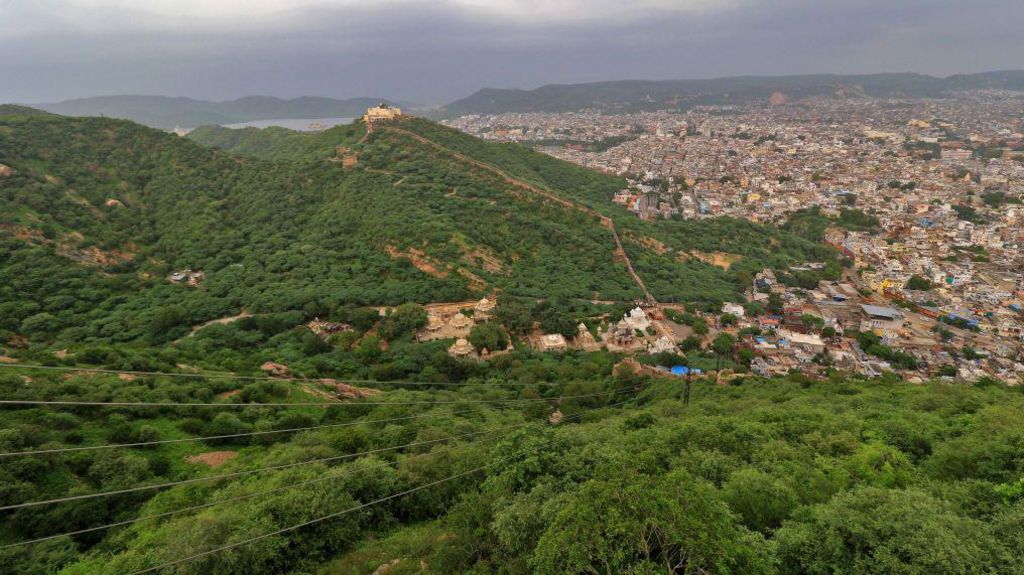
Northern India has become a hotbed of environmental activism following a controversial Supreme Court decision to redefine the geographical parameters of the Aravalli mountain range. The judicial ruling, which adopted federal government recommendations, now classifies an Aravalli hill as any landform exceeding 100 meters (328 feet) in elevation relative to its surroundings. The definition further designates multiple such formations within 500 meters as constituting an Aravalli range.
This reclassification has triggered widespread concern among environmental experts who warn that numerous ecologically vital but topographically lower hills risk losing protected status. These scrub-covered formations, while not meeting the new height threshold, serve critical functions in preventing desertification across northwestern India and replenishing groundwater resources that sustain agricultural communities.
Peaceful demonstrations have emerged in urban centers including Gurugram and Udaipur, uniting residents, farmers, activists, and opposition politicians. Prominent environmental advocate Vikrant Tongad argues that global practice identifies mountain systems by their ecological functions rather than arbitrary elevation metrics. “Any landform geologically connected to the Aravalli system that performs crucial environmental services should receive protection regardless of height,” he emphasized.
The federal government maintains the new criteria aim to standardize regulations across state boundaries. In official statements, authorities clarified that mining remains prohibited in protected forests, eco-sensitive zones, and wetlands, with only approximately 2% of the 147,000-square-kilometer range potentially eligible for regulated extraction after rigorous environmental review.
Despite governmental assurances, protest organizations continue mobilizing while exploring legal avenues to challenge the court’s definition, setting the stage for continued confrontation over India’s ancient geological heritage.