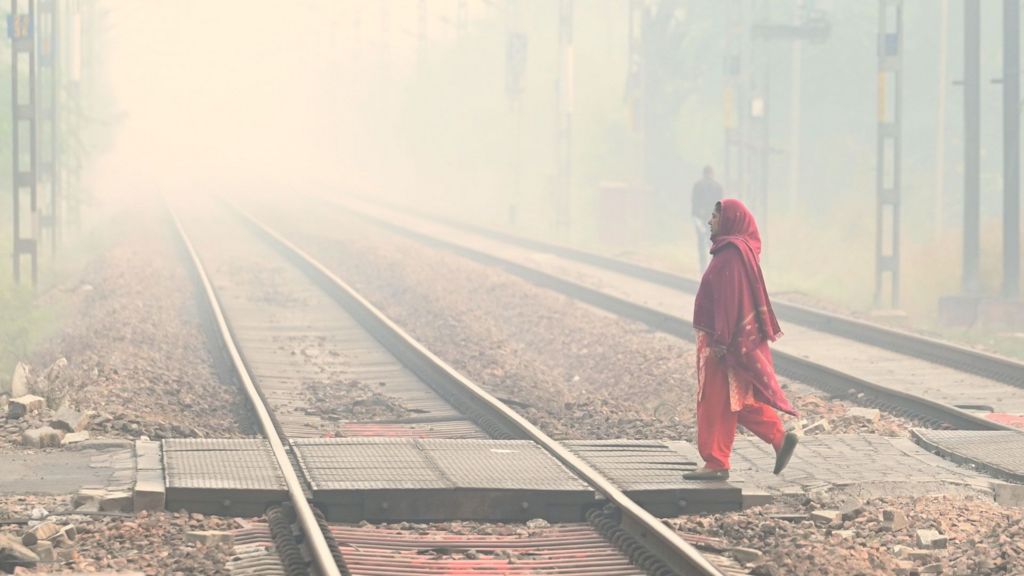
In northern India, November brings a familiar yet grim reality: ashy air, hazy skies, and the daily struggle of stepping outdoors. For millions, checking the Air Quality Index (AQI) has become a morning ritual. However, the numbers they see vary drastically depending on the source. Government-backed platforms like SAFAR and SAMEER cap the AQI at 500, the upper limit of India’s scale, which consolidates data on pollutants like PM2.5, PM10, nitrogen dioxide, and ozone into a single figure. In contrast, private and international trackers such as IQAir and AQI frequently report readings soaring past 600, even reaching 1,000 on severe days. This discrepancy raises pressing questions: Which figures are accurate? And why does India’s official system stop at 500? Experts caution against comparing India’s AQI to global standards like those of the WHO or the US, as each country’s index is tailored to its unique environmental and health contexts. India’s 500 cap, introduced over a decade ago, was intended to avoid public panic, as exceeding this threshold signaled a critical need for immediate action. However, this approach flattens data, treating all readings above 500 equally, regardless of actual pollution levels. The National Air Quality Index, last revised in 2009, relies on Beta Attenuation Monitors (BAMs), which measure particle mass with strict calibration. In contrast, platforms like IQAir use sensor-based monitors, which estimate particle counts through laser scattering and electrochemical methods. These sensors, unapproved by the Indian government, lack the same calibration rigor. Environmental scientists and activists are now advocating for a comprehensive revision of India’s air quality framework, including the removal of the 500 cap and the integration of sensor-based data. As pollution levels continue to rise, the health impacts worsen, underscoring the urgent need for an updated and transparent AQI system.