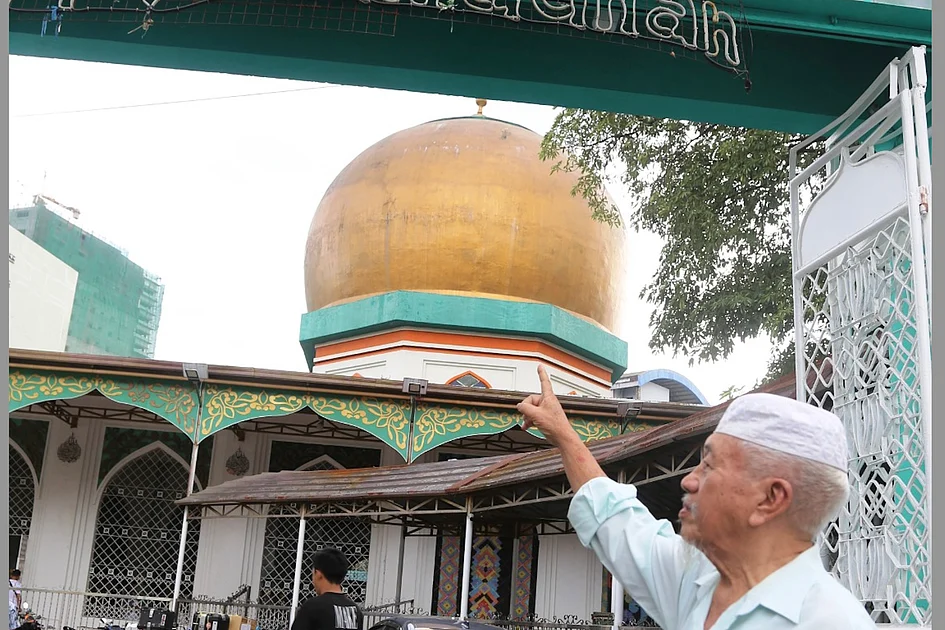
In the bustling heart of Manila’s Quiapo district, the Golden Mosque stands as the Philippines’ largest Islamic place of worship outside Mindanao. This iconic structure, which becomes the focal point for Ramadan celebrations in the capital, carries a history far younger than most assume—marking just half a century since its construction.
The mosque’s origins trace back to a pivotal diplomatic mission in November 1976 when former First Lady Imelda Marcos visited Libyan leader Muammar Gaddafi. Her husband, President Ferdinand Marcos Sr., sought Libya’s assistance in negotiating peace with the Moro National Liberation Front. The subsequent Tripoli Agreement granted limited autonomy to Muslim Mindanao, and during discussions, Gaddafi inquired about prayer facilities should he visit Manila.
This query triggered an ambitious building spree. Imelda Marcos, renowned for her architectural projects, commissioned four mosques simultaneously: the Golden Mosque in Quiapo, the Blue Mosque in Taguig City, one within Malacañang Palace grounds, and another in Marcos’ hometown of Paoay. Remarkably, construction of the Golden Mosque concluded within just 40 days through the concerted efforts of local Muslim residents, many of whom still reside in the community.
The mosque’s distinctive gold-colored dome pays homage to the brass cannons forged by Muslim blacksmith Pira that defended Manila against Spanish colonizers in the 1570s. Spanning 2,000 square meters on a 3,000-square-meter property, the complex houses Hadji Ali Alawi’s Arabic School and a Quranic institution for young students.
Historical context reveals the significance of this Islamic revival. After Spanish conquest in the 16th century transformed Manila into a Catholic stronghold, no major mosques remained in what was once a Muslim-ruled kingdom. Historian Hadji Ali Alawi notes that Manila’s original mosque likely stood where the Roman Catholic Cathedral now resides, evidenced by Quranic inscriptions within the Christian structure.
Today, only the Golden and Blue mosques remain operational—the Malacañang mosque was converted to a library after the Marcos regime fell, while the status of the Paoay mosque remains uncertain. Despite Gaddafi never making his anticipated visit, the Golden Mosque endures as a vibrant center for Manila’s Muslim community, surrounded by thriving markets and residences that maintain Quiapo’s dynamic character.