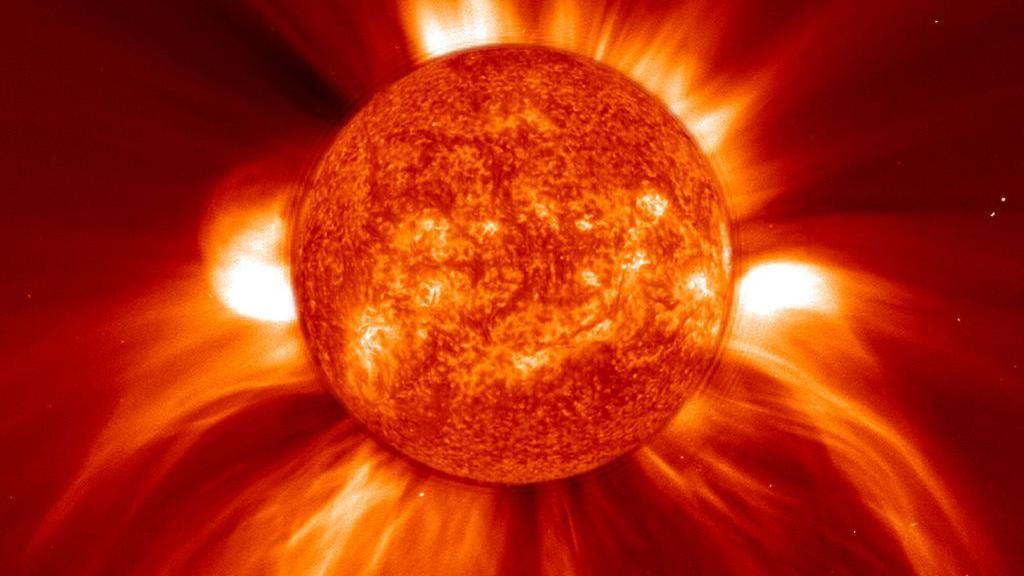
India’s pioneering solar observatory, Aditya-L1, is poised to capture unprecedented data during the Sun’s peak activity period in 2026. Launched into orbit last year, this mission represents India’s inaugural dedicated solar study endeavor and will witness the star’s dramatic transformation during its 11-year magnetic cycle culmination.
The solar maximum, occurring approximately every 11 years when the Sun’s magnetic poles reverse, generates extraordinary turbulence. This phase transforms our star from relative calm to intense storminess, characterized by a dramatic surge in solar storms and coronal mass ejections (CMEs). These massive eruptions of charged particles from the Sun’s corona can exceed a trillion kilograms in mass and accelerate to velocities approaching 3,000 kilometers per second.
Professor R Ramesh of the Indian Institute of Astrophysics, principal investigator for Aditya-L1’s Visible Emission Line Coronagraph (Velc) instrument, anticipates monitoring capabilities will expand significantly. ‘During normal activity periods, the Sun produces two to three CMEs daily,’ he notes. ‘Next year, we expect ten or more eruptions each day.’
The mission’s advanced coronagraph technology provides a critical advantage over other solar observatories. Its unique design nearly mimics the Moon’s size, completely obscuring the Sun’s photosphere to enable continuous corona observation throughout the year—even during eclipses. This capability allows scientists to study eruptions in visible light while measuring temperature and heat energy, key indicators of a CME’s potential strength toward Earth.
While CMEs create spectacular auroral displays, they pose serious threats to modern infrastructure. Geomagnetic storms can disrupt satellite electronics, disable power grids, and impair communication systems. Historical precedents include the 1859 Carrington Event that disabled global telegraph networks and a 1989 storm that left six million Canadians without power for nine hours.
Recent collaborative research between IIA and NASA analyzed data from a September 2024 CME event—classified as medium-sized despite its staggering characteristics: 270 million tonnes mass, 1.8 million degrees Celsius temperature, and energy equivalent to 2.2 million megatons of TNT. These findings establish a benchmark for evaluating future eruptions during maximum activity.
The insights gained will prove invaluable for developing protective measures for satellites in near-space and enhancing our understanding of space weather dynamics as humanity becomes increasingly dependent on orbital infrastructure.