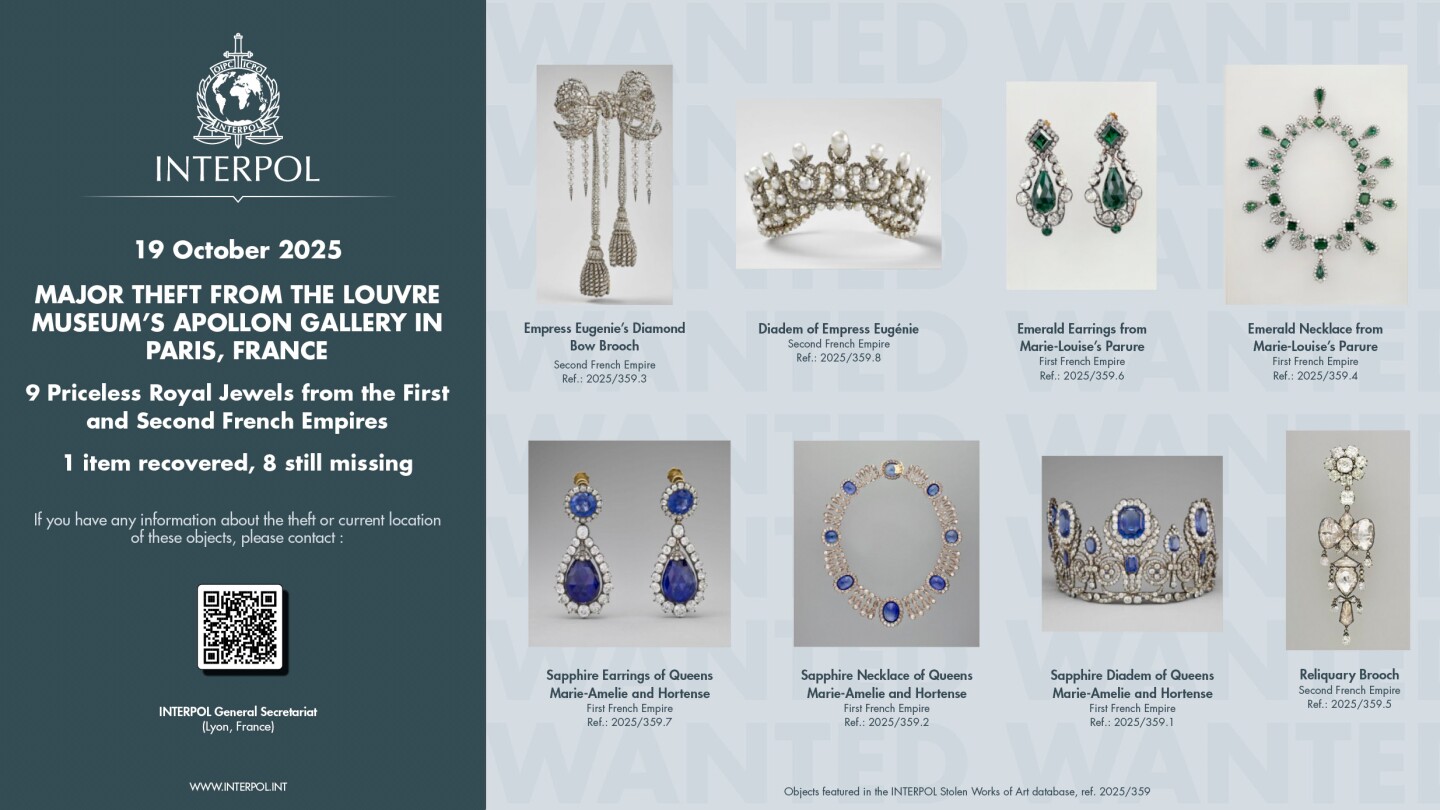
In a dramatic turn of events, seven individuals have been apprehended in connection with the audacious theft of priceless royal jewels from the Louvre Museum in Paris. However, the stolen artifacts, valued at over $100 million, remain elusive. Experts warn that the jewels, which once adorned French royalty, could be dismantled or melted down to evade detection. This tactic, increasingly common among art thieves, allows the fragmented pieces to be sold discreetly in jewelry stores or through illicit channels. Erin Thompson, an art crime professor, emphasized that such items could be sold openly without raising suspicion, given their altered state. Christopher Marinello, founder of Art Recovery International, noted the challenges of selling intact high-profile artifacts, suggesting that breaking them down might be the thieves’ best option. French prosecutor Laure Beccuau has urged the culprits to return the jewels, warning that buyers would face legal consequences. Despite the arrests, the likelihood of recovering the jewels intact appears slim. Experts like Robert Wittman, a former FBI art crime investigator, remain skeptical about the thieves’ ability to monetize the stolen items, given their historical significance and unique characteristics. The case highlights the growing trend of museum thefts and the complexities of recovering stolen artifacts. As time passes, the chances of retrieving the jewels diminish, leaving their fate uncertain.