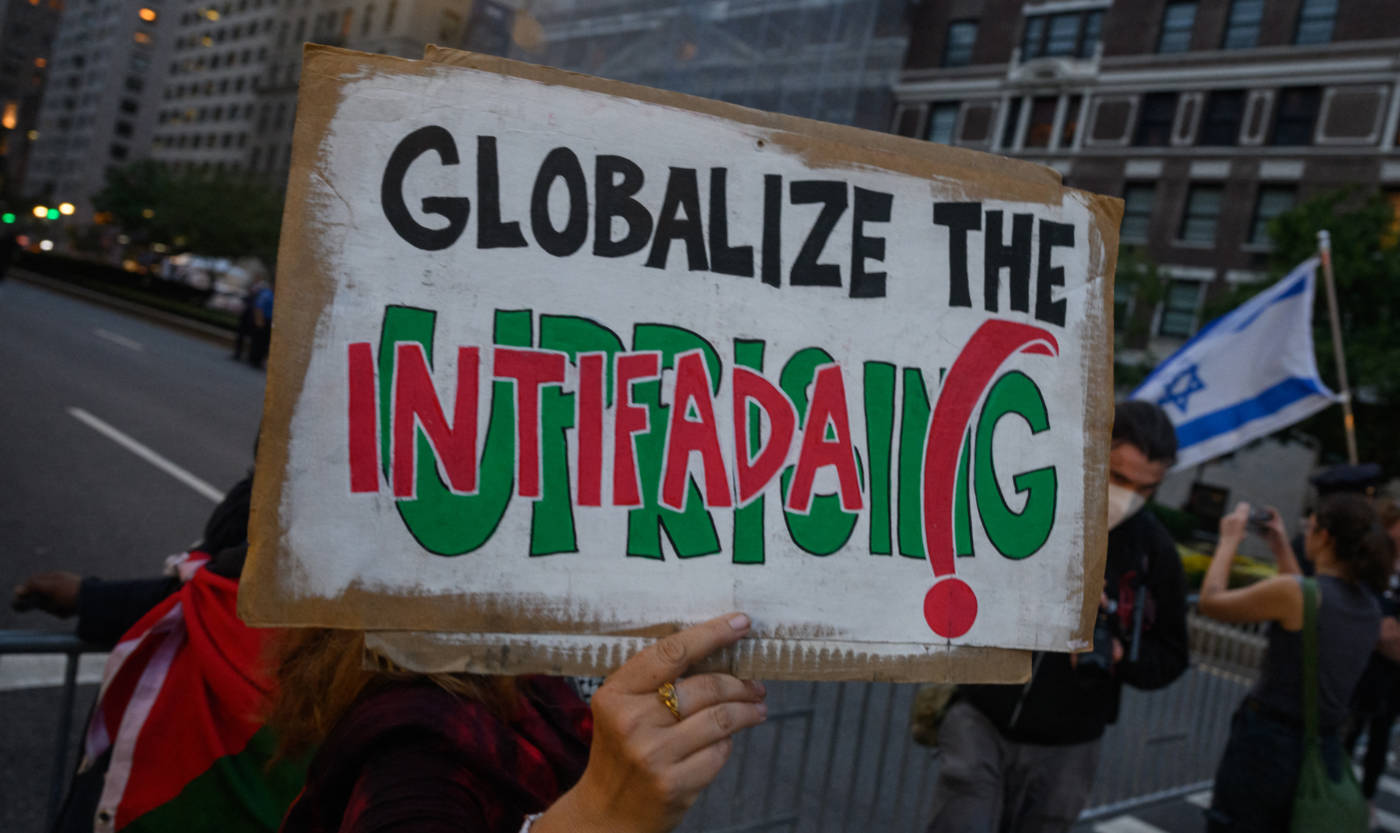
The phrase ‘Globalize the Intifada’ has emerged as one of the most contentious slogans in pro-Palestine activism, sparking intense debate about its meaning and legal status. Recent developments in the United Kingdom have seen law enforcement agencies take unprecedented steps to criminalize its use, resulting in the first criminal charges under racial hatred legislation.
British authorities have charged three individuals for chanting the slogan during a December protest supporting hunger-striking Palestine Action prisoners. The charges allege ‘using threatening, abusive or insulting words or behaviour intending thereby to stir up racial hatred,’ an offense carrying potential seven-year prison sentences. This enforcement action follows joint announcements from the Metropolitan Police and Greater Manchester Police in December that they would arrest anyone using the phrase or displaying it on placards.
The linguistic and historical context of ‘intifada’ reveals complex layers of meaning. Derived from Arabic, the term translates to ‘shaking off’ or ‘uprising’ and has been applied to various resistance movements beyond the Middle East, including the Jewish uprising in the Warsaw Ghetto during World War II. Historically, it references two specific Palestinian uprisings: the largely non-violent First Intifada (1987-1993) that employed civil disobedience and stone-throwing tactics, and the more violent Second Intifada (2000-2005) that featured suicide bombings and resulted in approximately 4,000 combined casualties.
Pro-Palestine activists maintain the slogan represents a call for international solidarity against what they term Israel’s genocide in Gaza, which has claimed over 71,000 Palestinian lives since October 2023. Ben Jamal of the Palestine Solidarity Campaign asserts the phrase advocates ‘worldwide support for an end to the oppression of the Palestinian people through all means of legitimate resistance’ rather than violence against Jewish civilians.
However, critics including the American Jewish Committee argue the slogan inherently promotes violence, noting that previous intifadas resulted in significant Israeli casualties. UK Health Secretary Wes Streeting recently stated those who don’t view the phrase as violent are ‘daft,’ while Prime Minister Keir Starmer has called it ‘a call to attack Jewish communities around the world.’
The enforcement crackdown follows the December Bondi Beach attack in Australia, where 15 people were killed in an antisemitic incident. Although the attackers had no established connection to Palestine activism, Australian and British authorities have cited rising antisemitic hate crimes as justification for stricter measures. New South Wales Premier Chris Minns has initiated a parliamentary inquiry into banning the phrase, describing it as ‘hateful, violent rhetoric.’
Legal experts and rights organizations have raised concerns about free expression implications. The International Centre of Justice for Palestinians criticized the police action as ‘reckless and nonsensical,’ noting that the Crown Prosecution Service had previously advised that such phrases didn’t meet prosecution thresholds. The situation reflects broader tensions surrounding protest rights and counter-terrorism measures in Western democracies grappling with the complexities of the Israel-Palestine conflict.