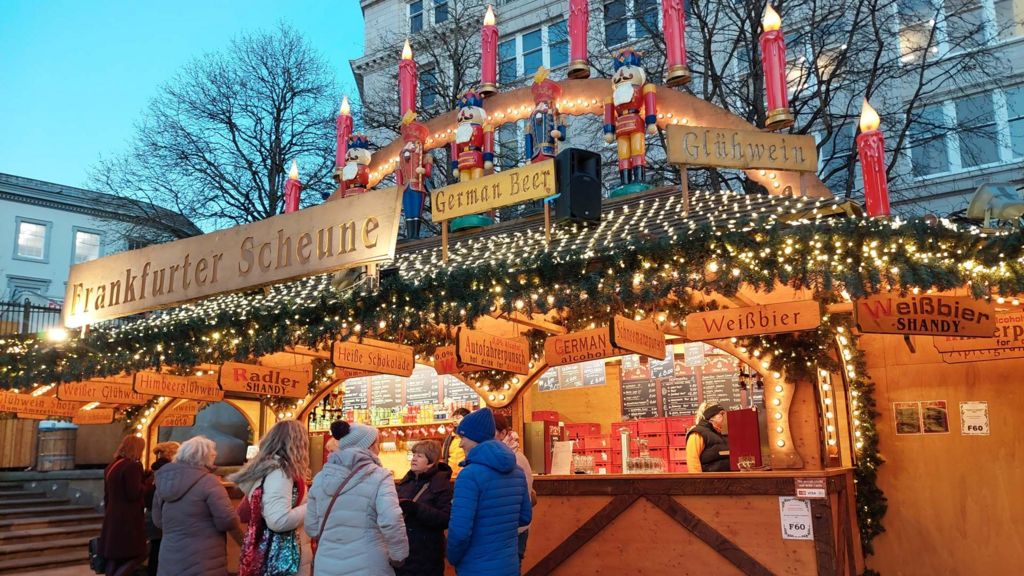
Amidst the glittering golden fairy lights and wooden huts of Birmingham’s city center, the aroma of mulled wine and grilled sausages fills the cold winter air. This isn’t a scene from Germany but the UK’s second city hosting what organizers proudly call ‘the largest authentic German Christmas market’ outside Germany and Austria.
The Birmingham Frankfurt Christmas Market, established in 1997 and running annually since 2001, represents a meticulous recreation of German tradition. Under the direction of Kurt Stroscher—who also oversees Frankfurt’s own Christmas market—the installation features exclusively German-built wooden stalls, atmospheric white lighting, and imported food and beverages.
BBC News conducted an authenticity assessment with German PhD students Nina Adler and Till Rampe, both 27-year-old academics studying in Birmingham. While impressed by the wooden structures, handicrafts, and chocolate-coated marshmallows that reminded Till of his hometown near Frankfurt, they noted distinct differences. ‘In Germany, we typically drink mulled wine, not beer,’ Nina explained from Berlin. The musical selection of pop tunes like ‘The Power of Love’ also diverged from traditional German markets where Christmas carols dominate.
Dr. Katharina Karcher, a University of Birmingham academic originally from near Frankfurt, offered a contrasting perspective, declaring the market ‘super authentic.’ She emphasized the cultural significance of these markets in Germany, where they serve as beacons of light during dark winters and hold ‘huge symbolic meaning’ with religious undertones.
The comparison extended to Berlin’s Charlottenburg Palace market, where approximately 70 different Christmas markets operate simultaneously. The German capital’s offerings feature large tents housing restaurants, stalls selling handmade gifts, and traditional foods like Lebkuchen and Bratwurst. Visitors Magrita and Dietmar, aged 66 and 69 respectively, emphasized the unique atmosphere created by colorful lights and Christmas decorations that distinguish authentic markets from generic ‘Winter Wonderland’ installations.
Back in the UK, other Christmas markets show varying degrees of authenticity. While Birmingham’s market remains notably faithful to German traditions, locations like Kingston upon Thames incorporate diverse elements including Greek gyros, Yorkshire pudding wraps, and open mic nights. Some visitors appreciated this localized interpretation, with Jamie Aycliffe noting, ‘We’re doing our British version of the Bratwurst,’ though he acknowledged European markets generally superior quality.
The evolution of Christmas markets continues both in Germany and abroad. Dr. Karcher notes the increasing presence of Santa Claus imagery replacing traditional depictions of Saint Nikolaus, while international foods become more common. Security measures have also intensified following tragic attacks in Berlin (2016) and Magdeburg (2024), with concrete barriers and police patrols now common features.
Despite these changes, the essential spirit remains. As Berlin visitors Anna and Karolina, both 19, expressed: Christmas markets are defined not by location but by ‘the festive atmosphere and the time of the year when they take place’—a sentiment that transcends national borders and continues to bring communities together in seasonal celebration.